

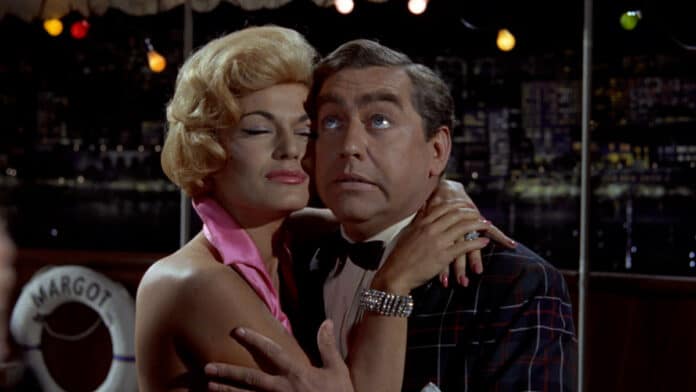

The 1961 British film ‘The Rebel' brought together the combined talents of a partnership that defined comedy in the Swinging Sixties: star Tony Hancock and writers Ray Galton and Alan Simpson. It's shot in colour, which is an unusual medium for Hancock, who had worked his way up from radio star to having his own black and white television series. A short-lived spate of activity on the big-screen followed. It would not sustain, and ‘The Rebel' is Hancock's best film in a starring role.
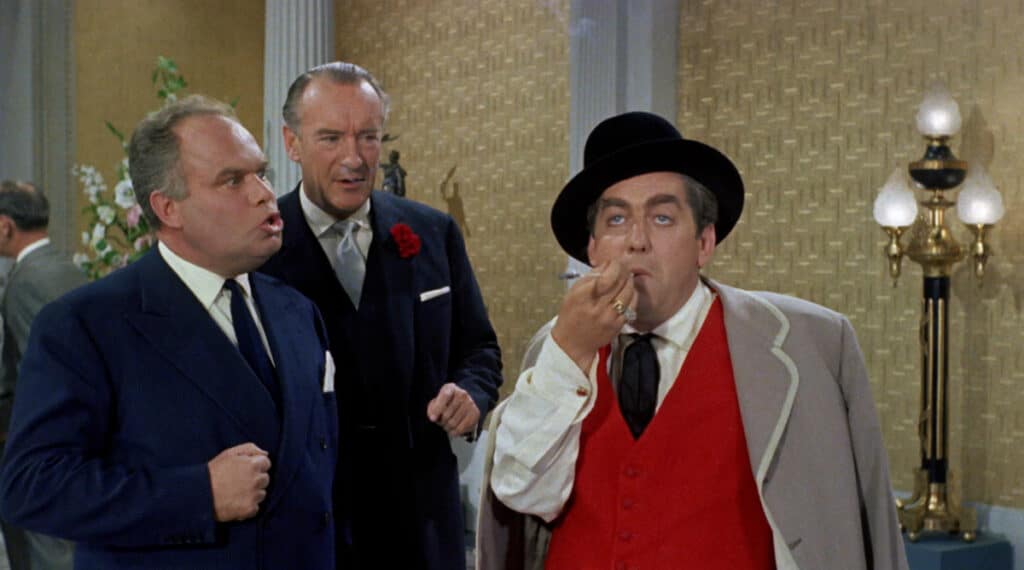
In ‘The Rebel', all of the usual Hancock trademarks are there to see. He's playing a character called ‘Tony Hancock' who is an exaggerated version of himself. This time, he brings all of his pomposity and delusions of grandeur to bear in pursuing art. What he imagines to be paintings and sculptures of genius are crude and childish. Yet his unassuming bedsit neighbour, Paul (Paul Massie) is the opposite: he has great talent but is too modest to realise it.
When an illustrious art critic (played by George Sanders) becomes involved, Tony takes credit for Paul's work in order to snatch the glory, imaging that it's only a matter of time before his talent is recognised. An enjoyable farce ensues that finds Tony travelling the world on a cruise ship and rubbing shoulders with the doyens of the art world.
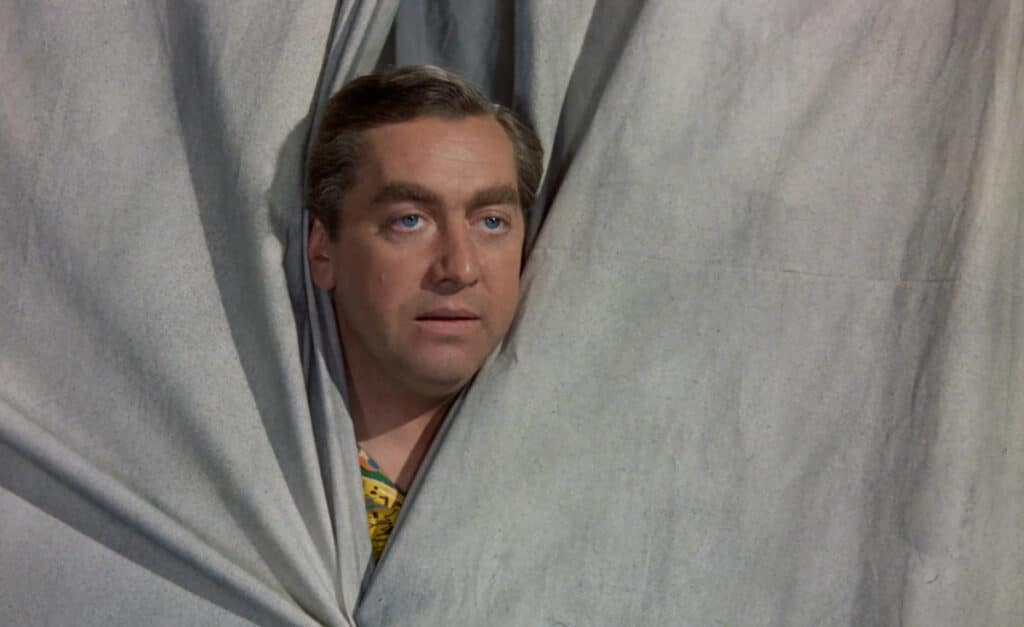
The premise is reasonably good for comedy, if fairly well-trodden. How much you enjoy the film will hinge upon whether or not Tony Hancock is to your taste. His performance and personality are so large there isn't much room for anyone or anything else in the film. There is much bluff and bluster as Hancock acidly scowls his way through one scene after another. Everybody else essentially plays the straight man to Hancock's jowly, boorish buffoon.
George Sanders, forever associated with the velvety voice of the villainous Shere Khan in ‘The Jungle Book' is at his smooth best as the old creature of the establishment Sir Charles Broward. Margit Saad is both glamorous and funny as Margot, the wife of a wealthy businessman who poses for Hancock as he crafts a lamentable sculpture. The ever-dependable John Le Mesurier (‘Dad's Army') has a cameo as the office manager tasked with dispensing with Hancock's services. Robert Day's direction is pedestrian, and the whole film feels more like an extended episode of a TV sitcom, but he keeps the show on the road.
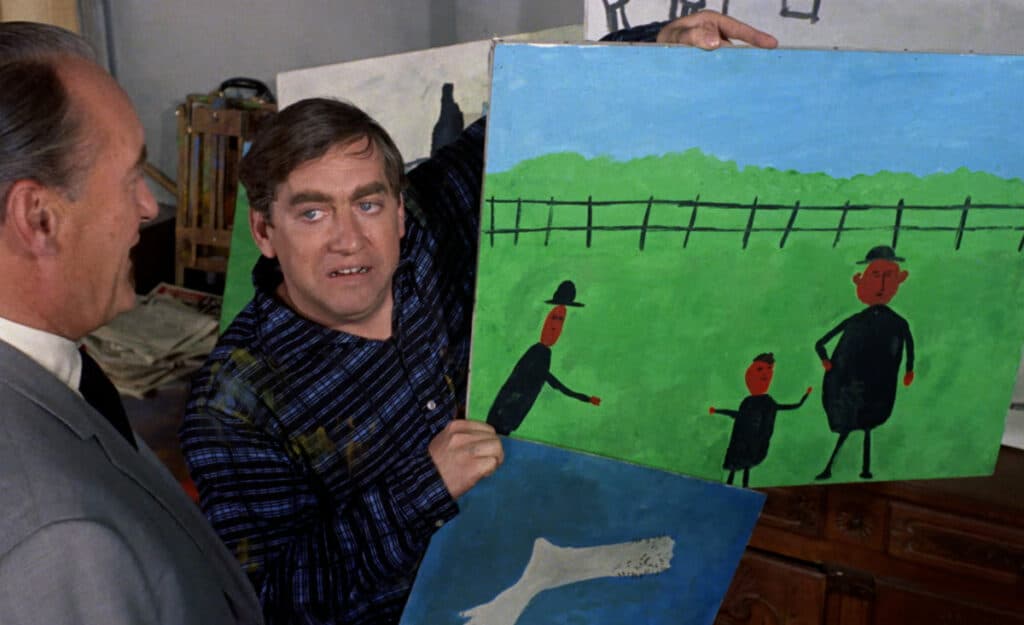
Gaudy and often painted with broad brushstrokes, ‘The Rebel' works as a decent enough comedy. It doesn't quite work as a satire either on ordinary life nor on the art world, as Hancock is too divorced from reality to provide any real alternative. None of it is smart enough to take down the objects of its derision. Nevertheless, you can tell that it is well-written by seasoned comedy script writers. When Hancock became too big for his boots, he dispensed with the services of Galton and Simpson. They went on to create ‘Steptoe and Son', one of the greatest sitcoms of all time. Hancock pushed everyone else away until he reached an early grave before the decade was out.
Maybe it's that taint of tragedy that hangs over ‘The Rebel', but I found it hard to raise a laugh. Maybe it's just not to my taste. Either way, ‘The Rebel' looks and sounds sharp on Blu-ray, and will be enjoyed by the many admirers of Tony Hancock who still enjoy his work over fifty years after his death. One such admirer is Paul Merton, whose dour delivery has often drawn parallels to Hancock's style. He provides his verdict on ‘The Rebel', while Diane Morgan (‘Philomena Cunk') explains how Hancock inspired her approach to comedy. ‘The Rebel' is released concurrently with Tony Hancock's other starring film role, in ‘The Punch and Judy Man'.
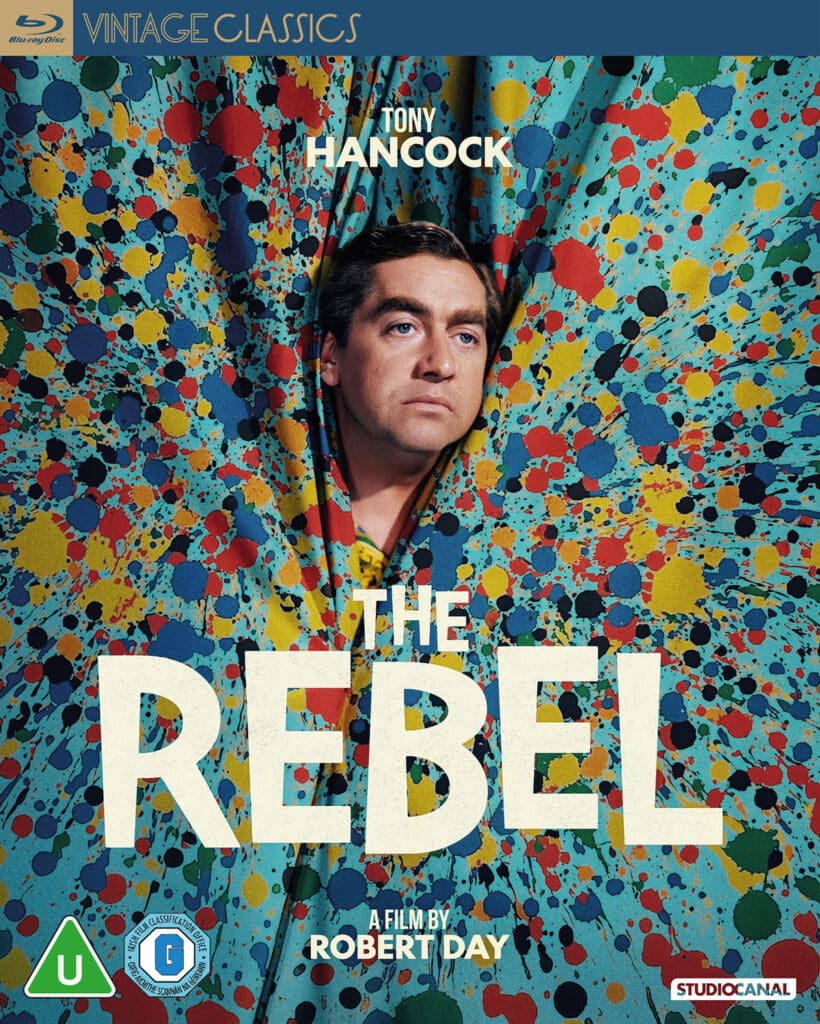
Cast: Tony Hancock, George Sanders, Paul Massie, Margit Saad, Nanette Newman, Irene Handl, Dennis Price Writers: Ray Galton and Alan Simpson Director: Robert Day Running time: 106 mins Released by: Studiocanal Release date: 3rd March 2025 Buy ‘The Rebel'

