

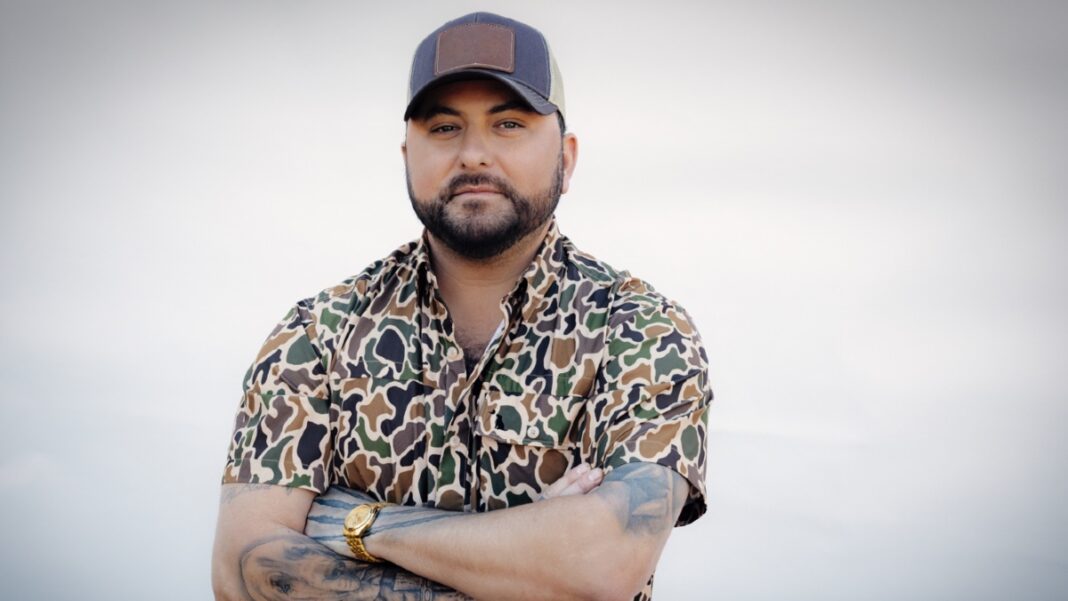

Tyler Farr emerged in the early 2010s as one of country music’s most distinctive voices, blending a gritty, rock-edged intensity with a traditional country backbone shaped by his Missouri roots. A classically trained singer who studied opera before turning to country, Farr broke through with a string of hits including ‘Redneck Crazy' and ‘A Guy Walks Into a Bar,' the latter becoming a chart-topping showcase for his emotive delivery. His albums ‘Redneck Crazy' and ‘Suffer in Peace' cemented his reputation as an artist capable of balancing hard-hitting attitude with vulnerable storytelling, while his commanding vocal style set him apart in a crowded Nashville landscape.
Over the years, Farr has navigated the shifting tides of the music industry while staying true to his identity as a vocalist and storyteller. As country music has evolved, embracing new sounds, streaming-driven success and a broader audience, he has remained grounded in the authenticity that first defined his rise, even as he’s adapted to the demands of a changing business. Now entering a new chapter, Farr is reflecting on the journey so far while looking ahead to fresh material, bringing with him the perspective of an artist who has seen the genre transform from the inside out.
Tyler, great to catch up again. Before we dive in, I’d love to see ‘Suffer in Peace' and ‘Redneck Crazy' get vinyl releases. What’s your take on vinyl?
Man, I’d be all about that. It’s actually something I’ve never done before, but I think it would be really cool. I’m a collector myself, I’ve got a pretty big vinyl collection, especially older records. Stuff like ‘Live at Folsom Prison' by Johnny Cash, the original pressings: that’s the kind of thing I love.
Years ago, I bought an old Victrola-style record player, one of those big wooden ones where you can literally turn the dial like you’re tuning into AM radio. Ever since then, I’ve just enjoyed collecting and listening to records that way. There’s something about it that feels more intentional.
And you’re right, vinyl has really come back around in the last five years or so. What’s funny is seeing younger people get into it now. If Gen Z are buying turntables and collecting records, then there’s definitely something in it. That whole vintage thing is cool again. I mean, people are out here buying beat-up old Carhartt jackets, and I’m like, “Man, I’ve got ten of those already.” So yeah, I’d definitely be up for putting those albums out on vinyl.
If you were building a Mount Rushmore of your four best songs, what would make the cut?
That’s a tough one, man, because when I think about it honestly, some of the songs I’d probably put on that list haven’t even been released yet. There are a few that I feel like really capture who I am as an artist now, and I think down the line those might end up being the ones I’m most proud of. But if we’re talking about what’s out there right now, the songs people know and have lived with, there are definitely a few that stand out to me.
‘A Guy Walks Into a Bar' would absolutely be on there. That song has meant a lot to me from the moment we cut it, it connected in a way that you can’t really predict, and it’s one of those tracks that still holds up every time I play it. It just feels timeless in what it’s saying and how people relate to it.
I’d also put ‘Hello Goodbye' up there, because that one shows a different side of me. It’s got a bit more depth emotionally, and I’ve always been proud of how that one turned out. Same with ‘Suffer in Peace,' that song, to me, really represents the kind of artist I wanted to be at that time. It’s got that mix of grit and vulnerability that I’ve always tried to balance in my music.
And then there’s ‘Livin’ With the Blues' from the ‘Redneck Crazy' album. That’s probably one of my personal favourites from a songwriting standpoint. It might not be the biggest hit, but it’s one that I feel really strongly about, just in terms of how it was written and what it says.
There are others you could make a case for: like ‘I Should Go to Church,' but if I had to pick four that really represent me, those would probably be the ones. And like I said, give me a little more time, and I might be swapping a couple of those out for some new ones that I think show where I’m at now.
Looking back on that breakout period, the ‘Redneck Crazy' and ‘Suffer in Peace' years, what do you remember most about that time?
Man, when I look back on that whole period, the first thing that comes to mind is just how fast everything happened. It really did feel like I was just holding on for dear life. People always ask if you knew it was going to happen, if you could feel it building, but honestly, I didn’t. I was just out there hoping it would work, grinding, doing what I loved, and then all of a sudden it clicked, and when it clicked, it really clicked.
From there, it was like everything went into overdrive. Getting out on the road with Jason Aldean for a couple of years, being part of those massive tours with Florida Georgia Line, playing stadiums, that was probably the peak of it all. Those were some of the biggest stages you could be on, and to go from where I started to standing in front of those kinds of crowds was just surreal. It’s something I’ll never take for granted, because not everybody gets to experience that.
At the same time, some of my favourite memories aren’t even the big, obvious moments: they’re the things in between. The camaraderie on the road, the hangs after the shows, the ridiculous stuff that would happen when everybody let their guard down a little bit. I was usually the one stirring things up, probably getting us into a bit of trouble here and there, but those are the moments that stick with you because they’re real.
And then there were the opportunities that came with it, especially things like the military tours overseas. Getting to travel, see parts of the world I never thought I’d see, and play for people in those environments… that’s something that stays with you on a deeper level. It gives you a different kind of perspective on what you’re doing and why it matters.
It was intense, it was fast and there were times where you barely had a second to breathe, but it was also an incredible ride. I feel very lucky to have gone through that and to have experienced it the way I did.
The sound of country music shifted quite a bit after that: from the era you came up in to artists like Chris Stapleton and Morgan Wallen. How did you see that change?
I’ve always looked at country music like it moves in cycles, almost like a fork in the road where it’ll lean one direction for a while, and then eventually swing back the other way. It never really stays in one place for too long. You’ll have periods where it leans more commercial or pop-driven, and then there’s always a moment where it kind of corrects itself and goes back to something a little more stripped-down and traditional.
You can look back over the years and see that pattern pretty clearly. You had artists like Rascal Flatts who brought in a more polished, pop-influenced sound, and then not long after that, someone like Jamey Johnson comes along and pulls things back toward a more traditional, roots-driven style. It’s like the genre is always searching for that balance.
And we’re seeing that again right now. You’ve got artists like Zach Top coming through with that straight-up ‘90s country sound, the kind of thing that feels like it could’ve come out in 1992, and people are really responding to it. There’s a whole wave of younger artists, guys in their mid-20s, who are leaning into that neo-traditional lane, and I think it says a lot about where listeners’ ears are at right now.
For me personally, I’ve always been more drawn to the physical side of music, CDs, vinyl, something you can actually hold, and I’m not the biggest fan of how everything’s shifted toward streaming and algorithms and all that. But at the same time, you’ve got to recognise that it’s not going anywhere. It’s just the way people consume music now.
The one upside to that shift is accessibility. People aren’t limited to what’s on the radio anymore. They can go out and find exactly what they like, whether it’s a major label artist or someone completely independent. And I think that’s actually a really positive thing, because it allows all these different sounds within country music to exist at the same time. You’re not stuck in one lane, you can have all of it, and fans can choose what speaks to them.
Has that global accessibility changed things for you, especially in terms of reaching fans outside the US?
Yeah, it’s changed things in a huge way, honestly. Back when ‘Redneck Crazy' was really taking off around 2013, there just wasn’t the same kind of reach that artists have now. If you wanted your music to get heard outside the US, places like the UK or Europe, you pretty much needed a label behind you pushing it there. Without that infrastructure, it was really hard to break into those markets or even know if people were listening.
Now, with streaming and everything being so accessible, it’s completely different. People can discover your music anywhere in the world without any kind of gatekeeper. I’ve had messages from fans in the UK and other parts of Europe, and it still kind of blows my mind when I see that. I’m sitting there thinking, “How did you even find this?” But that’s just how it works now, the music travels on its own.
And the cool part about that is it opens the door to things that weren’t really possible before. If people are streaming your music overseas and connecting with it, that can eventually turn into opportunities to go over there and play shows, build a fanbase, and actually have a presence in those places. That kind of global connection just didn’t exist in the same way when I was first coming up.
So yeah, while there are definitely challenges with how the industry has changed, that’s one of the big positives. It gives artists a chance to reach people all over the world, and it gives fans access to music they might never have heard otherwise.
You mentioned earlier that you’re now operating independently, which is a big shift from the major label system you came up through. On one hand, that must be incredibly liberating but at the same time, it also means you’re taking on a lot more responsibility, from the business side to the day-to-day logistics that a label would traditionally handle. How have you found that transition, and has it changed the way you approach your career and your music?
Yeah, it’s definitely a bit of both, there’s a lot of freedom in it, but there’s also a lot more work that comes with it. When you’re on a label, there’s a whole machine behind you taking care of certain things, whether that’s marketing, planning, or just the overall structure of how things roll out. When you step away from that, you realise pretty quickly just how much was being handled for you.
Now, you’re wearing a lot more hats. You’re not just the artist anymore, you’re involved in the logistics, the planning, the decision-making on a much deeper level. That part can be tiring, because it’s not just about writing songs and getting on stage. There’s a whole business side that you have to stay on top of.
But at the same time, it is really liberating. You’re not waiting on someone else to give you the green light, and you’re not being told what direction to go in. If you want to put something out, you can do it. If you want to go somewhere and play, you can make that happen. That level of control is something I really appreciate at this stage of my career.
I will say, though, if I was just starting out right now, it’d be tough. There’s so much emphasis on things like TikTok and constantly being online, and that’s just not who I am. I don’t enjoy sitting there scrolling or trying to play that game. I’d rather be out hunting, fishing, writing songs: that’s where I’m most comfortable.
So I’ve kind of built things around that. I’ve got a good team that helps with the stuff I don’t necessarily want to focus on, and I stick to what I do best. It’s a different way of working, but it suits me, and it lets me stay true to who I am while still moving forward.
You’ve only released two full studio albums and it’s now been around a decade since that last record. In that time you’ve put out EPs and new music in smaller batches, but not a full-length project. Was that a conscious decision at the time, or more a product of how the industry was operating
Yeah, it’s kind of crazy when you actually say it out loud like that, only two albums, because it doesn’t feel like that’s all there should be. Honestly, it frustrates me a little bit, because I feel like there’s been a lot more music in me over the years that could’ve been put into full records.
A lot of that came down to the label side of things at the time. The shift towards EPs wasn’t really my decision, it was more about them wanting to play things safe. It became this mindset of, “Let’s not spend the money on a full album unless we know it’s going to work.” And I get that from a business perspective, but it’s very different from how things were when I first got signed. Back then, they were taking a chance on me. They believed in what I was doing and were willing to invest in it, and I do miss that approach.
Now, being where I am, I definitely feel the pull to make a full album again. EPs are fine, and they serve a purpose, but to me there’s something special about an album: the idea of putting together a body of work that has a flow, a sequence, a story to it. I think fans are starting to crave that again too. There’s been a bit of a swing back toward albums, with artists thinking more intentionally about how songs fit together and how you take a listener on a journey.
At the same time, I don’t think more is always better. I’m not interested in putting out some massive 30-song project just for the sake of it. That doesn’t feel like an album to me, it feels like content. And realistically, you’re never going to play most of those songs live anyway, so what’s the point?
I’d rather make something that’s focused and meaningful, where every song has a place and a purpose. So yeah, that’s definitely something that’s in the works now: getting back to making a proper album that really represents where I’m at today.
So we can expect new music soon?
Oh yeah, absolutely, there’s definitely new music coming, and I’m really excited about where it’s heading right now. I’ve actually just signed a new publishing deal, which has kind of kicked things into another gear creatively. I’ve been writing a lot more, and I’m about to head into a writing retreat this week where we’re really going to lock in and focus on building out the next batch of songs.
At this stage, it’s all about the process of gathering material. I kind of look at it like panning for gold: you go in with a bunch of ideas, and you start sorting through them, figuring out which ones really stand out, which ones feel honest, and which ones have that something extra. Some songs immediately jump out as front-runners, others might need a bit more work, and some just don’t make the cut. It’s about being patient and letting that collection build naturally.
Once you’ve got enough of those strong songs, the ones that really represent where you’re at, that’s when you can start shaping it into something bigger, whether that’s an album or a full project. I’m definitely getting to that point now where there are some songs in there that I’m really fired up about. There are some heaters coming, no doubt.
Being independent now also means I don’t have to wait around for anyone else to decide when that music comes out. When it’s ready, I can put it out. So yeah, there’s a lot in motion right now, and I think people are going to start hearing new stuff from me sooner rather than later.
You mentioned earlier that your music is now reaching fans internationally in a way it couldn’t before, and there’s clearly a growing appetite for your kind of country music over here in the UK and across Europe? Any thoughts on touring here?
Yeah, I’d love that, man. We’re coming over for a military tour in early July, which I’m really looking forward to, but I’d definitely like to get out there and play for everyone: not just on base. It’d be great to actually get into the cities, play proper shows, and connect with fans over there in that way. It’s really cool to hear that the music and the lifestyle are resonating over there now. That’s all I know how to do, I just live my life the way I live it and write songs about it, so to hear that it’s connecting with people in a completely different part of the world is pretty special.
Country music’s always gone through phases where certain sounds and styles come in and out, but if what I do is finding a place with audiences over there, then I’d love to be a part of that. So yeah, hopefully we can make that happen soon and get over there properly and play some shows.

