

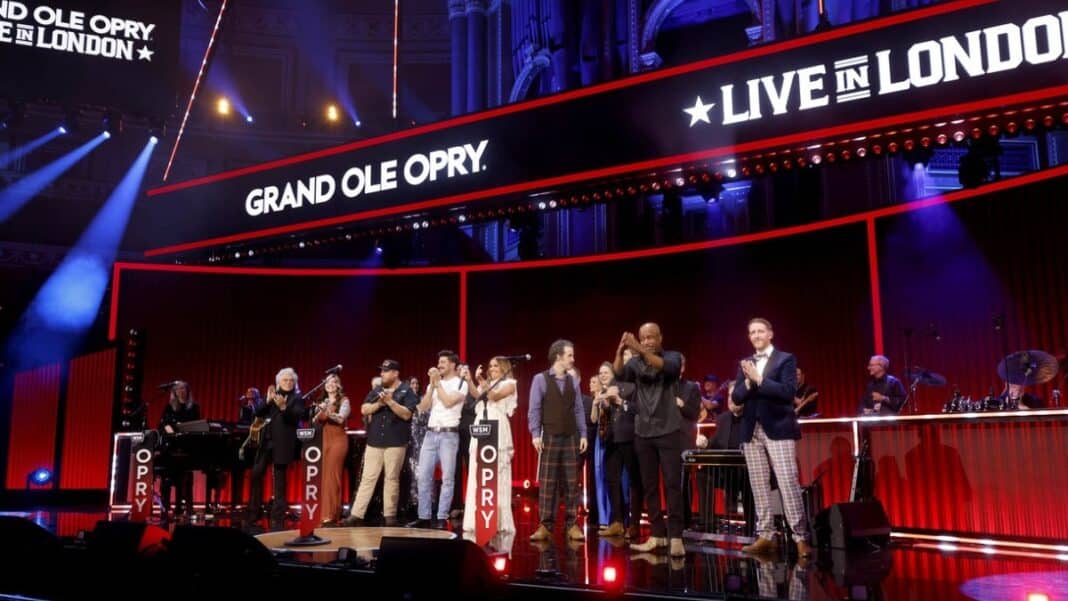

There are few stages in the world as storied as the Grand Ole Opry’s, and few names that carry such weight in the hearts of music lovers. For 100 years, the Opry has been more than just a radio show or a concert series — it has been the spiritual home of country music, a place where legends are born, traditions are cherished, and new voices carry the flame forward. Its centenary is not just a milestone for Nashville, but a celebration of a cultural institution that has shaped the very sound of American music.
The Grand Ole Opry has been many things over the past century — a radio broadcast, a proving ground for country’s brightest talents, and above all, a family gathering. Tonight, for the very first time in its 100-year history, that family spirit crossed the Atlantic and filled London’s Royal Albert Hall. The Grand Ole Opry show was not just a concert but a moment of history: the Opry’s first show outside the United States, staged in one of the world’s most prestigious venues. From the very first note, it was clear this was a night that honoured tradition while celebrating the global reach of country music.
The evening began in dazzling fashion with Scottish group Breabach, their fiddles and bagpipes ringing out across the hall in a joyous nod to the Celtic roots of country. They were soon joined by Darius Rucker, who launched into ‘Wagon Wheel' with Breabach adding a rousing Celtic twist — complete with a bagpipe solo that brought roars of delight from the crowd. “Who loves country music?” Rucker asked, greeted by a deafening cheer that confirmed London was more than ready to welcome the Opry. Hosts Vernon Kay and Kelly Sutton then took the stage to officially open proceedings, with a sea of raised hands showing just how many in the audience had already made the pilgrimage to the Opry in Nashville.

Carly Pearce was the night’s second Opry member to take the stage, and she made it count. After a rousing cover of Dolly Parton’s ‘9 to 5,' she paid heartfelt tribute to Jeannie Seely before performing her own ‘What He Didn’t Do.' But the most moving moment came when she stepped alone into the Opry circle, playing Loretta Lynn’s voicemail before delivering a tender solo rendition of ‘Dear Miss Loretta.' The hall fell into reverent silence until Luke Combs strode out to join her for a song he co-wrote – ‘I Hope You’re Happy Now' — an explosive duet that had the entire crowd on its feet. Pearce’s tears at the end were matched by the audience’s ovation.
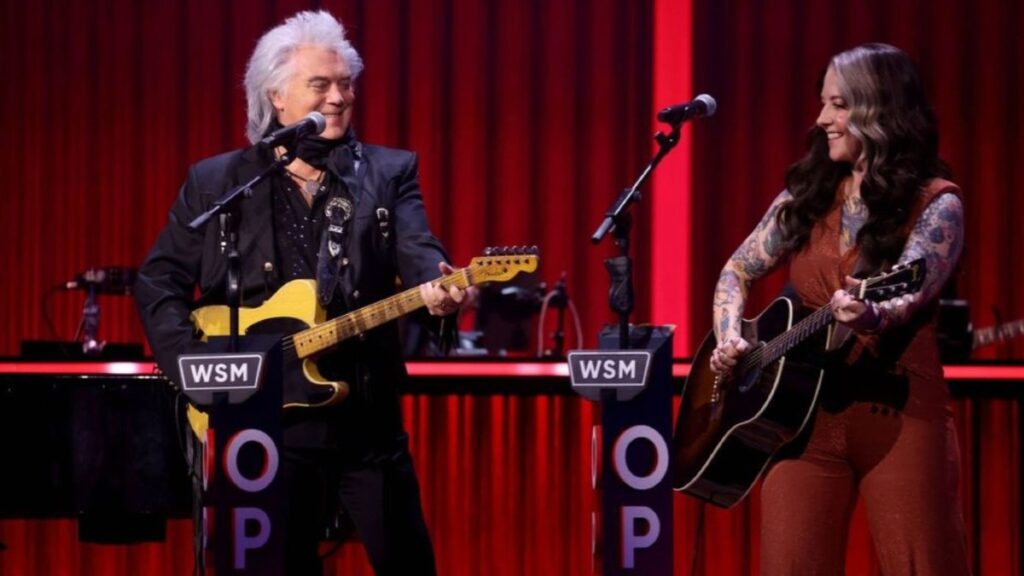
That sense of reverence continued with Mumford & Sons, representing the UK with a stripped-back, haunting acoustic set in the circle. Their opening quip — “We’re not members of the Opry, hint” — earned a laugh, but their delicate harmonies underscored just how wide the Opry’s influence stretches. Then came Marty Stuart, mandolin in hand, delivering a fiery version of ‘Orange Blossom Special,' a song he once played alongside Johnny Cash as a member of his band back in the day. His virtuosity reminded the audience of the timelessness of country music, while his collaborations with UK trio The Wandering Hearts and later the Opry house band on a wonderfully lush cover of The Rolling Stones' ‘Wild Horses' paid tribute to the deep musical ties between Britain and America.
After another exuberant interlude from Breabach, which this time included haunting Celtic vocals and a traditional step dance, the second half opened with a video tribute to Dolly Parton — a guaranteed crowd-pleaser that set the tone perfectly for Ashley McBryde’s set. McBryde’s tender rendition of Patsy Cline’s ‘Sweet Dreams (Of You)' highlighted her ability to channel country’s most intimate emotions, before she bared her soul on ‘Girl Goin’ Nowhere.' Tears ran down her face as the audience sang with her, a raw and unforgettable exchange between artist and fans. Teaming up with Marty Stuart for ‘The Whiskey Ain’t Working Anymore' reminded everyone of country’s honky-tonk roots, while her Abbey Road rehearsal footage gave a fitting nod to London’s own musical heritage.
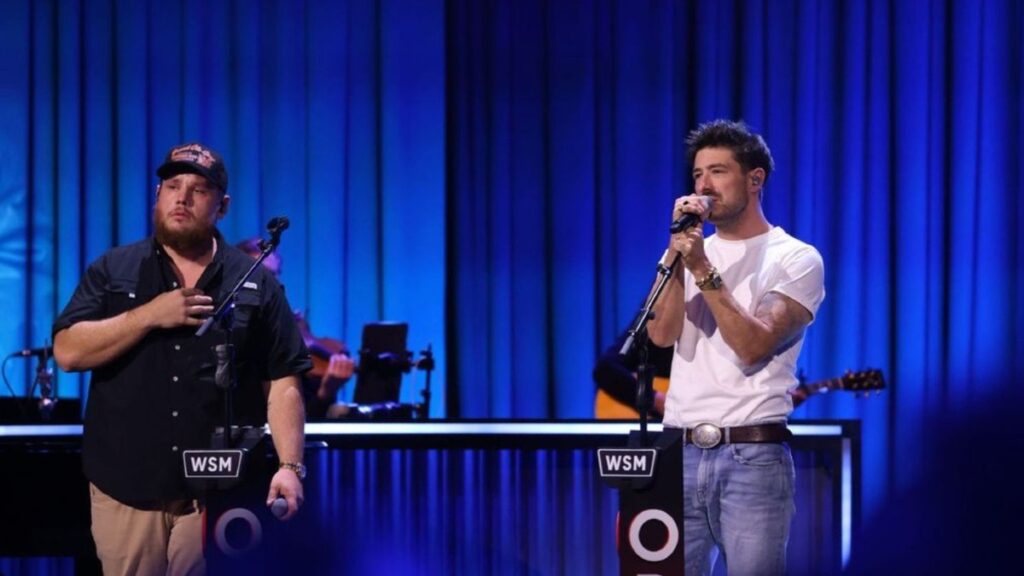
Darius Rucker’s return brought a shift in energy, his voice soaring through Hootie & the Blowfish classic ‘Hold My Hand' and the anthemic ‘It’s Alright,' both of which had the hall dancing. He spoke of his love for the Royal Albert Hall before honouring Johnny Cash on a rousing cover of ‘Folsom Prison Blues' — one of many nods throughout the night to the Opry’s enduring legends. Then it was time for Luke Combs, who bounded on stage to a hero’s welcome in a Grand Ole Opry cap. His set was a barnstorming showcase of modern country at its rowdiest, from ‘When It Rains It Pours' to the raucous ‘Beer Never Broke My Heart.' The crowd never sat down, singing their hearts and standing up to punch the air with exuberant delight. Peak Combs came when he launched into his crossover smash ‘Fast Car,' uniting every voice in the hall.
It was Combs’ duet with Marcus Mumford on Willie Nelson’s ‘Always on My Mind' that best captured the spirit of the evening: an American superstar and a British folk hero joining forces, framed by the pedal steel’s plaintive cry. It was a moment that bridged traditions, countries and generations, much like the Opry itself has done for a century. Throughout the night, each artist found a way to honour the greats — Dolly, Loretta, Patsy, Willie — weaving their songs into the fabric of the show and making the evening not just a celebration, but a history lesson in the best possible way.
Fittingly, the night closed with all the performers gathered on stage for a rousing rendition of ‘Will the Circle Be Unbroken.' Voices rose together in harmony, arms around shoulders, as if the Royal Albert Hall itself had been transported to Nashville for one extraordinary night. The song’s timeless message of unity and continuity summed up the Opry’s essence: a family that has grown for 100 years and shows no sign of slowing. This first-ever Opry show in London was more than historic — it was joyous, heartwarming and affirming. For those lucky enough to be there, it felt like standing in the circle itself, part of a tradition that will keep ringing out for the next hundred years.

