

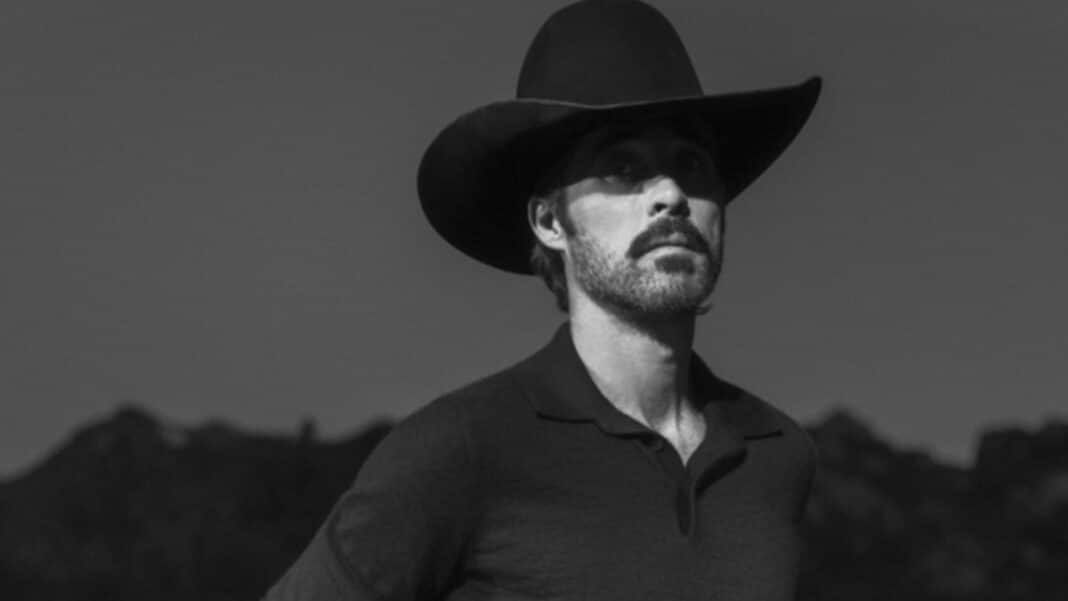

Ryan Bingham has built a career on doing things his own way, carving out a space where outlaw country, desert rock and cinematic storytelling collide. A former rodeo rider turned Oscar-winning songwriter, he first broke through with raw, road-worn records that reflected a life lived on the margins, before reaching a wider audience with ‘The Weary Kind' from Crazy Heart. Since then, Bingham has remained a restless creative force: balancing solo releases, acting roles and a reputation as one of the most authentic voices in modern Americana, grounded in honesty and a refusal to follow the Nashville rulebook.
That same spirit of independence runs through his collaboration with The Texas Gentlemen, a collective of deeply respected musicians known for their genre-blurring approach and rootsy, groove-heavy sound. Bringing together Bingham’s weathered songwriting with the band’s loose, soulful musicianship, the partnership feels less like a one-off project and more like a natural alignment of musical philosophies. The result is an album that leans into spontaneity and feel, drawing from country, rock and Southern soul traditions, while capturing the kind of lived-in chemistry that only comes from artists who value instinct over polish.
From the opening moments of ‘They Call Us The Lucky Ones,' Ryan Bingham and The Texas Gentlemen make it clear this is going to be a record rooted in atmosphere as much as storytelling. The title track drifts in on a swirl of acoustic guitar and a raspy, Bruce Springsteen-esque vocal as Bingham admits, “I got high, forgot the words to my own song,” immediately setting a tone of weariness and reflection. It’s a slow-burner, built on western plains imagery and ghostly recollections, gradually expanding with piano flourishes and harmonies before opening into something quietly anthemic. When he sings “They called us the lucky ones,” it lands somewhere between irony and resignation, the band stretching the track into a road-worn, cinematic opener that feels like it’s forever on the verge of breaking open.
That restraint doesn’t last long. ‘Let the Big Dog Eat' kicks the doors off with a funky electric riff, honky-tonk piano and handclaps before sliding headfirst into a barroom rave-up that channels the swagger of ZZ Top. It’s loose and unapologetically fun: gang vocals, pounding keys and a sense of reckless abandon driving it forward. Bingham leans into the chaos with lines like “I’m on fire, let’s go for miles, c’mon honey, let the big dog eat,” delivering one of the album’s most immediate, foot-stomping moments.
‘I Got a Feelin’ keeps that loose, livewire energy alive but adds a different texture. Acoustic and slide guitar carry the rhythm, while fiddle lines snake through the arrangement, giving it a distinctly Texan feel. There’s a hybrid spirit here: part Lynyrd Skynyrd, part The Rolling Stones, as the band locks into a groove that feels built for late nights and crowded bars. Bingham’s lyrics drift between observation and offhand humour, “I’ve got a feeling this party’s about to begin… I’ve got a feeling you’re going to be big in Japan,” capturing that hazy, half-serious mindset of a night that could go anywhere.
The record’s more introspective side returns with ‘Twist the Knife,' another acoustic-led piece that leans heavily into that Springsteen-tinged Americana. Mandolin adds a delicate edge early on before harmonica and piano swell the arrangement into something fuller and more expansive. Lyrically, it’s a song about emotional damage and the things people say and do that linger long after the moment has passed. There’s a troubadour quality here, a sense of someone reflecting on wounds while still moving forward, carried by the steady strum beneath it.
‘Americana' might be the album’s most intriguing and ambiguous moment. Built on a plodding acoustic and piano foundation, it tells the story of a man who’s just lost his job but refuses to let it define him. Lines like “We’re Americana, we do whatever we wanna” walk a fine line between defiance and satire, especially when paired with references to sleeping on hardwood floors and shrugging off consequence. Whether it’s a sincere anthem or a subtle critique is left deliberately unclear, and that ambiguity gives the track a bite that lingers long after its mournful fiddle solo fades out.
At the album’s cinematic centre sits ‘Cocaine Charlie,' a near seven-minute epic that plays like a film in miniature. Stripped back at first, just voice and acoustic guitar, it unfolds into a detailed narrative of smuggling along the Rio Grande, following Charlie and Martha as they navigate danger and desperation. There’s a heavy sense of inevitability baked into the storytelling, especially when Bingham foreshadows the ending with “She knew that she would lay beside old Charlie in some grave.” As the arrangement builds, with fiddle adding a creeping sense of dread, the song transforms into a near murder ballad: dark, immersive and arguably the album’s emotional core.
‘Relevance' snaps things back into motion with a burst of energy, driven by galloping drums and a swagger that feels lifted straight from a smoky 1970s rock club. There’s a hint of Mick Jagger in the delivery as Bingham asks, “What’s the relevance if you don’t want no love?”: a deceptively simple question buried beneath the noise. It’s a track that balances philosophical weight with barroom chaos, embodying the album’s ability to move between depth and pure release without losing its footing.
By the time ‘Ballad of the Texas Gentlemen' rolls around, the record fully embraces its sense of movement. This is a song about life on the road, New Orleans-bound, driven by music and nothing else, where fiddle, piano and guitar all interplay in a way that feels both loose and deeply musical. There’s a cinematic quality to it, like a lost scene from a 1970s road movie, capturing the restless spirit that runs through the entire album.
Closing track ‘I’m A Goin Nowhere' brings things back to where the album began: simple, acoustic storytelling with a quietly emotional core. Bingham paints a picture of small-town struggle, “No one pays in cash or deals in luck,” before anchoring the song in love as the one constant. As the arrangement slowly expands, with organ, piano and harmonies building around him, the track evolves into something unexpectedly uplifting. The final stretch, complete with whoops, hollers and a loose jam feel, leaves the listener with a sense of warmth and resolution.
‘They Call Us The Lucky Ones' is an earthy and deeply human record. It moves between cinematic storytelling and barroom abandon with ease, grounded in Americana, Texan grit and that ever-present Springsteen-like sense of place. There are moments of sharp lyrical insight and others where the band simply leans into the joy of playing together but it’s that balance that makes the album so compelling. This is music that feels lived-in, shaped by miles travelled and stories carried, offering a vivid glimpse into a world of wide-open plains, restless souls and the kind of America that rarely takes centre stage.
Tracklist: 1. The Lucky Ones 2. Let The Big Dog Eat 3. I Got A Feelin' 4. Twist The Knife 5. Americana 6. Cocaine Charlie 7. Blue Skies 8. Relevance 9. Ballad of The Texas Gentlemen 10. I'm A Goin Nowhere Release Date: 15th May Record Label: Bingham Recording Co. in partnership with Thirty Tigers Buy ‘They Call Us the Lucky Ones' right here
This article contains an affiliate link. Purchases through this link may result in us earning a commission

