


‘Stories of Hope from Auschwitz' recounts experiences of Nazi concentration camp prisoners at that most totemic of all of the death camps. Each short chapter introduces a new narrative. Hearing so many deeply personal tales about finding some hope and humanity even while part of the greatest crime against humanity does not inure the reader from the horrors of the Holocaust. Rather, it humanises its victims and survivors, accentuating the evil of what they endured much more vividly than statistics on the numbers of the murdered ever could.
Since not every life encountered among these pages would be a survivor, and most have now died even if they lived to old age, ‘Stories of Hope from Auschwitz' is a testament to extraordinary lives that puts human faces to unimaginable suffering and cruelty. Hearing their voices has power, especially at a time when Jews worldwide are again living in fear for their future.
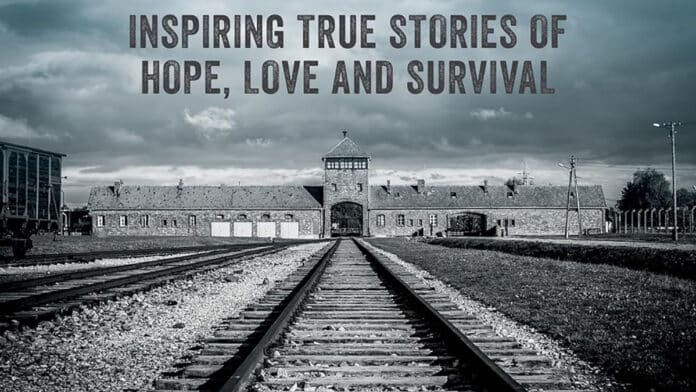
As the book points out, birds don't fly over Auschwitz. They didn't when the ovens were lit and they still don't, as if nature itself knows of the evil of the place. The unmistakable grim yawn of stretched buildings at the end of the railway track feature on the cover. The introduction recalls the experiences of the young Italian chemist, Primo Levi, who survived Auschwitz and spent the rest of his days bearing witness (in common with many others you will meet among these pages). A fine writer, Levi's remarkable accounts of life both inside the camp and after liberation are set out in ‘If This is a Man' and ‘The Truce', which are two of the most remarkable books I have ever read. Yet they too have levity, warmth and humour within their pages. Levi and his friend and fellow inmate Cesare capturing a live chicken sticks in my mind as a moment that made me laugh.
Readers will emotionally respond to ‘Stories of Hope from Auschwitz' in a variety of different ways. Many tales will pull on the heartstrings. Common themes involve family members reuniting after liberation, inmates falling in love and starting a new life together afterwards, and the bringing together of people through universal experiences such as music and dance. Sometimes these stories are inspiring because survival becomes “an act of resistance against what the Nazis had tried to do”.
You will hear about Jerzy and Cyla, who exchanged secret notes knows as “gyps”, risking immediate execution to declare their love for one another. And the moving account of how, after the chaos of liberation and the reordering of the world, they found one another again years after the end of the war. Then there's thirteen year-old Fritzie, separated from her mother and kept alive by the kindness of strangers when the older women each gave her a crumb from their bread rations – enough to keep her from sickness and starvation. Then there's the remarkable tale of the Women's Orchestra of Auschwitz, started by the SS initially as a propaganda tool. Not every member would survive, but those that did used music to illustrate the elevation of the human spirit against oppression.
Other stories are more morally complex. There's the Nazi SS Lance Corporal Franz Wunsch who developed an affection for prisoner Helena Citronova, without changing his cruelty towards other Jewish prisoners. In a role reversal, she would later hold power over him at his trial. It recalls the unequal and destructive sexual relationships between prisoner and guard depicted in films such as ‘Schindler's List', and, even more disturbingly, ‘The Night Porter'.
Some names will be familiar. The story of Otto Frank, an Auschwitz survivor, is one. His daughter, Anne Frank, kept a journal during the Frank family's time sheltering from the Nazis in the Netherlands. Publication of her diary would change forever how subsequent generations viewed the crimes of the Nazis.
Some moments will haunt you. The story of Tova recalls that, as a five-year-old, she was made to drag the body of her twelve-year-old bedmate to the other corpses. “She would later say that she thought that being Jewish meant you died – they went together.” At one time she hid among corpses to survive, but would go on to spend her working life as a therapist, helping others in psychological torment. Then there is the bittersweet story of Alice, left as a newborn infant at a railway station, avoiding the trip to Auschwitz. Piecing together her past, she uncovers a heartbreaking tragedy as well as family in Haifa she did not know she had.
A strength of ‘Stories of Hope from Auschwitz' is an absence of narrative intrusion to tell readers what to think. They can make up their own minds. But certainly the questions of place, belonging and what it means to be displaced and a refugee will pop into the brains of inquiring readers as they make their way through. Names synonymous with evil, such as that of Dr Josef Mengele, reoccur throughout these pages, characterising the depravity of the Nazi mindset.
In a long list of stories, some will have more impact than others and live longer in the memory, and some chapters could have benefitted from a little more detail. Undoubtedly, though, I was held by the storytelling from first to last. This is the kind of book that is a good way of introducing readers to a subject or historical period. It is an ideal gift for a friend looking to learn more about recent Jewish history or about what the horrors that occurred at the Nazi's most notorious death camp. Anyone who wishes to hear a range of voices from victims and survivors will also find this a useful compilation, as it covers many demographics. For curious readers, there are important names to pick out, such as Primo Levi, Anne Frank, Elie Wiesel (I have just added his Auschwitz memoir ‘Night' to my reading list) and Viktor Frankl. Their works can shine a healing light on the antisemitic slaughter of the mid Twentieth Century.
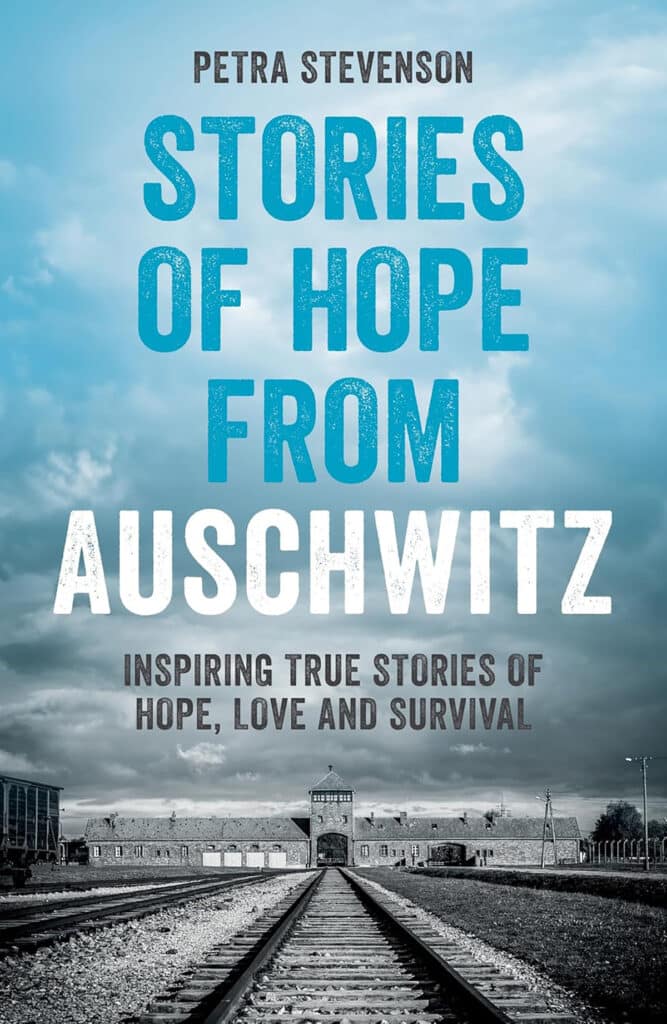
Publisher: Summersdale Publishers Publication date: 26th March 2026 Buy ‘Stories of Hope from Auschwitz'
This article contains an affiliate link. Purchases through this link may result in us earning a commission.

