

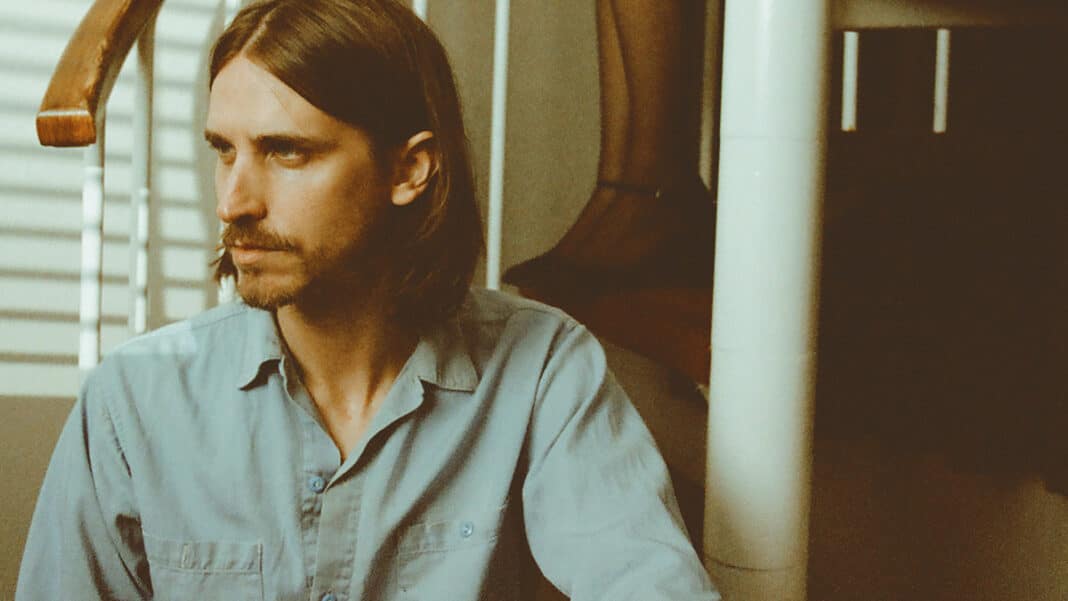

Troy Cartwright has quietly become one of Nashville’s most respected voices, known for pairing sharp lyrical insight with a deep understanding of the craft behind great songs. A Texas native who made the move to Music City to chase a career in songwriting, Cartwright has built a reputation both as a compelling artist in his own right and as a collaborator whose work resonates across the country landscape. His songs blend introspection with melodic accessibility, reflecting years spent honing his voice in writing rooms and on stages across the country.
Beyond his own music, Cartwright has also become a thoughtful chronicler of the songwriting journey through his widely praised podcast Ten Year Town, where he sits down with fellow writers, artists and industry figures to explore the realities of building a career in Nashville. That same reflective perspective runs through his latest project, ‘Etc. All the Rest,' an EP that captures both the emotional nuance and lived experience that define his work. Whether behind the mic or in conversation, Cartwright continues to offer an honest, articulate voice on what it means to make a life in music.
Lovely to talk to you today, Troy—thanks for your time. Let’s start with new EP ‘Etc.All the Rest.' It feels like a really reflective project. What was the emotional starting point for it?
Yeah, absolutely. A lot of it actually goes back further than people might expect. Some of these ideas started forming around 2021, and I remember having this really clear sense of a world that one of the songs existed in—I could see it, feel it—but I didn’t quite know what to do with it yet. So instead of forcing it, I just let it sit. I thought, “This is a great song, but it’s not ready to be part of anything yet.” I wanted to wait until I had a clearer understanding of what the bigger picture was.
Then, after everything I’d been working toward kind of came together around 2024, I found myself in a place where I just wanted to be quiet for a while. I’d accomplished a lot of what I set out to do, and instead of rushing into the next thing, I took a step back and really reflected on what I wanted to say—and how I wanted to say it. That space allowed this EP to take shape. It became less about chasing something and more about understanding where I was emotionally and creatively, and building something that felt honest to that moment.
There’s a real sense of place running through the EP. Was that something you were consciously trying to create?
Yeah, very much so. Every time I sat down to write for this project, I was imagining a shared world—like all the songs existed in the same emotional landscape. I don’t necessarily define exactly where or when that is for the listener—that’s for them to decide—but for me, I always knew where I was, how it felt, what the atmosphere was like.
I’ve always been drawn to records that do that. Albums like ‘Nebraska' by Bruce Springsteen or ‘Southern Accents' by Tom Petty—they don’t just give you songs, they give you a place to exist in. That was exciting for me, to try and create something immersive where the listener feels like they’re stepping into a world rather than just hearing a collection of tracks.
The title itself—Etc. All the Rest—is really interesting, especially with the punctuation. What’s the significance of that full stop in the middle?
Yeah, I love that you picked up on that. When I was writing the title track, I got to the end of that phrase and it just felt like it needed a pause—a breath. It wasn’t supposed to be one continuous thought. That full stop creates separation, like you’re closing one emotional idea before moving into the next.
There’s also something about that phrase—“et cetera, all the rest”—that implies unfinished business, the things left unsaid. That really aligned with the spirit of the record. Life doesn’t wrap itself up neatly, and this project isn’t trying to either. It’s reflective, but it leaves space for ambiguity and interpretation.
Is there one song on the EP that stands out to you as the emotional core?
Yeah, I think ‘How Missin' You Sounds' is probably my personal favourite. There’s something about that song that just really hits me every time. But I also think you touched on something important—if ‘Etc. All the Rest' is the heart of the record, then that song sits right alongside it emotionally.
That whole project was about digging into something deeper inside me, and trying to express feelings that maybe I hadn’t quite been able to articulate before. At this point in country music, where everything can feel very immediate or surface-level, I wanted to make something that lingered a bit more.
There’s a lot of conversation right now about artists being pigeonholed into sounds or genres. Is that something you think about or try to avoid?
I really try not to think about it. For me, every project is a new page. I don’t want to feel like I have to live up to whatever the last record was. If the last record leaned more pop, that doesn’t mean the next one can’t lean rock—or stripped back, or whatever feels right.
I think the moment you start worrying about how things are supposed to sound, you lose something creatively. I feel very fortunate that I don’t really carry that pressure. I’m not trying to recreate something I did five or ten years ago—I’m just focused on what feels honest right now. And yeah, that absolutely keeps things fresh. You have to keep finding new sources of inspiration, especially if you’ve been making music your whole life.
The EP feels quite cinematic—almost like it’s telling a story over time. Was that intentional?
Yeah, definitely. I think I’ve become more aware over the years of how storytelling can stretch across a project, not just live inside individual songs. I wouldn’t say it’s strictly chronological, but there is a progression—emotionally, if nothing else.
As I’ve gotten older, I’ve understood more about how to shape that kind of narrative, and how to let songs speak to each other. That’s something I’ve really leaned into with this EP.
You’ve had a long relationship with Nashville. What do you remember most about arriving there, and how has it changed since?
When I first moved to Nashville, it took a while before it really felt like home. You’re trying to find your footing, your people, your place in the ecosystem. And a lot has changed since then—the industry, the way music is consumed, the rise of social media and streaming.
But the one thing that hasn’t changed is the craft of songwriting. That’s why I moved there in the first place. That feeling of sitting in a room and creating something meaningful—that’s still the same. And honestly, that’s what keeps me there. Trends come and go, but the core of it—the writing—still matters.
Looking back to your early releases, what were your goals then compared to now?
Honestly, when my first record came out, I was just hoping five people would show up to a gig. I was young, so of course there’s that naive belief that maybe you’ll change the world—but mostly I was just trying to build something.
Now, I think there’s a deeper appreciation for the journey. My career hasn’t been a straight line—it’s had ups and downs, twists and turns—but I’m incredibly grateful for everything that’s happened. And that sense of gratitude grows over time. The older you get, the more you realise how special it is just to be doing this at all.
Was there ever a point where you were chasing record deals, or did that happen naturally for you?
It actually happened pretty unexpectedly. When I got my record deal, I wasn’t chasing it at all. I remember sitting at dinner when they offered it and thinking, “You’ve got the wrong guy.” But I was honoured, and I learned a lot from that experience.
Going from doing everything yourself to suddenly having a big team around you—it changes how you think. You start asking, “What works commercially? What moves the needle?” But over time, I realised that not all of that felt like me. And interestingly, the period after I left the label was when I felt the most lost—but also the most driven.
There was a bit of a chip on my shoulder, like, “I’ll prove this can work.” And that’s when I had some of my biggest commercial moments. But eventually, I reached a point where I thought, “Okay, you’ve proved what you needed to prove—now what do you actually want to say?” That shift led directly into this new project.
If you had to build a Mount Rushmore of your own songs, which four would you choose?
That’s a tough one. ‘Busted,' would definitely be up there—that song changed my life. It was the first time people really paid attention. I’d also say ‘God Is Good,' because I’m really proud of the writing and the message.
Then probably ‘Unlove You'—I’ve always loved how that one came together—and it’s a toss-up between that and ‘Wild One.' Those songs feel like key moments in my catalogue. The new stuff is still too fresh for me to judge properly.
We have to talk about your podcast ‘Ten Year Town'. What inspired you to start something like that?
I’ve always loved podcasts—I listen to a ton of them—so I’d had the idea for a while. But I didn’t want to do one just for the sake of it. I wanted it to have a purpose.
What really pushed me was this growing feeling that songwriting was being undervalued, especially with the rise of AI and short-form content. I wanted to create something that highlighted the craft, and also gave people insight into what it’s actually like behind the scenes in Nashville.
It’s also something I wish I’d had when I first moved there. Hearing people’s stories—their timelines, their struggles—it’s incredibly valuable. Some people break through quickly, others take 10 or 15 years. That perspective is so important, and I wanted to share that.
Has the podcast fulfilled a different creative side for you?
Definitely. It’s allowed me to connect with people in a completely different way. I’ve built friendships through it that probably wouldn’t have happened otherwise. And it all feeds back into the songwriting too—it’s all connected.
Finally, what do you hope listeners take away from ‘Etc. All the Rest'?
I think one thing that bothers me about music right now is how much context is missing. You hear a 30-second clip on social media, but you don’t really understand the artist behind it.
With this record, I wanted to create something more complete—something that gives you a sense of place and perspective. I want people to come away feeling like they understand who I am, what I’m trying to say, and maybe even feel compelled to dig a little deeper.
At its core, making music is about trying to be understood. And I think that’s what I’m always chasing—just that connection where someone listens and goes, “Yeah, I get it.”
Our review of ‘Etc. All the Rest' can be found right here. Go listen to it in all the usual places right now. His ‘Ten Year Town' podcast is a great listen – find it on Apple or Spotify.

