

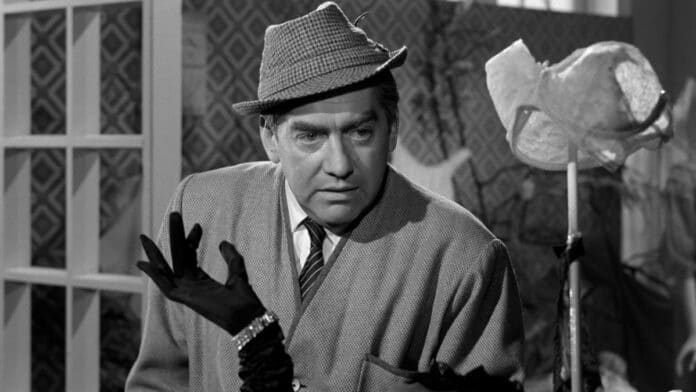

‘The Punch and Judy Man' is the last big-screen outing for Tony Hancock as a leading man. Released in 1963, only two years after ‘The Rebel', it has all of the hallmarks of a waning star.
It's a bleak film for any genre, let alone a comedy. It is filmed heavily on location in the distinctly unglamorous seaside town of Bognor Regis. In some of the scenes, it is raining heavily. The whole thing feels like a wet bank holiday weekend.

The premise is that Hancock's glamorous wife Delia (Sylvia Syms) is socially-climbing and wants them to attend the mayor's gala reception for a local dignitary. Hancock prefers spending time with his Punch and Judy assistant (Hugh Lloyd) and other social misfits and drop-outs who hang around on the beach, including the Sandman (John Le Mesurier). It's hard to figure out what you're meant to laugh at throughout this overdrawn and mean-spirited mess. It's even harder to fathom what point the film is seeking to make, or why its audience should care. Delia's aspirations to mix with the upper echelons is sneered at, but Hancock is deeply unhappy and unfulfilled putting on shows for ungrateful children. As a satire on the class system, it's juvenile at best.
Perhaps the most memorable moment is when Hancock takes a young boy, disappointed by the absence of the crocodile puppet from the Punch and Judy show, for an ice-cream. The assistant is kind to the boy but takes a dislike to Hancock as he serves them. It would raise eyebrows these days, but the brief friendship between child and overgrown child was intended perfectly innocently in the early 1960s. The boy doesn't reappear in the film, and the only purpose of the scene is to leave Hancock too full of ice-cream to want the dinner his wife has lovingly prepared for him. It draws out the childishness of Hancock's character: which is charming in young people but tiresome in adults who refuse to grow up.

With the meandering script, you can tell immediately through the dip in quality that this is post-Galton and Simpson Hancock. He unwisely dispensed with their services (after they had written ‘The Rebel' and all of his best TV scripts). They went on to create ‘Steptoe and Son' that stands up as a work of comedy genius to this day, whilst Hancock's sad final years provided ever-diminishing returns. If there is an appetite for the world-weariness, bitterness, cynicism and pointless, self-destructive rebellion that runs throughout ‘The Punch and Judy Man', it is likely to be niche.
The shame is that Hancock clearly was a talent who had a devoted following. There are many cultural tastes that my parents passed down to me and I generally adore everything British from the 1960s. Tony Hancock has always left me cold, and so too did his final starring film. The illustrious cast includes Sylvia Syms, who played Dirk Bogarde's wife in ‘Victim' and starred opposite John Mills in ‘Ice Cold in Alex'. There's also Welsh comedy actor Hugh Lloyd, who worked with Hancock a lot, but who was regularly partnered with Terry Scott (of ‘Terry and June' fame) in sitcoms. You can also find the dependable John Le Mesurier, best-remembered as the smooth Sergeant Wilson in ‘Dad's Army'. There's even a small role for ‘Game of Thrones' star Peter Vaughan.
I usually say that the presence of such illustrious cast members is enough on its own to recommend the film, especially on crisp black and white Blu-ray, but ‘The Punch and Judy Man' is one for the Tony Hancock die-hards, I suspect. Paul Merton contributes an extra feature to explain why ‘The Punch and Judy Man' isn't a comedy film. Part of its problem is that it doesn't really know what it is, or what point it's making. The film is released on Blu-ray concurrently with Hancock's 1961 vehicle, ‘The Rebel'.
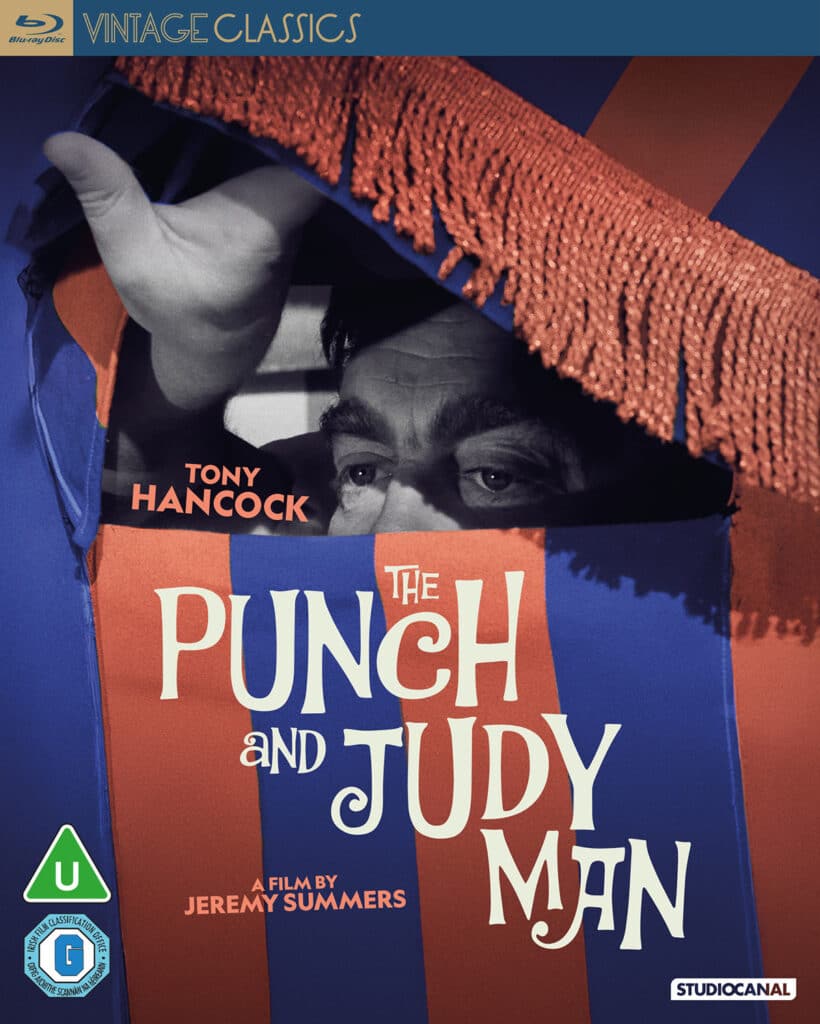
Cast: Tony Hancock, Sylvia Syms, Ronald Fraser, Barbara Murray, Hugh Lloyd, John Le Mesurier, Norman Bird, Peter Vaughan Writer: Phillip Oakes Director: Jeremy Summers Running time: 96 mins Released by: Studiocanal Release date: 3rd March 2025 Buy ‘The Punch and Judy Man'

