



Even if you don't read a lot of philosophy, and you aren't familiar with the worldviews of top thinkers from Socrates to Sartre, you'll find ‘The Happiness of Dogs' an accessible book. If you have ever loved and shared your life with a dog, then you'll derive a lot of pleasure from exploring Mark Rowland's latest title. I found myself nodding along in recognition of my dog's behaviour, finally seeing an explanation set out in front of me as to why dogs are the way they are, and especially why they are, all other things being equal, happier than people.
I've mentioned this premise to a few friends, and they sometimes baulk at the idea, even if they're dog people. But in ‘The Happiness of Dogs', Mark Rowlands sets out a persuasive case as to why a dog's life isn't merely a charmed one but a happier one. Along the way you learn how dogs see the world and how they think. Even when unpacking nuanced philosophical arguments (that I might not be able to later articulate), Rowlands is such a persuasive writer that he's a constant joy to read.
Most importantly, his analysis of dogs' psychologies, and his reminiscences about his own canine pets ring true. When Rowlands talks about his dog battling inner demons to choose to ignore his instinct for aggression, he justifies why he considers him more moral than the dog whose good behaviour comes naturally. After all, he has an additional struggle to overcome with his own conscience. I recognise this in my own reactive dog, whose instinct is always to bark and lunge at other dogs, but who has slowly learned to compartmentalise such behaviour to please her owners, and whose snarled lip melts away once she's called a good girl for not barking or pulling on the lead.
The opening chapters introduce readers to the character of Shadow, Rowlands' German Shepherd who has a propensity to chase iguanas along the canal. From this duty he derives sheer unadulterated joy. Not for Shadow the feeling of the Sisyphean drudgery as he repeats the same thankless task, but rather wide-eyed pleasure each time. I could instantly relate it to my own German Shepherd cross and her incessant need to chase, well, not iguanas in her case, but certainly pigeons and any rodent brave enough to venture into her territory. But why do dogs approach the same daily tasks with relish rather than weary resignation?
Rowlands unpacks his argument and explains how reflection is humanity's great curse and blessing. As he succinctly puts it, “We suffer anguish in the face of our freedom to choose and alienation in the face of our choices.” Explaining the difference between how a dog thinks and how humans think at the conclusion of a chapter, he says, “Dogs are creatures of commitment. But humans are creatures of doubt. Reflection has made us fractured, uneasy creatures, never quite at home in the world or even in our own skins.”
Beyond the quotations, the whole book is written in elegant, persuasive prose. Rowlands is a gifted writer and a talented communicator, bringing across his subject matter with consummate skill. If you have an interest in philosophy, then you will learn something about humanity's greatest thinkers along the way. Plato, Sartre, Aristotle and Wittgenstein are amongst those great minds whose ideas are expounded upon.
There are biblical concepts too, such as the meaning behind the story of the Garden of Eden in the Book of Genesis, when Adam and Eve lost their innocence. This theme is built upon in the final chapter, ‘Sometimes Toward Eden'. None of this is conveyed to the reader in the style of an academic lecture for undergraduates. Rather, Rowlands guides his readers through philosophers' big ideas, ensuring they are presented in a way that will engross and delight a wide range of readers. Whether or not his theses will cut the mustard with fellow philosophers and other serious thinkers, I could not say. There's a further reading section at the back for those with a philosophical bent who wish to delve deeper into the arguments set out in ‘The Happiness of Dogs'.
Finally, there are some sections that long-standing dog enthusiasts will understand and relate to only too well – the final days of an old, sick dog, and the manner in which they approach the inevitability of death. One story in particular, and wishing to avoid spoilers precludes details, is immensely moving as the dog seeks the opportunity to play in the garden, holding death at bay to do what he had always loved, just one more time.
If we learned to live and see life as dogs do, the world would be a happier place. It's an idea many dog owners have long believed but may not have been able to set out why, beyond trusting their instincts to its inherent truth. ‘The Happiness of Dogs' finally takes that idea and runs with it. The author does the hard work of thinking through the proposition and explaining why it's premise is sound. The journey the reader goes on with Rowlands and his loveable assortment of dogs is at once thought-provoking, entertaining and compelling.
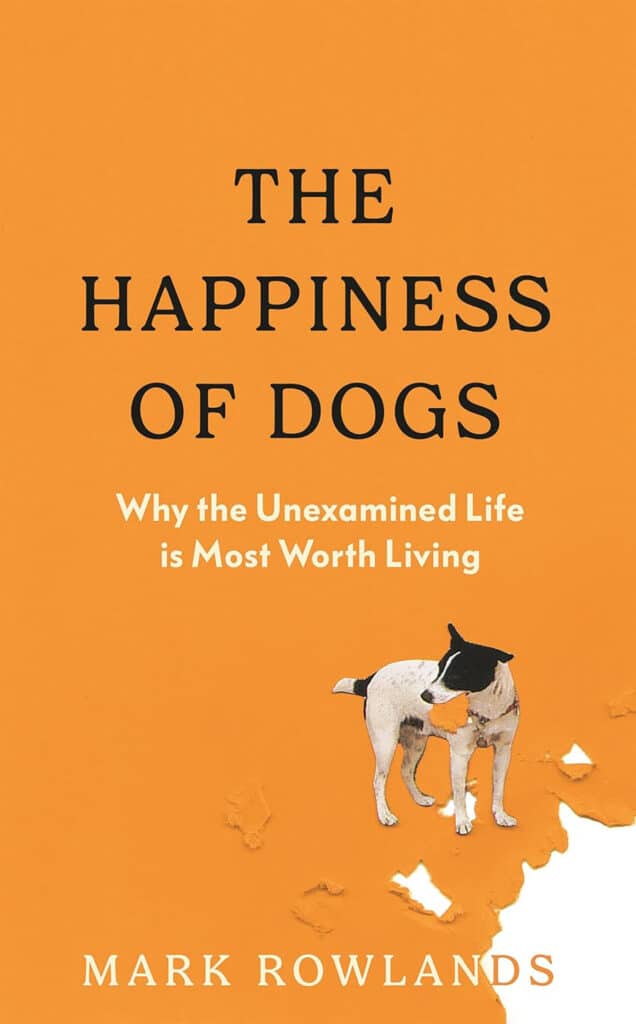
Publisher: Granta Books Publication date: 12 September 2024 Buy ‘The Happiness of Dogs'

