



Young Egyptian man Nabil (Ryan Ali) moves to Toronto with his father Iskander (Dani Jazzar) following the death of his mother. Deciding that he wants to honour his mother’s legacy through finishing some of her fashion designs, Nabil is drawn to the drag scene where he meets Malibu (Alexandra Billings). Under her mentorship, Nabil starts to realise that it might be time for him to start living his authentic life but the scene he’s become a part of is under threat of demolition by his father, who is leading a project to gentrify the area.
‘Queen Tut’ would fit neatly into the coming-of-age category, and it’s the kind of film that LGBTQ+ cinema has built itself on. Through central character Nabil, the audience is witnessing the awakening of a young man who has been forced to suppress his sexuality due to where he was born and the attitudes of his father. Alongside that journey of self-discovery, Nabil is also dealing with great loss as he struggles to come to terms with the death of his mother. He has a difficult relationship with his father, who is happy to show disapproval over anything and everything that doesn’t fit in with his narrow view of life.
Nabil’s journey really begins when he meets Malibu. The fiery Grand Dame is a force of nature, and she becomes the mother figure that Nabil so desperately wishes he had. As he starts to continue his mother’s work, Nabil is drawn to drag himself and dips his toe in the water. All the while a romance is on the cards with the handsome Morcos (Mostafa Shaker) and Nabil tries his best to hide what he’s doing from his father. Of course, that can’t last forever and the main conflict in the film is drawn from Nabil’s relationship with Iskander.
It's not just Nabil though that’s affected by Iskander. The patriarch’s determination to gentrify the LGBTQ+ safe space that Malibu resides over, causes plenty of upset as Malibu begins to reflect on the hard-fought journey she’s taken to get to where she is today. The film touches upon the transgender struggle, while never fully diving too deeply into it. Malibu’s sense of impending loss, coupled with Nabil’s grief becomes a driving theme for the film.

Alexandra Billings is undoubtedly the star of ‘Queen Tut’. She gives a strong performance and it’s her scenes that make the film as good as it is. Whether she’s doling out advice to the hapless Nabil or performing on stage to her community, Billings establishes Malibu as a strong woman with an unshakeable understanding of who she is. Where the film perhaps falters slightly is with Ryan Ali, whose performance is adequate but at times quite wooden. He struggles to get under the skin of his character and at times his monotone delivery of the dialogue misses the emotional undercurrent that the character is trying to portray.
Arriving during Pride Month, ‘Queen Tut’ will likely find a ready and willing audience. It’s a solid film that touches upon serious issues that affect the LGBTQ+ community but it never goes as deep as I wanted it to. Instead the film chooses to mostly keep things light, which is a shame as the characters here have more depth than they’re able to show. As a showcase for Alexandra Billings, ‘Queen Tut’ is superb but with a little more care and attention, this could have been a much stronger film with a poignant message.
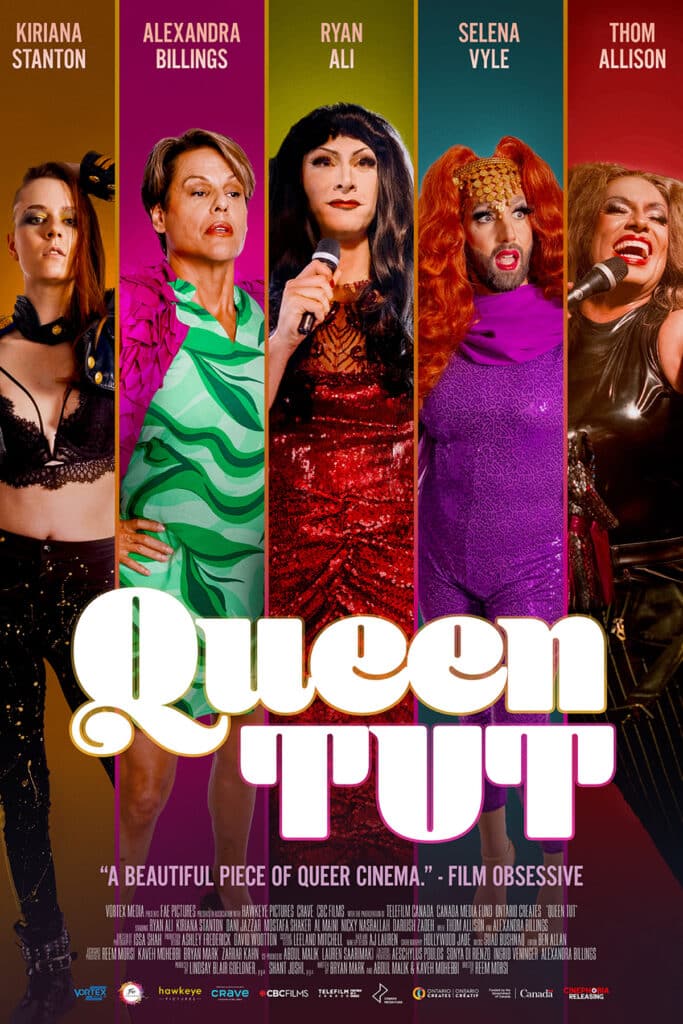
Cast: Alexandra Billings, Ryan Ali, Kiriana Stanton, Mostafa Shaker, Dani Jazzar Director: Reem Morsi Writers: Abdul Malik, Bryan Mark and Kaveh Mohebbi Certificate: Unrated Duration: 91 mins Released by: Cinephobia Releasing Release date: 11th June 2024

 moves to Toronto with his father Iskander (Dani Jazzar) following the death of his mother.)