

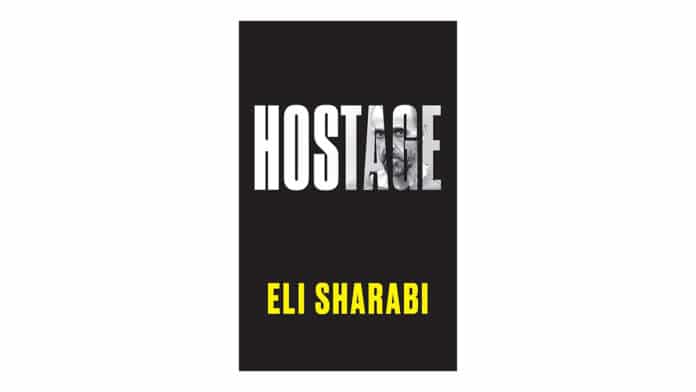

Two years on from the horrific attacks on Israel by terrorist organisation Hamas, and all of the living hostages have finally been returned from Gaza. The deadliest attack on the Jewish people since the Holocaust, October 7th 2023 saw over 1,200 people murdered and 251 taken hostage. One of the hostages that survived the ordeal is Eli Sharabi, a resident of Kibbutz Be’eri who was kidnapped by Hamas and held for 491 days before eventually being released as a part of a deal on 8th February 2025.
‘Hostage’ is the first account from a hostage of their ordeal at the hands of Hamas. Sharabi has become well-known across the world since his kidnapping and subsequent release, and he’s one of the most recognisable of the hostages. Opening ‘Hostage’ for the first time, you might expect a bitter and angry account of Sharabi’s ordeal but that’s not what you get. During his time in captivity, Sharabi held onto the hope that his wife Lianne and daughters Noiya and Yahel had survived, and he hoped his brother Yossi, who was also kidnapped, would be released by Hamas. Devastatingly, Sharabi’s wife and children were murdered by Hamas and Yossi died while being held hostage, which Hamas blamed on strikes from the IDF.
Sharabi’s account is nothing short of extraordinary. In some ways it was nothing like I was expecting and in others, it was just as brutal and inhuman as I’d anticipated. Starting from the moment he was kidnapped, Sharabi tells his story in detail describing how he was held in a civilian home initially before being forced underground to live in Hamas’ tunnel system. Throughout his ordeal he met other hostages, including Alon Ohel who has only recently been released, that he formed close bonds with. The sense of complete disorientation he, and the other hostages felt, rises from every page of ‘Hostage’ and even though you know the outcome, it doesn’t make the book any easier to read.
One of the most surprisingly aspects of ‘Hostage’ is that Sharabi doesn’t share his story with anger. He talks about the various Hamas militants that he came into contact with, all of which had nicknames such as The Circle and The Mask, and details the uneasy bond they were forced to form. Sharabi knew he needed to keep his captors on side, and his captors knew they had to keep their hostages alive otherwise they would lose their bargaining chip. As you’d expect, that relationship was anything but easy with Hamas being unpredictable; one minute they’re slipping Sharabi and his fellow hostages extra food, the next they are beating them and forcing them to live in squalid conditions.
Sharabi shows incredible humanity, trying to understand the situation he was in from all viewpoints. He understands that Hamas has indoctrinated and warped the minds of his captors, but he never loses sight that they too are humans with stories and families. Most people would wish the unthinkable on their captors, but not Sharabi. The story he tells is one of remarkable resilience, driven by a strong desire to live and a strength that saw him rallying the other hostages to help them survive their ordeal. No matter how badly he was treated, Sharabi was there for the other hostages, reminding them of their reasons to fight for survival and never allowing them to believe that their stories would end in death.
‘Hostage’ has some very difficult parts. The entire book is hard to read, knowing that Sharabi and the other hostages endured what they did. Dread fills you as you wait for him to find out the fate of his family, and I felt sick to my stomach reading his recollections of being starved and abused, as part of Hamas’ sick game. Sharabi also gives insight, as much as he can, into how the society in Gaza continued to operate in spite of the retaliatory attacks from Israel. He paints a much different picture than the mainstream media would like you to believe.
By the end of ‘Hostage’, I was in tears. My emotions were all over the place. I felt a sense of relief for Sharabi, and the other hostages who were released, and a huge admiration for a man who has gone through the worst things a person can go through, and come out the other side with a strong sense of purpose and drive. Israel is one of the only societies, if not the only one, that has citizens as strong as Sharabi. I can’t imagine had UK citizens gone through this ordeal, that the outcome would be similar. ‘Hostage’ is one of the year’s must-read books and Sharabi is incredibly brave for telling his story.
Publisher: Swift Release date: 9th October 2025 Buy ‘Hostage’ now
This article contains an affiliate link. Purchases through this link may result in us earning a commission.

