

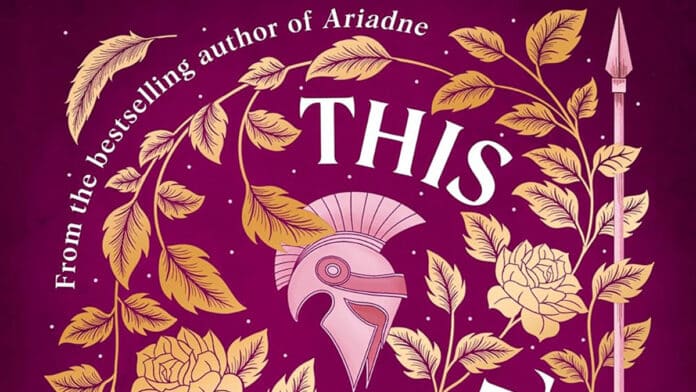

What happens when Aphrodite, the goddess of love, and Ares, the god of war, fall in love with one another? That is the intriguing premise of ‘This Immortal Heart', the latest novel from Jennifer Saint reimagining Greek mythology for a modern readership. Her previous titles include the bestsellers ‘Ariadne', ‘Elektra' and ‘Atalanta'.
The novel is told from Aphrodite's perspective. She is our guide into the inner sanctum of Mount Olympus, home to the gods of the Ancient Greeks. Although Saint introduces readers to the colourful cast of immortal inhabitants, I'd say it's probably best to at least have some prior knowledge of Greek mythology to appreciate the world of the story.
The novel is not strongly plot-driven, but more of a sweeping personal narrative of Aphrodite's interactions with human beings and her complex relationships with other immortals. One word of caution is that ‘This Immortal Heart' won't have universal appeal. For those who love an intricate character study and well-developed themes, in this instance, the nature of love, mortality and warfare, the book may well prove compelling. For readers who prefer a well-structured narrative with a steady progression from chapter to chapter, this title may be a frustrating read. The prologue is a case in point. It recounts the birth of Aphrodite from the sea foam. Saint's powers of description in bringing to life an ancient story are impressive. The act of divine creation leaves an impression on the reader, but it doesn't anchor their expectations of the story to come.
The first few chapters outline Aphrodite's involvement in the lives of mortals. She hopes to protect the ferryman Phaon from interventions by other gods, but he ends up lying dead at her feet. This moment of loss initially sets Aphrodite against Ares, the god of war, but their mutual attraction is evident from the earliest pages. The reader has not come to know the character of Phaon well, so his death matters more in how it influences Aphrodite's interactions with other Olympians.
One danger of putting the gods centre stage is the necessity it creates to humanise them, providing them with personalities and motivations. This leads to moments in ‘This Immortal Heart' where council meetings are assembled by Zeus, the king of the gods. Although this renders the gods more relatable, it also reduces the inner workings of Mount Olympus to bureaucratic squabbles. When immortals argue with one another, it's not immediately apparent what the stakes are. The Olympian court technique is repeated later on when Poseidon, god of the sea, takes exception to the death of one of his sons. There is a grey area too in terms of the gods powers over the lives of mortals, which is never fully satisfied. This, perhaps, is a problem of foregrounding characters who are essentially, by their immortal natures, unknowable. By the end of the book, I was not convinced that the mechanics of the divine world had been firmly established by the author.
The strength of the novel, and where keen readers of romance will be satisfied, is in the emotional and intellectual depth given particularly to Aphrodite, but to Ares, the object of her affections too. He is certainly depicted as a more fully-rounded being than simply a killer who revels in chaos, and their scenes of tenderness are memorable. I also enjoyed the weaving in of many timeless stories from Greek mythology with episodes featuring Hephaestus, Dionysus and others. Readers who enjoy immersive mythology will find much to enjoy in Saint's elegant and appealing prose. But those looking for a tighter narrative structure may find the descriptions overly-long, with pace usually sacrificed to explore themes.
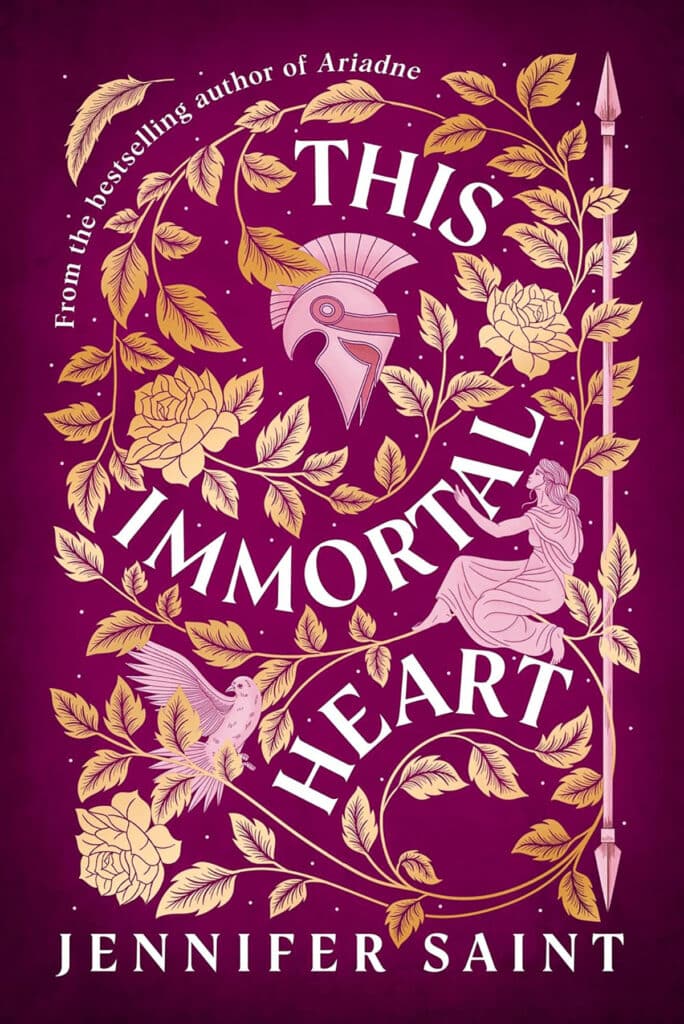
Publisher: Viking Books Publication date: 4th June 2026 Buy ‘This Immortal Heart'
This article contains an affiliate link. Purchases through this link may result in us earning a commission.

