

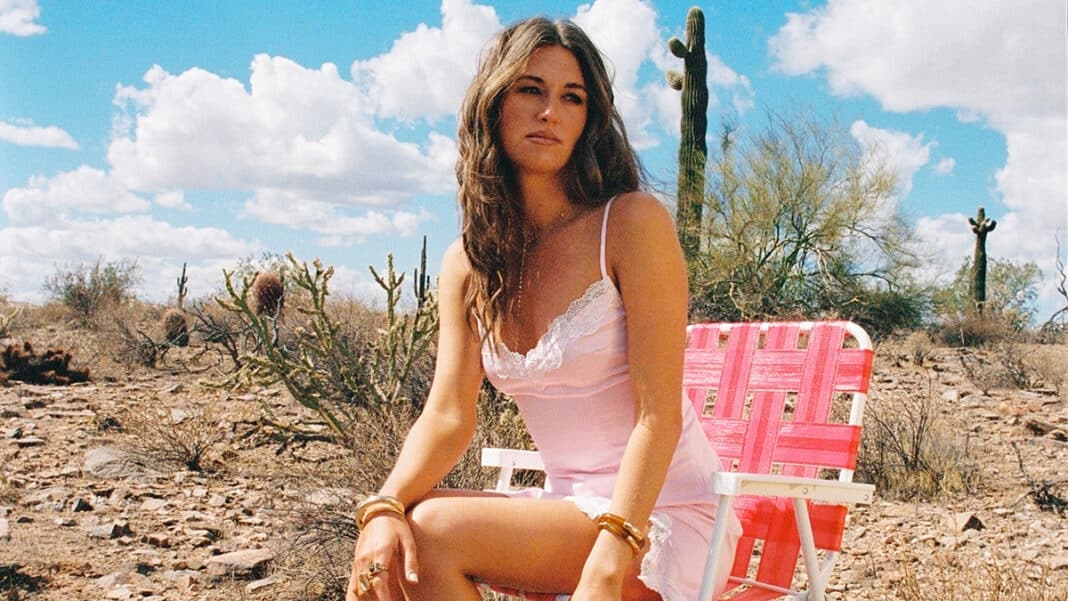

Country singer Lauren Watkins took to Instagram over Christmas and declared that she missed Bro Country. It was a bold take seemingly flying in the face of current accepted genre expectations but does she have a point? Lots of artists, like ERNEST, HARDY and Chase Rice (himself now, ironically, a changed artist from back when he was one of Bro Country's main ambassadors) replied to her with positive comments. Watch the video below:
The rise of Bro Country in the early 2010s marked one of the most commercially dominant and culturally divisive periods in modern country music. Emerging in the wake of country’s late-2000s pop crossover boom, Bro Country fused slick, hip-hop-influenced production with small-town imagery and stadium-ready hooks. It was music built for mass consumption: loud, catchy, and instantly recognisable. While the term itself was initially coined pejoratively by critics, the sound rapidly took over country radio, reshaping the genre’s commercial centre of gravity for much of the decade.
At its core, Bro Country was defined less by geography and more by attitude. Songs revolved around a familiar checklist: lifted trucks, cut-off jeans, cold beer, tailgates, back roads, and romanticised Southern masculinity. Lyrically simple and chorus-heavy, the music borrowed rhythmic cadences from hip-hop and EDM while maintaining country signifiers like banjos and twangy guitars. Producers such as Joey Moi helped streamline the sound into a radio-dominant formula, making Bro Country instantly accessible to younger listeners and suburban audiences far beyond the genre’s traditional base.
The movement’s commercial breakthrough came via artists like Florida Georgia Line, whose 2012 smash ‘Cruise' became a cultural juggernaut, followed closely by Luke Bryan, Jason Aldean, Brantley Gilbert and Cole Swindell. These artists sold out arenas, shattered streaming records, and dominated Billboard’s Country Airplay chart. For labels, Bro Country was a gold rush — a repeatable, scalable sound that delivered hits with remarkable consistency. Country festivals grew larger, crowds skewed younger, and the genre’s mainstream visibility surged as a result.
Yet Bro Country’s dominance also sparked fierce backlash. Critics accused it of flattening country music into a caricature, sidelining storytelling, emotional depth, and traditional musicianship. Female representation on country radio sharply declined during the movement’s peak, prompting industry-wide debates about gender imbalance. Artists like Kacey Musgraves, Miranda Lambert, and Eric Church emerged as counterweights, offering more nuanced songwriting that challenged Bro Country’s lyrical tropes without fully rejecting modern production values.
By the mid-to-late 2010s, the genre began to evolve. The Bro Country template didn’t disappear, but it softened and diversified. Artists like Thomas Rhett and Sam Hunt expanded the sound into pop-leaning, introspective territory, while others pivoted toward heartland storytelling or neo-traditionalism. At the same time, Americana, Texas country, and singer-songwriter movements gained renewed attention, signalling fatigue with the genre’s most exaggerated excesses.
In hindsight, Bro Country stands as a pivotal chapter in country music history — a movement that modernised the genre’s sonic palette, expanded its audience, and forced long-overdue conversations about identity and representation. While its clichés are often mocked today, its impact is undeniable. Bro Country didn’t just dominate the 2010s; it permanently altered how country music is marketed, produced, and consumed — for better and for worse. Maybe Lauren is right and it is now time for Bro Country Season 2? After all, there are rumours that Brian and Tyler have made friends after the FGL spilt – surely we won't see out 2026 without the architects of the whole movement announcing they are back and playing live again?

