


Stand up comedians are the heart of their material. Their persona, their attitude – no matter what the subject – is what helps sell jokes to an audience. As in the worlds of Literature, TV and Film, we first have to care about a ‘character' to be moved by their experience. As such, truth becomes a commodity onstage. Sure, well-crafted one liners and silly skits bring joy in the moment but for real emotional punch to land as well as a punchline, many stand ups mine their own life experiences to deliver authentic material that really hooks a crowd.
Treading the fine line between tragedy and comedy is nothing new but increasingly – as the popularity of ‘true stories’ such as Baby Reindeer and the taste for ‘dramedies’ over sitcoms, like Fleabag, has proven – airing personal difficulties in comedy has become desirable. But at what cost to the performer’s own mental health?
With the Edinburgh Fringe set to start this August, several comedians taking shows to the festival shared with me how they approach tough topics and offer advice to newer acts starting out who want to discuss big issues but take care of themselves and their crowds.
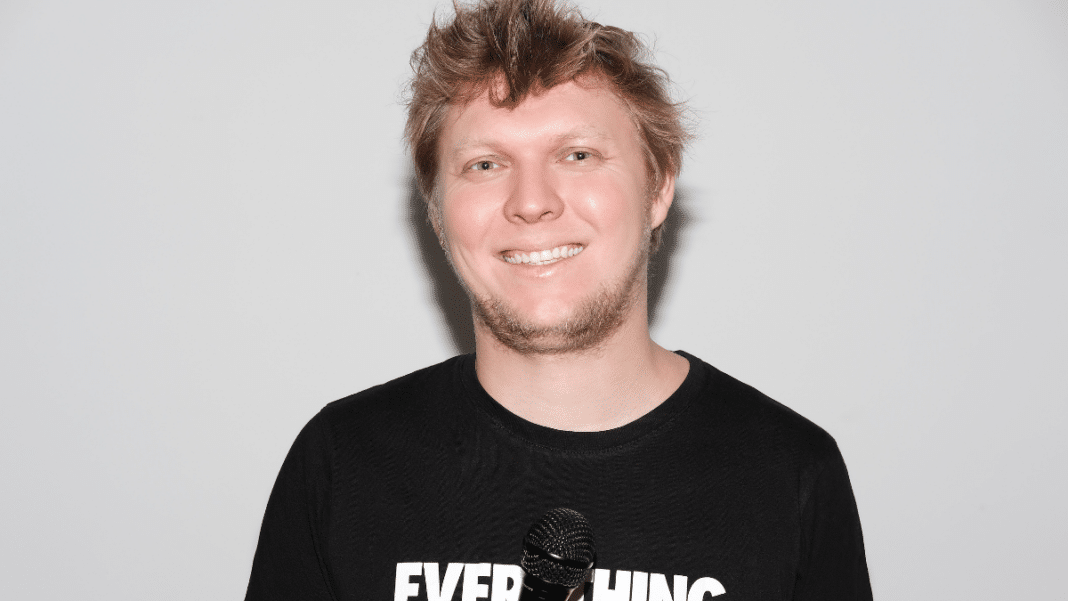
Dima Watermelon is a Ukrainian-born stand up with his debut show ‘Ukrainian Dream’ (Laughing Horse, The Raging Bull, 17:15). As the war in Ukraine continues, Dima uses comedy to hold global politics to account because laughter, he says, is the way he copes with everything happening in the world.
Dima says, “It can be cathartic to write about difficult events. Jokes about the war in Ukraine were a way to direct my anger and frustration regarding the whole situation. Especially in the beginning. Now I have a lot of Ukrainians coming to my shows and the latest feedback I received is that some jokes ‘hurt’ but they get it intellectually. I feel that if you can laugh about something, you can deal with it. To ‘laugh it off’ can be therapeutic. As Charlie Chaplin put it: ‘Life is a tragedy when seen in close-up, but a comedy in long-shot.’
“In my comedy I'm trying to find answers for myself through writing, be it my opinion about the state of the world or some particular issue, problems in my marriage and relationships with friends/family, or my life in general. The more you open up and share personal stuff, the more relatable you are for people, because everyone is going through the same stuff.
“My advice for newer comics: be patient, some topics are easier than others, try some stuff, if it doesn't work, come back to it in half a year, usually these bits take time and skill to pull off, but the reward is worth it.”
Grief is a universal subject that many comedians choose to spotlight. Clown act Julia VanderVeen’s debut hour My Grandmother’s Eyepatch (ZOO Venues, Playground 1, 12:45pm) is an off-the-wall show about a lovable idiot holding a memorial service for a long-deceased family member. VanderVeen leads the audience through wild stages of grief as she attempts to honour her grandmother.
Julia says: “Being vulnerable and risking something makes for great storytelling and great theatre. It makes the audience feel closer to the performer because the performer is risking being authentic and letting their vulnerability and humanity show. This can get tricky, however, when a performer doesn't know their limits with their personal trauma, and especially when they are addressing the audience directly, leading the audience to feel like they have to take care of the performer.
“When the audience enters the theatre, we as performers have an unspoken contract with them. It is our job as theatre artists to make them believe we are crying, that we are breaking down, that we are in crisis, but what makes it art and not someone screaming at the train station is that the moments have been crafted intentionally for the journey we are taking the audience on. And if we do not know our limits as performers and suddenly the audience feels obligated to take care of us, that relationship gets perverted.
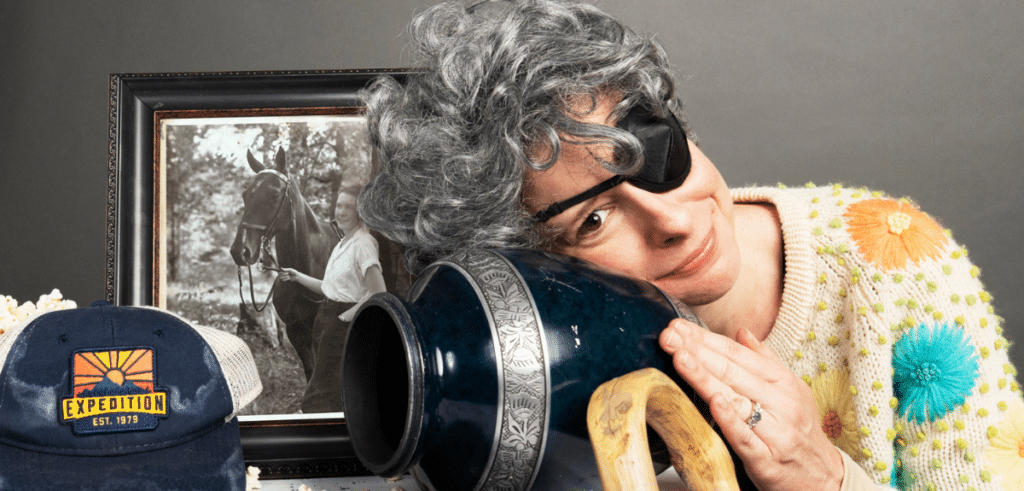
“My show is a memorial service for my long dead grandmother and one theme in the show is grief, with a focus on our limited time on earth. I invite the audience to participate in their own experience of grief with me, but it is all in service to the game of theatre. When I have a breakdown in the show, I am in control of it. We should not be asking the audience to take care of us, they should safely be able to go on the journey with us.”
Comedian Rich Spalding’s father died ten years ago and Rich has since channelled his grief into writing jokes about death. His debut hour Gather Your Skeletons (Pleasance Courtyard, Cellar, 21:15) is not directly about his father’s death, it explores fear and boredom, legacy and regret and the universal experience of working for a living and dying sometime after.
Rich says: “Ever since I lost my dad I've been fascinated by death. The more you know about something that has affected your life, the less power over you it has. But it took me a while to find a way to talk about my dad onstage. The natural instinct for a comic is to make it into a laugh, but delivering the news that my dad's dead by way of a punchline tended to draw more gasps than laughter, so I had to change tack. You have to reassure an audience that you're OK with them laughing, before they feel comfortable laughing.
“My opening joke, for a long time, had dead parents as a punchline. And it worked, because it was very obviously a joke. But once it becomes clear that what you're discussing is true, it can be hard to convince an audience that you're fine with them laughing. You have to ease them in. The ‘Dead Dad Show' is an Edinburgh cliche, but there's a reason why comedians save that stuff for hour long shows. Audiences have more time to get to know you, to trust and invest in you. And you, as a comedian, have more time to explore the subject without feeling like you're selling someone's memory for a cheap laugh. You can do them justice.”
The ‘Dead Dad Show’ may be an Edinburgh trope yet, year after year, numerous accolades are heaped upon those brave enough to share their stories. It’s impressive when we are moved to tears and laughter in a comedy hour – human experience, good and bad, resonates deeply. And we all feel better for a good cry and a good laugh.
Simon David is returning to Fringe 2024 with a limited run of his critically acclaimed Dead Dad Show (Underbelly Bristo Square, The Dairy Room, 21:20), through the course of which he lampoons the very notion of him performing such an hour via various theatrical genres.
Simon says: “Shortly after my dad was diagnosed with terminal cancer, he decided to write and perform a show reckoning with how to spend his final few months.
“I was interested in sharing my dad’s show but entirely against a ‘woe is me’ hour so, collaborating with my director Chris Larner, we dug into the reason why most comedians do these kinds of shows: awards. So I’m scrabbling around performing multiple dead dad shows – a musical, a play, a Netflix special, a contemporary dance – to nab an Olivier nomination but at its heart we’re amplifying my Dad’s message of grabbing life by the reins.
“I’m not working through my grief on stage but it is intensely gratifying getting up onstage and acting a fool which is my way of following my Dad’s advice.
“I try and protect my own mental health as best I can – audiences are often eager to tell me their personal stories of grief after the show. It’s touching to know they connected with the performance but I can’t internalise their stories. So I’m always thankful and polite but put up a mental barrier as to not take their pain onboard. After one performance, a woman told me she had been diagnosed with terminal brain cancer with mere months to live which stopped me in my tracks.
“My advice to newer comics wanting to tackle ‘big’ subjects is: don’t try and heal your pain through work you’re presenting in front of a live audience. The writing and rehearsal process may be cathartic but people have booked tickets for a good time, not to witness a mental breakdown. Present work you can robustly perform every night.”
Difficult jobs are also explored at the Fringe and this August Ed Patrick reprises his show Catch Your Breath (The Stand, Stand 3, 15:30) sharing stories from his role as an anaesthetist. Ed tackles the realities of becoming a junior doctor, the NHS and the pitfalls of modern medicine.
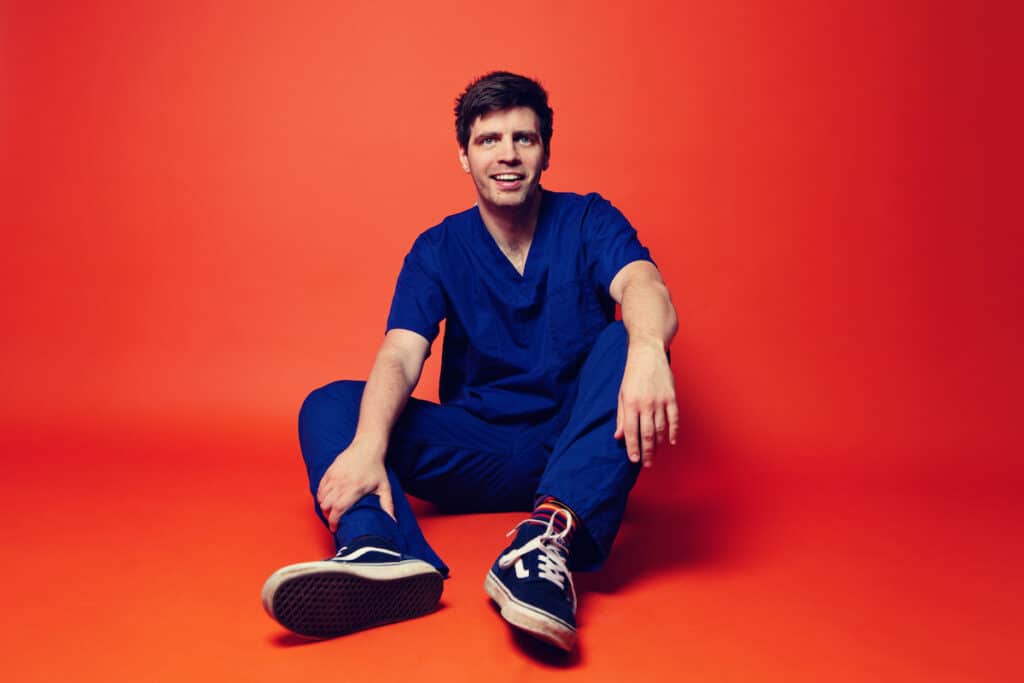
On performers caring for their mental health during Fringe, Ed says: “Less is more. I book a day or two off, take in the festival or escape outside the city. Last year I came up for a half run and had the best time ever, and I didn’t get sick for the first time. This year I am doing the first half of the Fringe. There are no rules, do what you want to do and don’t get sucked in by the hype. Also come see my show, if nothing else you get to check in with a doctor.”
And then there’s the day-to-day challenges many women of a certain age are expected to just take on their recently plucked chins. Comedian Louise Leigh’s second hour Louise Leigh Distracted (Just The Tonic Cabaret Voltaire, The Common Room, 15:30) explores navigating real world problems such as menopause and raising teenagers with very real distractions such as deciding whether warm nipples are ‘boring'.
Louise says: “There’s so much humour in recognizing the ways we are all flawed, and in the shared struggles of being in the trenches of whatever stage of life you’re at. You can’t get to the humour unless you’re prepared to say the truth of your life out loud, and that means dealing with a bit of shame. In fact, if there’s ever a bit where I think “god, I don’t know if I can say that, it’s a bit embarrassing”, that’s a really good signal to me that I *should* say it. After all, there’s bound to be someone else out there with the same problem and I really want to release them from it. By releasing them, I release myself (not a euphemism).
“My advice for comics starting out is basically a huge caveat to the above. It’s one thing to take the worst bits of your week and wang them about in a public place, but be more careful with the worst bits of your life. Think about why you’re doing it. Is it to sift through your own feelings about it? That’s for therapy. Comedy isn’t therapy; if you haven’t resolved how you feel about something, or if you’re still in the middle of it, the audience will just worry about you and worried people don’t laugh.
“If you’re going to talk about deep stuff on stage, you need to be prepared. And treat yourself with tenderness. You’re more than your comedy and you’re a precious and wonderful thing worth protecting.”
Then there’s the evergreen topic romance. Comedian Ollie Horn is in his early thirties and is single. His show Comedy for Toxic People (and their friends) (Hoots @ Potterrow, 21:00) grapples with the dating scene, relationships and the big C (commitment).
Ollie says, “By being predisposed to taking a solo hour of comedy to the Fringe, you’re already irreparably odd, and it would be weird if you felt ‘normal’ during the month, so don’t optimise for feeling that way – lean into the chaos and feel all the emotions the festival throws your way.
“And keep perspective: four weeks are a tiny part of what will be a very long career, and you’ll regret not taking the opportunity to be sillier, more daring, and breaking the rules while you can. The only thing that matters is the enjoyment of your audience, so give them as much of yourself as possible.”
Then there are topics about which everyone seems to have a strong opinion, even if it does not directly affect them. Alex Franklin’s third Fringe hour Gurl Code (Underbelly Cowgate, Delhi Belly, 20:25) is a simultaneously ludicrous and heartfelt exploration of her journey to achieving trans joy. Navigating personal truth from a unique perspective can hugely help inform a crowd – but it can come with big risks to a performer’s well being.
Alex says, “I don’t think every experience would be cathartic to express, but in a general sense, being trans is something that I’ve had to hide all my life; finally being able to talk about it in a public setting feels like an act of liberation. I remember being so afraid about mentioning it to anyone, to the point where I came up with various societal escape plans in case anyone found out; some kind of silly like running away to the mountains, some much darker. To be able to stand on a stage and be honest and happy and for people to react positively to that is so healing.

“It is about showing your vulnerability and for many people that resonates, and at least for other trans / genderqueer people, I think many of us share a common trauma, and British media and politicians have not been kind to trans people the past few years, to put it lightly. The show I’ve been working on hopefully acts as an antithesis to this, focusing on trans joy, with a trans perspective.
“Having said that, I think even cis people resonate with the show simply as a search for identity, something that we’ve all had to go through at some point in our lives. And I think (hopefully!) that the connection and story at the heart of it allows cis people to understand trans people on a more human level. And I think this applies to vulnerability in general; in a world of detachment where we’re encouraged to put up barriers and present a false societal image, to acknowledge any sort of suppressed emotion is something that I think many people resonate with.”
The Edinburgh Festival Fringe runs 2nd – 26th August 2024. To browse the full programme and book tickets visit: https://tickets.edfringe.com/

