

After a chaotic two-year hiatus, Tom and I settle on meeting for luncheon. My co-conspirator and I have written comedy shows together and worked on a podcast. There's usually a project on the go. But every chance to meet up has to have a theme and take us somewhere new. Usually there's a connection to a shared obsession.
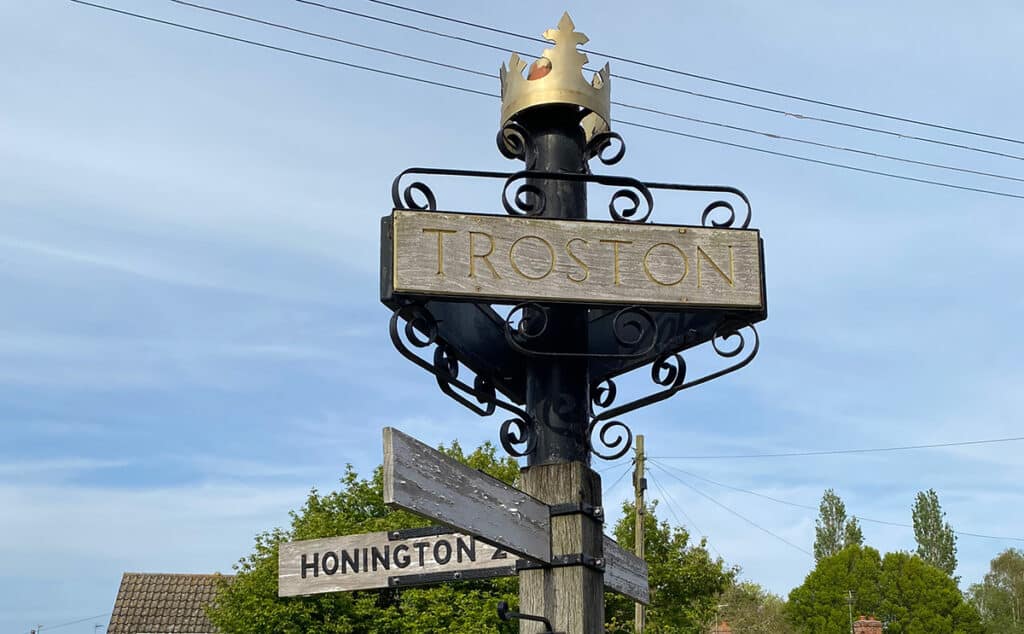
“How about Honington in Suffolk?” I suggest.
“Very specific. Why?”
“We could visit the grave of Simon Cadell.”
Tom is initially unconvinced. Cadell is my obsession, not his. But a clip from a 1982 episode of ‘Give Us A Clue' wins him over. In it, Cadell performs ‘Riders of the Purple Sage' with increasingly frantic brilliance while Lionel Blair, Bernie Winters and Jeffrey Holland flounder hopelessly. As the clock runs down, the answer is finally pieced together and Cadell collapses into his chair to thunderous and well-earned applause. Michael Aspel jokes that he thought Cadell would be the first contestant to die on stage. Cadell wittily replies that it would not be the first time.
That brief sequence encapsulates what made Cadell so memorable: the quick wit, nervous energy, fragility and intensity, and the off-centred physicality that made him unlike anyone else on British television.
My renewed fascination with Cadell began after revisiting ‘Hi-De-Hi!' (see my feature on top six ‘Hi-De-Hi!' episodes). Watching the series again, I realised just how extraordinary the ensemble cast was, but my attention was always drawn back to Cadell’s entertainments manager Jeffrey Fairbrother. Though only twenty-nine when he took the role, Cadell perfectly embodied the tweed-clad academic hopelessly out of place amid the changing Britain at the dawn of the 1960s.
Fairbrother’s awkwardness around figures like the unscrupulous Ted Bovis (Paul Shane) created much of the sitcom’s humour, but in real life, Cadell was old-fashioned, turning up to rehearsals suited and formal while others dressed casually. He preferred fine wines and classical music to rock and roll. For those of us instinctively suspicious of modernity, there is something deeply endearing about that quality.
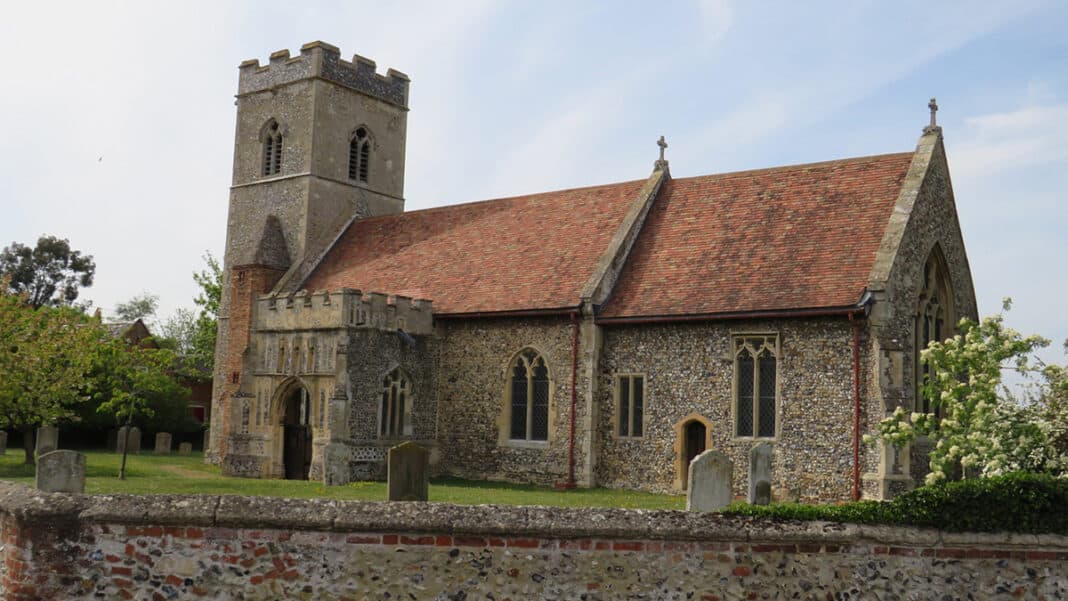
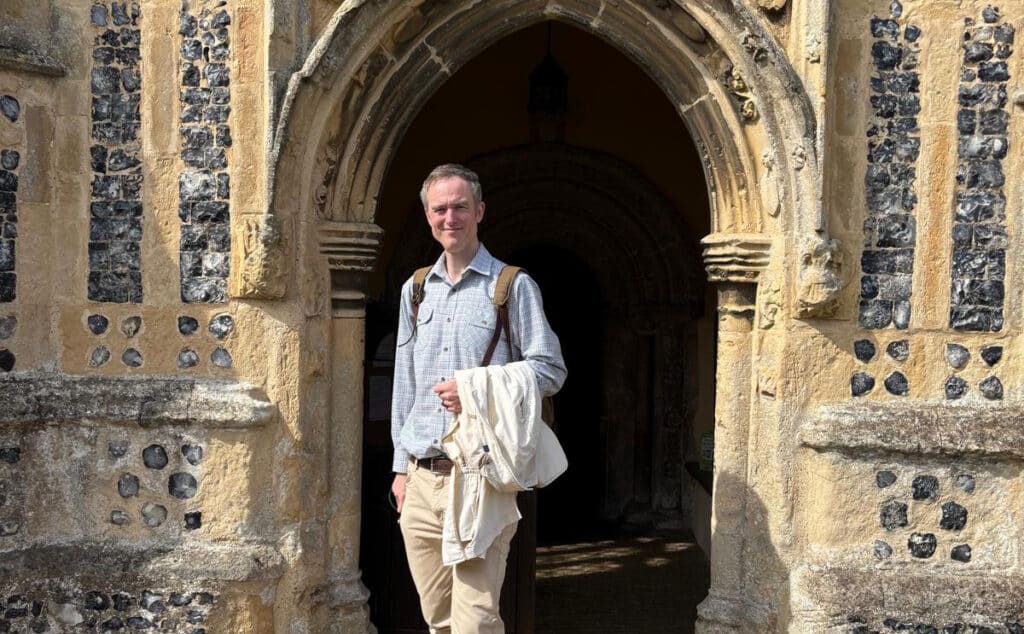
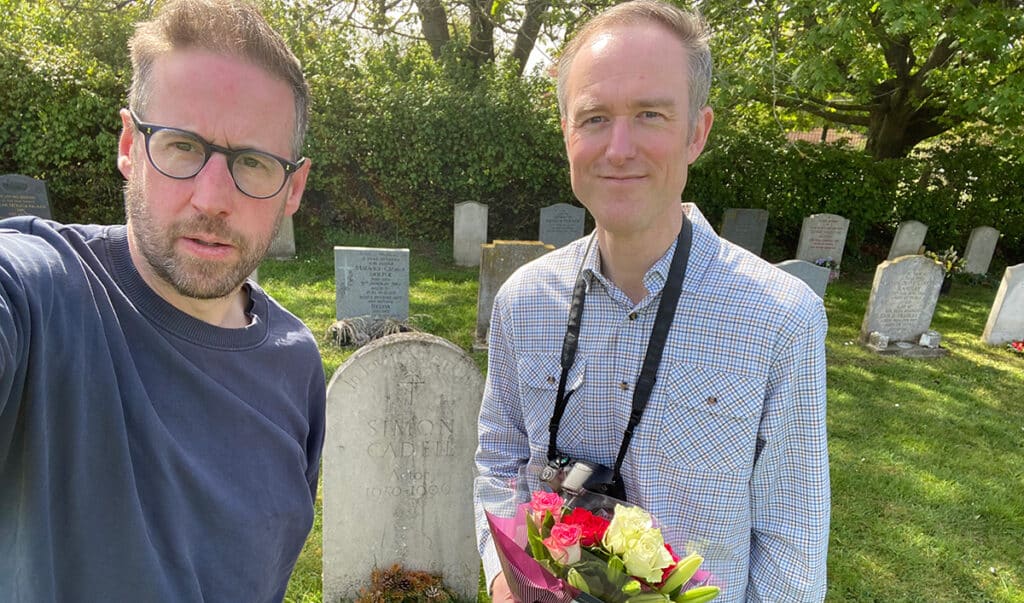
Tom and I make our way through the Suffolk countryside towards Honington. After lunch near Bury St Edmunds, we stop to buy flowers before driving on to All Saints Church. Dating back to the Middle Ages, it stands quietly at the heart of the village. There is nobody else around as we walk through the graveyard. I remember reading how, in January 1993, Cadell suffered a massive heart attack while performing a recital with Joanna Lumley. Triple heart bypass surgery followed. He was only forty-two.
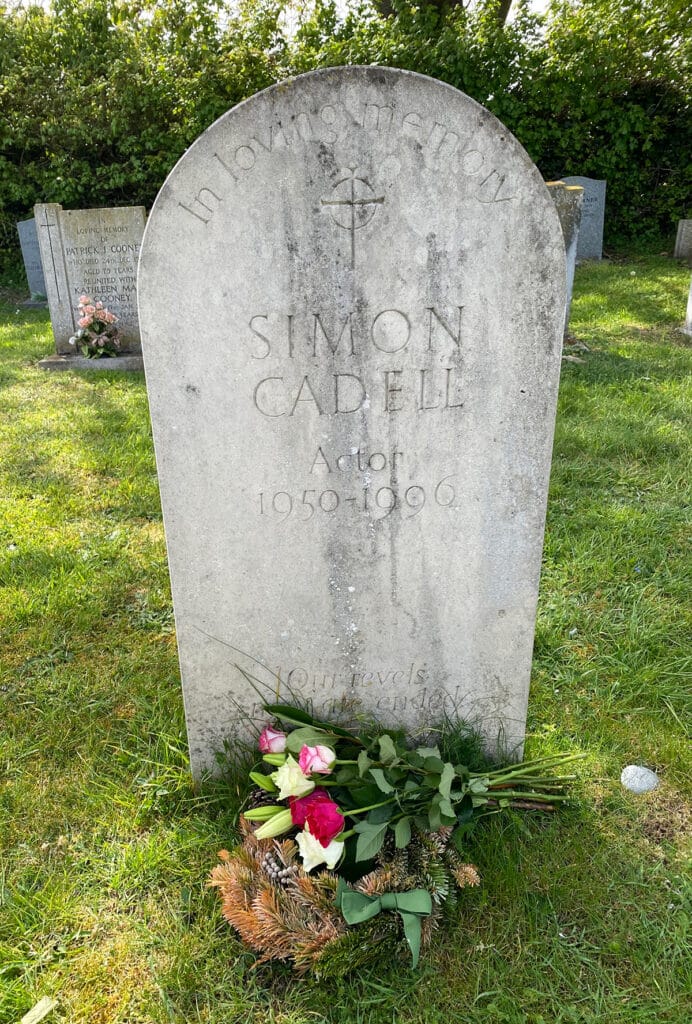
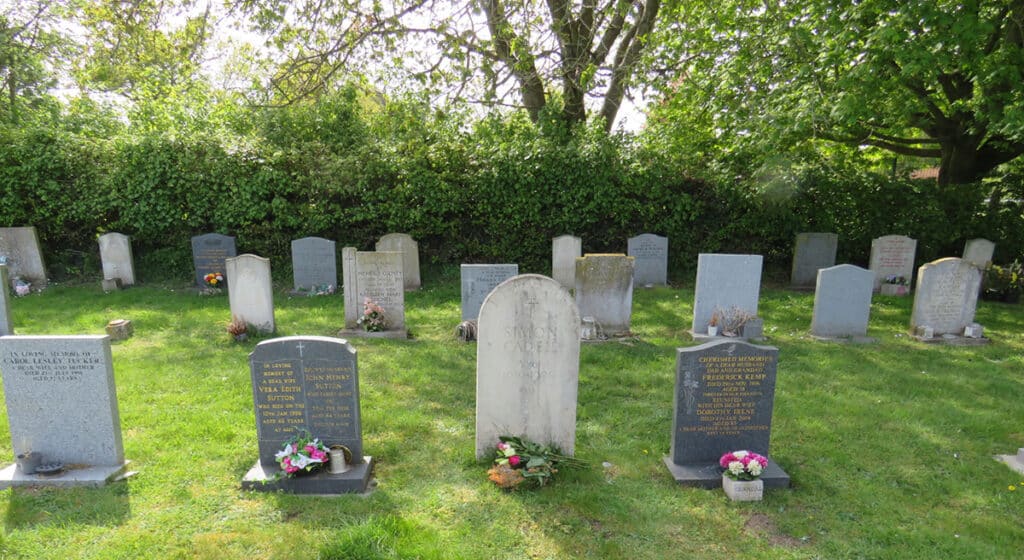
A few rows ahead, we spot the white rounded gravestone I had researched.
“In loving memory. Simon Cadell. Actor. 1950–1996. Our revels now are ended.”
There he lies. The quotation from ‘The Tempest' feels devastatingly apt.
We place the flowers beside the grave and stand quietly for a moment. I have even brought along my ‘Hi-De-Hi!' DVD box set to make the connection in my head rather than out of any expectation Cadell's spirit may sign it.
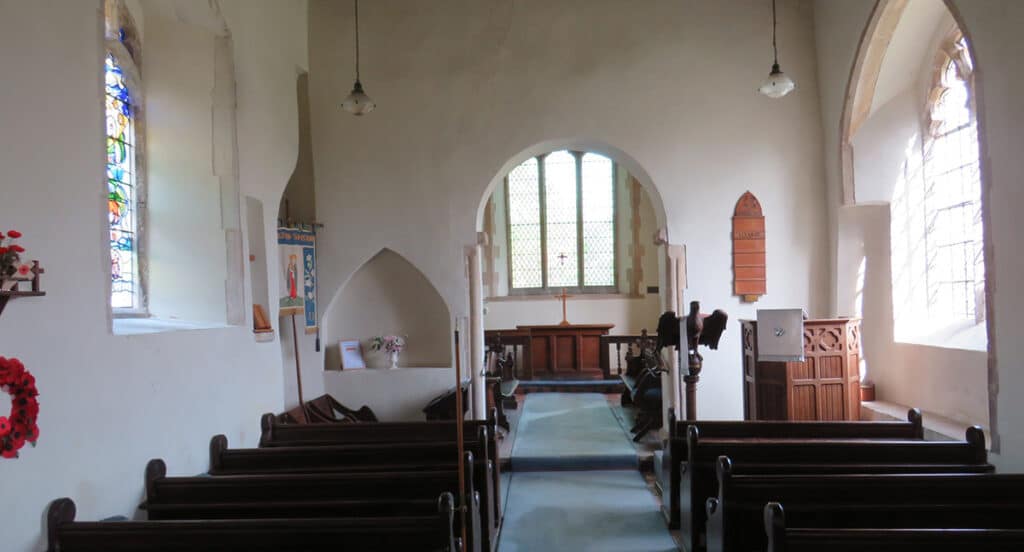
Inside the church, we add a note to the visitors’ book and admire the ancient beams overhead. It is impossible not to reflect on how much sitcom history is tied to this quiet Suffolk village. Cadell married legendary comedy writer David Croft's daughter. His father-in-law wrote his best lines and gave him a form of immortality, while with his daughter he created a family. When David Croft died in 2011, his funeral service was also held at All Saints Church, no doubt with Cadell's family in attendance.
The connection feels extraordinary. ‘Dad’s Army' remains Britain’s greatest sitcom to my mind, while ‘Hi-De-Hi!' ranks among my favourites. Walking through Honington, it is strange to imagine Cadell and the Croft family once moving through these same peaceful streets. We take a stroll across fields, enjoying the fresh air and sunshine. One thing that's obvious is how much fitter and healthier we both are since last we met. Reaching our later-40s, we've concluded that, to better meet our duties and overcome lifestyle health-related problems (bad backs and all that sort of thing) it's better to put some time and effort into physical fitness. When we first met a few decades ago, our activities centred around performing and drinking. Now, in middle-aged, such activities are tempered. Our revels now are curtailed, but not ended.
That is, I realise, why I felt so sad at Simon's grave, and why that line from Shakespeare’s ‘The Tempest' is so perfectly chosen. Having some time to set his affairs in order, conscious of his declining health and bravely facing his own mortality, did Cadell choose that epitaph for himself, I wonder?
It’s sad to realise that Tom and I are now older than Cadell was at the time of his death. After his near-fatal heart attack, he managed only a few more years of life in poor health, with a diagnosis of lymphoma late in 1993. It would kill him only a few years later, at the premature age of 45.
Simon's life was regrettably cut short. His revels were ended, far too soon. He wasn't given the chance to improve his health in middle age. Perhaps the signs always were there. At the end of his extraordinary ‘Give Us A Clue' performance of ‘Riders of the Purple Sage', as he collapses, weary from exertion into his chair, his co-star Jeffrey Holland's instinctive reaction is to proffer a glass of water, and all three teammates rally around protectively.
It is that very delicacy, that exertion of nervous energy, that capacity to give all of himself to his art that makes Cadell stand out as a brilliant and unique performer. The very qualities that perhaps exhausted him too soon are what continue to make him such a compelling performer. There was an intensity to Cadell as well as superb diction, immaculate comic timing, an expressive face and a sense that he was giving absolutely everything to a performance.
Whether sharing scenes with Kenny Everett or playing serious dramatic roles such as Hauptsturmführer Klaus Reinicke in ‘Enemy at the Door', Cadell brought the same total commitment and intelligence to his work.
Thirty years after his death, his performances still inspire admiration and affection. People continue to discuss his work, revisit his sitcoms and seek out his performances.
After posting a few photographs from the visit online, I hear from other friends who fondly remember Cadell appearing in programmes such as ‘Minder'. By happy coincidence, Jeffrey Holland mentions on social media that surviving members of the ‘Hi-De-Hi!' cast had gathered together that day to celebrate the series. I tell him that, simultaneously, we were laying flowers on Simon Cadell’s grave.
“How lovely!” he replies.
I hope Cadell’s family and colleagues would find some comfort in knowing how warmly he is remembered. Our Honington pilgrimage comes to an end, but the trip reinforces why Simon Cadell remains such a special and distinctive figure in British television history. His revels may have ended far too soon, but his work endures.