

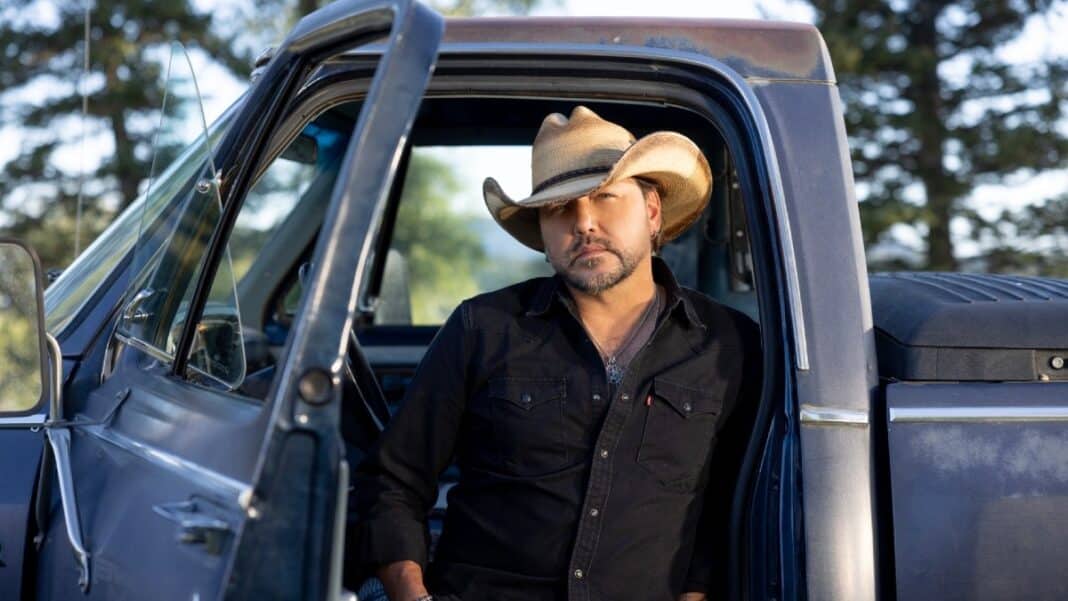

Next week, Jason Aldean releases ‘Songs About Us,' his twelfth studio album. On paper, it’s a familiar moment: a major country star delivering another arena-ready record built for radio, streaming, and stadium tours. But this release lands in a very different cultural climate. Because in 2026, you don’t just listen to Jason Aldean—you take a position on him.
Aldean, along with his wife Brittany, has been outspoken in support of Donald Trump and MAGA politics. Public appearances, social media posts, and high-profile affiliations have placed him firmly inside America’s cultural divide. For some fans, that alignment strengthens their loyalty. For others, it’s reason enough to tune out entirely.
And it raises a question that feels more relevant than ever:
Can you separate an artist’s work from their politics—or is that line already gone?
When politics becomes part of the brand
Aldean isn’t alone. Increasingly, artists across genres are finding their political views becoming inseparable from their public identity. Kanye West turned his support for Trump into a defining—if controversial—part of his persona. His antisemitic views have also caused a great deal of hurt and outrage too. Taylor Swift shifted from years of political silence to outspoken advocacy, reshaping how fans and critics view her. Bruce Springsteen has long woven progressive politics into his music and public life. And The Chicks faced industry-wide backlash after criticizing President George W. Bush in 2003.
What’s changed isn’t that artists have opinions, afterall, Bono has used rock band U2 as a vehicle for his political views since the mid 80s—it’s that those opinions are now amplified instantly. Social media has collapsed the gap between art and artist. Politics no longer sits in the background; it travels alongside every release.
For many artists, like U2, it has effectively become part of the brand.
The upside: loyalty, identity and deeper connection
Taking a political stance can sharpen an artist’s connection with their audience. For Aldean, whose fanbase already overlaps with a particular cultural identity, his outspokenness has arguably deepened that bond. Controversy doesn’t always fragment an audience—it can solidify it.
The same dynamic appears elsewhere:
- Bono's political provocations didn’t end his career—they reshaped an entire audience.
- Taylor Swift’s activism mobilised younger, more politically engaged fans.
- Bruce Springsteen’s consistency has strengthened his role as both artist and cultural figurehead.
In these cases, politics becomes a signal: “This is who I am—and if you’re with me, you’re really with me.”
For fans who share those views, the music can feel more meaningful, even personal.
The downside: alienation and a narrower audience
But the clarity that attracts one group can just as easily push another away. The Chicks remain the most striking example. Their criticism of President Bush led to boycotts, radio bans, and a dramatic loss of mainstream country support almost overnight.
More recently:
- Kanye West’s controversies have cost him major commercial partnerships and segments of his audience.
- Taylor Swift’s political shift alienated some longtime fans, even as it gained others.
- Jason Aldean has faced both backlash and boycotts alongside increased support.
The trade-off is unavoidable: the more specific the message, the smaller the tent.
Music, at its best, is universal. Politics, by nature, divides. When the two intersect, universality becomes harder to maintain.
Listening in the age of alignment
For listeners, this isn’t just a cultural debate—it’s a personal one. Every play, purchase, or skipped track becomes a small decision.
Do you:
- Listen purely for the sound, separating the art from the artist?
- Avoid the music because you disagree with the person behind it?
- Or try to hold both ideas at once?
There’s no shared rulebook. Some listeners draw a firm line between art and personal belief. Others see consumption as a form of endorsement.
Streaming has only intensified that tension. Music is no longer a passive experience—it’s an ongoing series of choices.
So… can you separate the art from the artist?
‘Songs About Us' will likely do what Jason Aldean albums tend to do: generate hits, dominate playlists, and fill arenas. We've heard an advance and, musically, it's his best album in a decade.
But it will also do something else. It will force a decision. Not just about the quality of the songs—but about what each listener is willing to accept, ignore or reject. Some will lean in more strongly because of who Aldean is. Some will walk away for the same reason and many will land somewhere in between, navigating that line track by track.
There’s no universal answer here. Only individual ones.
And in 2026, that may be the point: separating the art from the artist isn’t a solved question—it’s part of the listening experience itself.

