

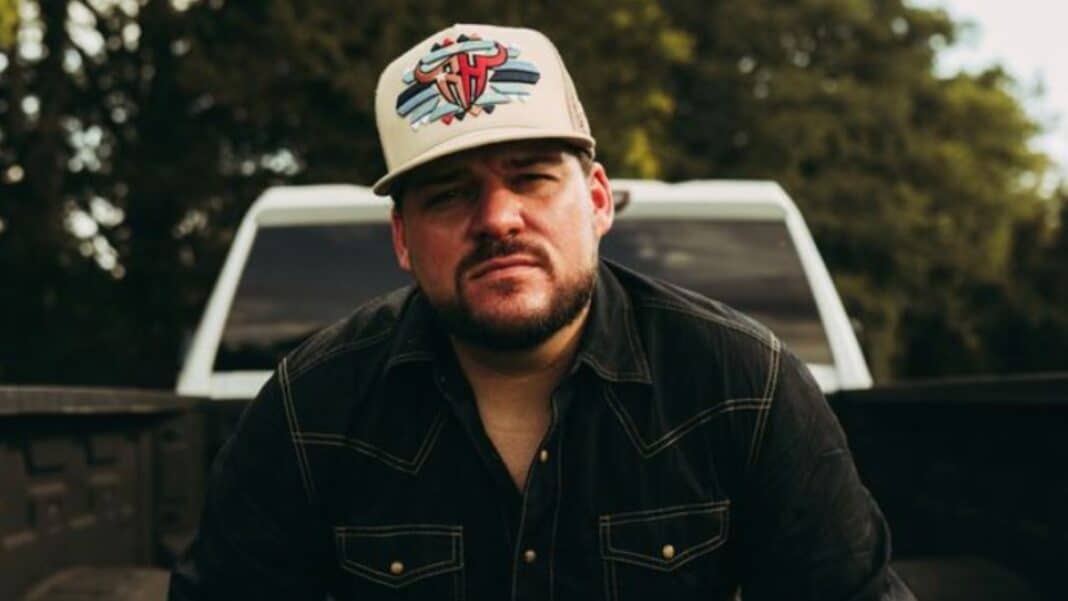

Rising country artist Hayden Coffman has quickly emerged as one of the most compelling independent voices in the genre, building his career from the ground up with a blend of raw authenticity and modern edge. Hailing from Knoxville, Tennessee, Coffman pairs a soulful, smooth vocal delivery with emotionally honest songwriting that feels both deeply personal and widely relatable. Rooted in traditional country but shaped by contemporary influences, his music captures the spirit of a new generation of artists who are connecting directly with fans on their own terms.
That connection has translated into serious momentum. With a relentless work ethic and a steady stream of releases, Coffman has cultivated a fast-growing fanbase, racking up hundreds of millions of streams and earning recognition as one of the most exciting unsigned artists in the U.S. His breakout success has been driven by songs that balance classic country storytelling with arena-ready energy, positioning him at the forefront of country’s evolving independent scene. As he continues to build on that momentum with new music, including his latest EP ‘Goner,' Coffman is stepping into a defining chapter of his career—one shaped by growth, confidence and a clear sense of identity. We caught up with him to talk all about it.
Hayden, first of all, I really appreciate you taking the time during release week — I know it must be a busy period. I’ve been diving into the new EP, and I’ll admit this is my introduction to you as an artist, but over the last couple of weeks I’ve gone back through your catalogue and really immersed myself in your music. How does it feel to have new listeners discovering you in that way?
Man, I appreciate that a lot — seriously, that means a ton. That’s one of the coolest things about putting out a project like this, especially in today’s world. You’ve got people who’ve been following me for years, and then you’ve got people who just found me last week. So when someone like you goes back and listens through everything, that’s huge. It’s kind of the goal — to give people a reason to stick around and explore more of what you’ve done.
I want to start with the EP itself. ‘Love and a Heartbreak' only came out about a year ago — so were the songs on ‘Goner' part of that same creative period, or have they all come since?
That’s a great question. Actually, almost all of them came after ‘Love and a Heartbreak.' The only one that didn’t was ‘Talk to Texas.' That song’s actually about six years old now. I wrote it back when my wife and I were dating long-distance — she was in Texas, I was here — and it just came from that place.
I always loved the song, and she loved it, but I honestly wasn’t sure if people would connect with it or if it was just personal. But once we started playing it live and putting it on social media, people really reacted to it. That’s when I realised, okay, this belongs out there. The rest of the EP though — those are all newer songs, written after the last project.
That suggests you’ve been writing a lot over the past year. Would you say you’re a prolific songwriter, or do you work in bursts?
I’d say it comes in waves. I try to write year-round, but it’s not always consistent day-to-day. Some weeks I’ll have three writing sessions, and then I might take a little time off. Touring definitely affects it — when you’re on the road, it’s harder to stay in that creative headspace.
I’ve also learned the hard way that burnout is real. There was a time where I’d be playing four shows and then trying to write straight after, and that’s just not sustainable. So now it’s about balance — keeping the creativity going without running yourself into the ground
Looking at the songs on ‘Goner', which one came together the easiest, and which one took the most work to get right?
Honestly, “Call It Country” was probably the easiest. That one just sits right in my wheelhouse — it’s country rock, it’s fun, it’s not trying to be overly complicated. There’s no Shakespeare in there, you know? It’s just straight-up storytelling about how you were raised and what you love.
As for the others, I don’t tend to drag songs out too long. My philosophy is, if we don’t get it done in the room that day, maybe it’s not meant to be. There might be the odd tweak later, but generally I like to finish things in one go. So they all came together fairly naturally.
‘Call It Country' feels like a live show moment — almost like it was built to open a set. Where does it sit in your shows right now?
That’s exactly how we approached it in the studio — like a show opener. Right now, though, we actually play it in the middle of the set. It kind of acts like a second wind — we come out of a couple of slower songs and then hit that, and it just lifts the whole room again.
Two songs that really stood out to me were ‘Talk to Texas' and ‘Fit for a King.' The latter is interesting because it leans into a more sensual tone — which isn’t always easy to pull off in country music. How do you approach writing songs like that without tipping into something that feels forced or cheesy?
That’s such a fine line, man. Whether it’s a love song or something with a bit more edge like ‘Fit for a King,' it’s really easy to go too far and make it feel cheesy.
With that song, I wanted it to have that “sexy” element, but still feel grounded in country and rock. And it’s been cool — that one’s getting a lot of love now, even though I dropped it a few months ago. That’s part of why I put the EP together, because there are always new listeners discovering songs for the first time.
If you had to pick one song from ‘Goner' to represent you right now — say it’s the one being sent into space on an Artemis style mission — which would it be?
That’s a tough one. I’d probably go with either ‘Damn Sure Does' or ‘Talk to Texas.'
‘Damn Sure Does' just feels like me — it’s got that energy, it connects live, and people love a good breakup song. But ‘Talk to Texas' is maybe the most straight-down-the-middle country song on there, and it’s very radio-friendly. So I’d say one of those two.
Listening through your catalogue, I can hear influences from artists like Luke Combs and Jason Aldean, but also older country sounds. Who did you grow up listening to that shaped your style?
Yeah, those modern guys definitely had an impact — Luke Combs, Jason Aldean, even some of Morgan Wallen’s stuff now. But growing up, it was a lot of Alan Jackson, Randy Travis, George Jones.
At the same time, I listened to everything — rap, pop, all kinds of music. And I think that shows up in the live show especially. It’s very high-energy, very guitar-driven. That’s just what feels natural for me.
Your sound feels very rooted — very much a straight-down-the-line country rock identity. Have you ever been tempted to lean further into genre-blending, like hip-hop influences or more experimental production?
I’ve dabbled in it a little bit. Sometimes I’ll play with phrasing that leans a bit more rhythmic, and I’ve got songs where we’ve used programmed beats or loops. That’s probably as far as I go.
But I think it comes down to the song. Some songs just don’t make sense if you try to force a certain production style on them. If it’s meant to be rocked up, we rock it up. If it needs something else, we go that way. I try not to force it.
Going back to your earliest releases — songs like ‘That’s Just Me' from 2019 — when you listen back now, how do you reflect on that version of yourself as an artist? What’s changed the most in your sound, your writing, and your identity since then?
Oh man, it’s honestly night and day. I mean, tenfold different. Back then, I really didn’t know who I was as an artist yet — I just knew I wanted to do this for a living and that I loved doing it. That was kind of all I had figured out at that point.
I even had an EP up before those songs that I ended up taking down because I couldn’t even listen to it anymore — it drove me crazy. But that’s just part of the process. When you’re starting out, you’re trying to figure out your voice, and for me, a lot of that early stuff was just me trying to sound like the artists I loved. I think everybody does that — it’s almost like a compliment to those artists — but at the same time, you eventually realise that’s not what’s going to make you stand out.
I started out the old-school way too — playing bars, restaurants, just grinding it out live — not going viral overnight or anything like that. So a lot of those early songs were shaped by that environment. But now, when I listen back, it doesn’t even sound like me anymore. The writing’s different, the vocals are different, the confidence is different.
That said, I still keep those songs up because they show the growth. And there are fans who found me through those songs, so they still mean something to people. I get folks all the time asking me to play them live, and I’m like, “Man, we’ve got so many songs now, I can’t fit everything in!” But it’s cool to have that history there — it shows the journey.
A lot of artists from your generation had their momentum disrupted around that same time when the pandemic hit. You were just getting going in 2019 — how did that period affect you, both in terms of your career and how you approached building an audience?
Yeah, I mean, it definitely hit in some ways — especially on the live side. Shows stopped, everything kind of paused, and that was tough. But at the same time, I was in a unique position as an independent artist where I could still make my own decisions. I didn’t have a label telling me what I could or couldn’t do, so I found ways to keep things moving.
And honestly, in a weird way, that period helped me. That’s when TikTok really started blowing up, and I wasn’t even on it at first. I was still focused on Facebook and Instagram, just grinding those platforms. But my wife kind of pushed me to get on TikTok — she saw what was happening with artists like Priscilla Block and was like, “You need to be doing this.”
So I got on there, started posting, and that’s really when things began to take off for me. I kind of leaned into the fact that we couldn’t do much else — like, if we can’t play shows, then we’re going all in on social media. And that ended up being a huge turning point.
I still played some shows where I could — we found places that were opening back up — but honestly, I gained way more momentum online during that time than I did on the road. Then by 2021, it felt like everything kind of clicked, and I was able to take that next step forward.
So yeah, it definitely changed things, but for me, it ended up being more of an opportunity than a setback.
You mentioned social media — artists like Cooper Alan have built huge audiences that way too. Is there a formula to it, or is it just trial and error?
I wish there was a formula. Honestly, I think part of it is luck, part of it is effort.
You’ve just got to treat it like part of the job. If the worst part of your job is posting videos, you’ve got a pretty good job. And you never know what’s going to hit — something you think will do great might flop, and something you don’t think about can blow up.
So you just keep posting and keep trying.
As an independent artist, what are the biggest challenges you face compared to being on a label?
Yeah, man, I think the biggest challenge with being independent is definitely on the business side — especially when it comes to things like radio and touring opportunities. Like, that’s where having a label can really make a difference. For me, it’s like, I know I’ve got the songs, I know I’ve got the fanbase building, but it’s those next steps that are harder to break into on your own. Getting on country radio is a huge one — that’s still such a big piece of the puzzle — and then getting on those major tours where you’re opening for big artists, being that first of three on a stadium or arena run. That’s where labels really help, because a lot of those opportunities come down to relationships and being part of that system. A lot of times those slots go to other artists within the same label group, so even if your numbers stack up, it’s tough to get in the room without that backing.
At the same time, though, the flip side of being independent is the creative freedom, and that’s something I don’t take lightly at all. I can put out what I want, when I want, and I don’t have to wait on anyone else to give me the green light. That’s huge, especially in today’s world where consistency matters so much. Like, you really can’t go six months without releasing music anymore — people move on too fast. I’ve heard horror stories from buddies who signed deals and then ended up getting shelved or stuck waiting in line behind a bunch of other artists, and that’s something that honestly scares me. Some labels have 60 or 70 artists on their roster, and you’re just hoping your turn comes at the right time. So for me, it’s constantly weighing that trade-off — the opportunities a label could bring versus the control I have right now.
I think where I’ve landed with it is just trying to stay smart and patient. If I do a deal, it’s gotta be the right one — something that still lets me have a hand in everything, from the music to the social side. Because at the end of the day, I know what works for me and my fans. Social media, for example, that’s been a huge part of my growth, and I’d never want to hand that off completely to someone else. Same with the music — if I believe in a song, I want to be able to release it. Not every song is gonna go viral, and that’s fine, but you’ve gotta keep putting stuff out. So yeah, being independent is definitely harder in some ways, especially breaking into those bigger spaces, but it’s also what’s allowed me to build this thing the way I want to. And right now, that balance is working — I’m just trying to keep pushing it as far as I can.
What have you got coming down the line for the rest of the year, Hayden, that you are in control of?
Oh yeah, man — honestly, a lot. This year feels like a really big one for me in terms of just taking everything I’ve learned and actually putting it into motion. I made a conscious decision at the start of 2026 that I wanted this to be the year where I just go all in — more shows than I’ve ever played, more music than I’ve ever released, and just being as active and visible as possible. For a long time, I feel like I had the songs, but I didn’t always have them fully recorded and ready to go, so there were these gaps where I couldn’t be as consistent as I wanted to be. Now, for the first time, I’ve really got a solid bank of songs finished and ready, which puts me in a completely different position.
So the plan is to just keep the momentum rolling — I’m aiming to release a new song every five or six weeks throughout the year. Even though the EP just came out, I’m already looking ahead to the next one, and the one after that. For me, it’s about staying present in people’s ears and not letting things go quiet. In today’s world, if you disappear for too long, people move on, so I want to keep showing up consistently. And beyond just the numbers or growth, I think mentally it’s gonna be huge for me too — just knowing I’m doing everything I can, putting everything out there instead of letting songs sit on my phone. There’s nothing worse than having music you believe in that nobody’s hearing because it's stored away on your phone!
We’d love to see you over here in the UK — is that something you’ve got your eye on?
Man, I would absolutely love that — that’s something I’ve already been talking to my booking agent about. It’s definitely on my radar. I’ve had a few buddies go over and play things like C2C and some of the other festivals, and just seeing their shows — how packed they are, how engaged the crowds are — it looks incredible. And from everything I hear, the fans over there are just so passionate about country music, maybe even more so in some ways because you don’t get as many shows as we do over here in the States.
I actually just played outside the U.S. for the first time recently — I did a show in Canada — and even that opened my eyes a bit. It made me realise how much I want to take this further and start playing internationally. And yeah, I know Canada’s not exactly the same as coming across the Atlantic, but it still gave me that taste of what it’s like to step outside your home crowd. So now I’m like, alright, let’s take that next step — let’s get to the UK, let’s get to Europe.
Check out Hayden Coffman's new EP ‘Goner' in all the usual places. Our review of it is here. Hayden will be playing CMA Fest on Thursday 4th June at the Wrangler Remix Stage at 4.35pm. His tour dates can be found here.

