

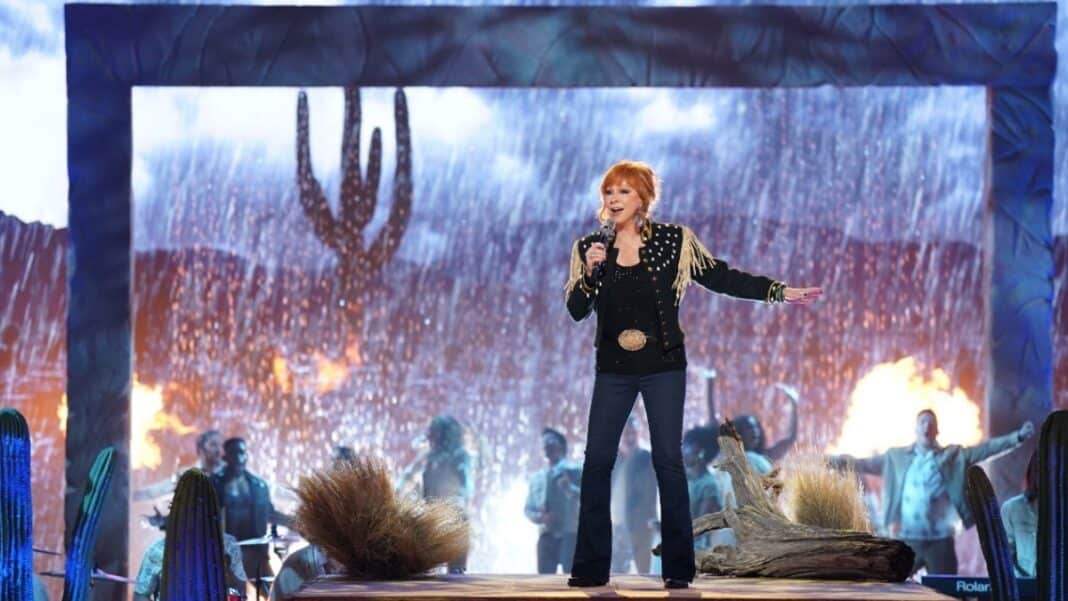

Few artists can trace a career as rich, enduring and influential as Reba McEntire — and as she celebrates an extraordinary 50 years in music, she’s doing it the only way that feels fitting: by telling her story through song.
This year, McEntire is opening a new chapter with a series of monthly “music capsules” — thoughtfully curated collections that blend her most defining recordings with brand new material. It’s a concept that feels both reflective and forward-looking, pairing the legacy of one of country music’s most iconic voices with a clear sense that she’s far from finished. Pre-save right here.
The first release, ‘One Night In Tulsa,' arrives April 17 via MCA, and sets the tone for the entire project. Rooted in her home state of Oklahoma, the collection draws together songs that echo the landscapes and stories that shaped her, while introducing a brand new title track that feels like a bridge between past and present.
Previewed during an intimate performance at her Oklahoma venue, Reba’s Place, ‘One Night In Tulsa' is classic McEntire — a return to the kind of emotionally rich, ’90s-leaning ballads that first established her as a master of heartbreak storytelling. Written by Neal Coty, Kylie Frey and Thom McHugh, the song leans into nostalgia without ever feeling stuck in it, reminding listeners exactly why her voice has remained so vital for five decades.
The capsule itself brings together a carefully chosen set of tracks that orbit that same sense of place and identity:
“One Night In Tulsa”
“Tulsa Time”
“Oklahoma Swing”
“Does The Wind Still Blow In Oklahoma”
“No U In Oklahoma”
But the ambition of the project goes beyond a single release. Each capsule will be accompanied by curated playlists designed to map out key eras of McEntire’s career — offering both longtime fans and newer listeners a guided journey through her evolution. The first of these, ‘The Making of Reba,' launches May 1, tracing her early years and the foundations of a sound that would go on to define modern country music.
In an era increasingly dominated by fast-moving releases and fleeting moments, McEntire’s approach feels almost archival — a deliberate, carefully constructed celebration of longevity. It’s not just about revisiting the hits, but about contextualising them, connecting the dots between who she was, who she became, and who she still is as an artist.
And that may be the most striking part of this 50-year milestone: it doesn’t feel like a closing chapter. If anything, these capsules suggest an artist still actively shaping her narrative, still finding new ways to tell stories, and still deeply connected to the music that made her a legend in the first place.

