



‘Clerks & Quirks' is a title to keep an eye on and it's due to launch on PC via Steam later this year.
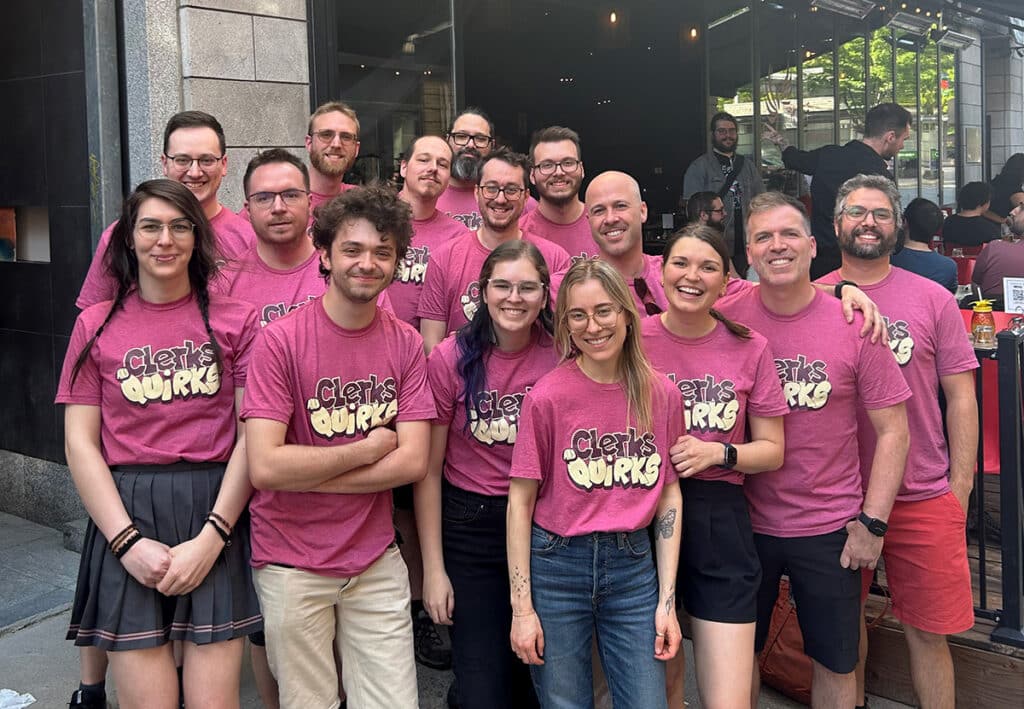
From independent Canadian development studio ALTKEY Games – founded in 2016 by industry veterans Dany Robitaille and Mathieu Savard – ‘Clerks & Quirks' puts the management of the most unpredictable retail outlet in the hands of the player. A demo of the game was recently released on Steam so players can get a taste of what's to come when the full game arrives.
I spoke with Dany Robitaille, Creative Director/Producer & co-founder of ALTKEY Games, to find out more about the game, talk about the game's mix of styles, and discuss the recently released demo…
What inspired the core concept of ‘Clerks & Quirks', and how did you settle on the idea of blending retail chaos with roguelite mechanics?
Our team lives and breathes roguelites, that was the foundation from day one. We love systems that evolve, runs that change each time, and chaos that demands adaptation.
On the retail side, we drew inspiration from one of gaming’s oldest mysteries: the suspicious shopkeeper. The merchant who’s always there. Who sells everything. Who somehow has legendary gear… and absolute junk. You ever wondered where it came from?
That question led to Chaos & Co. the corporation behind every questionable item drop. In ‘Clerks & Quirks', they’re your supplier, your employer, your “friend,” and your worst nightmare all at the same time.
C&Co doesn’t just stock your shelves, they force you to carry mischievous, living appliances called Quirks that sabotage your shift. The catch? The longer you work with them, the greater your chance to tame them and unlock their hidden abilities. Those powers become essential to staying afloat. Quirks make your job harder, but they’re also the only way you can survive it.
Unlike titles such as ‘Overcooked' or ‘PlateUp!', which focus primarily on cooking execution and service loops, ‘Clerks & Quirks' layers roguelite progression, systemic unpredictability, and absurdist humor onto a broader business-management framework.
Because in this store, chaos isn’t a failure state, it’s the core mechanic of our game.
How would you describe gameplay to someone unfamiliar with the title and what makes each week at Chaos & Co unique?
In Clerks & Quirks you’re not playing as the hero, your job is to craft and sell iconic items: swords, treasure maps, magic flowers, cloaks of invisibility, that sort of thing.
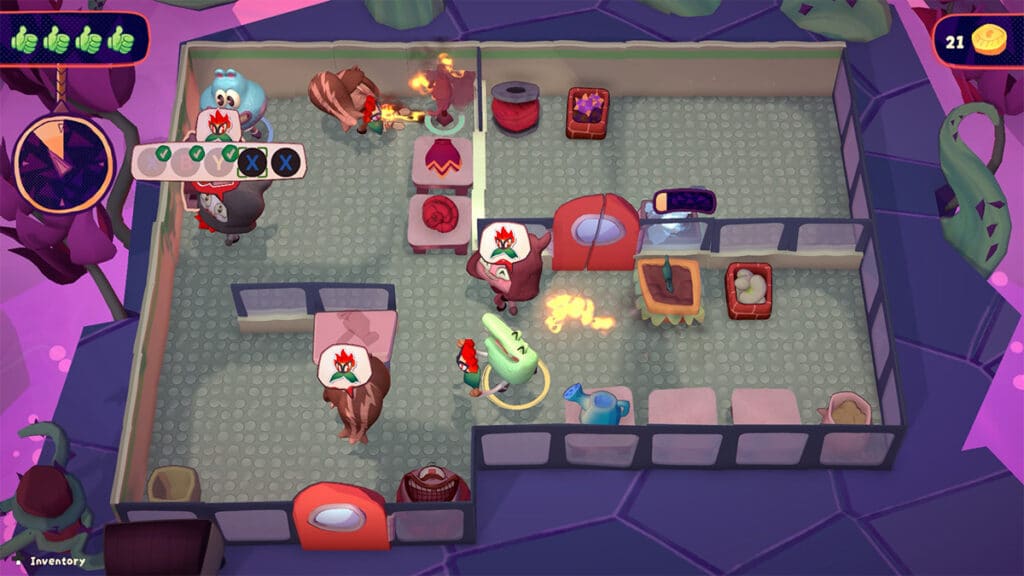
You start by picking your store layout, destination, and the first item you want to craft and sell, with prices that vary depending on complexity. Before opening, you plan your week using daily coupons that can unlock new items, Quirks, upgrades, or even force customers to leave a little tip for your trouble.
Friday brings the boss challenge. Was your weekly strategy enough?
The goal is to build the most persistent store and overthrow C&Co… and it won't be easy. The more you play, the more items and appliances you unlock to help with your next run. There’s a lot of exploration and experiments possible, with plenty of appliances, store layouts to try out, and item recipes to discover.
From the trailer we have seen the game looks very hectic and madcap. Can you entice our readers with some of the unpredictable events and engaging ideas you think the game presents that will hook gamers? Maybe you can run us through one eventful sequence?
You have to manage the store, but you also need to manage your relationships with your living appliances.
One day, your magical infuser might come alive and start spitting fireballs all around the shop, which you’ll have to extinguish. However, if you manage your relationship with the infuser correctly, it will become your friend. Instead of spitting fireballs, it will prevent things from burning on it.
Each appliance has its own unique little side quest that allows you to earn its friendship. So if you can embrace the chaos for a little while, you’ll be greatly rewarded.
With both solo and up to 4-player co-op support, how does the game’s balance adapt across different player counts? Do you feel the game leans more towards team play than solo?
It’s very important to us that the experience feels balanced and engaging in both multiplayer and solo play. There are many different strategies to succeed in the game, and some are better suited for solo players while others shine in a team setting.
For example, players can automate large parts of the crafting process. We’ve found that this approach is especially appealing to solo players, as it helps reduce the number of tasks they need to handle within a single day.
In multiplayer, on the other hand, players often enjoy dividing responsibilities and coordinating their efforts, which creates a different but equally rewarding dynamic.
Overall, we don’t feel the game leans more toward team play than solo but it offers distinct strategic opportunities depending on the number of players.
The game mixes management, strategy, and humour. How do you balance these elements to keep players engaged without overwhelming them?
Most of the action and humor happen during the day, while the management side of the game takes place more during the night. This helps separate the different gameplay moments so players aren’t overwhelmed. We also make sure to introduce the different gameplay elements one by one so players can learn them naturally.
There isn’t a story in the traditional sense, but we created a joyful and unpredictable universe where players naturally create their own stories through the way they build their store and discover the different Quirks’ behaviors. And when things go wrong, it usually ends in laughter rather than frustration.
What aspect of the game are you most proud of and were there any features or ideas that were cut or significantly altered during development, and why?
The Quirks are really the twist of our game, and we all love them. They’re disruptive at first, but eventually become your best allies during a run. It took a lot of iterations to get there, but we’re very satisfied with the current state of the system.
The weekly planning with the Calendar and assigning reward coupons is also a major feature that gives players more control over how they approach each week.
Our game is a big sandbox built around strong core features, which makes new mechanics fun to implement and test. Our backlog is already filled with ideas for upcoming updates that are just waiting for the full release to be shared with players.
Lastly how is the gaming faring from your demo on Steam and has community feedback, such as playtests or Discord discussions etc., influenced the game’s development so far? Can we also expect to see the release on all platforms?
We’ve participated in several in-person indie game events where we showcased the game to players, which was incredibly helpful for validating the initial concept and ensuring we had something unique to offer compared to the competition.
Last November, we attended the International Montreal Game Summit and won the Best Indie Game award, chosen by the public. It’s a real honor to receive such recognition while we’re still working on the game.
Our community on Discord has been extremely generous with us. We’ve received a lot of feedback from them, including ideas for mechanics and reports of pesky little bugs to fix! We’ve already implemented some of their suggestions and are making sure to consider all of them.
We’re creating a game for the community to enjoy, and we want to keep it organic and creative. You can definitely expect ‘Clerks & Quirks' to evolve with the community’s choices, and we hope to see it grow, maybe even with crossovers with other game IPs.
We can’t hide the fact that this game would feel great on many platforms. For now, we’re focusing on making a great game for Steam, but we’re also exploring other platforms and should have some announcements in the coming months.
Find out more about ‘Clerks & Quirks' and download the PC demo now on the game's Steam page.

