

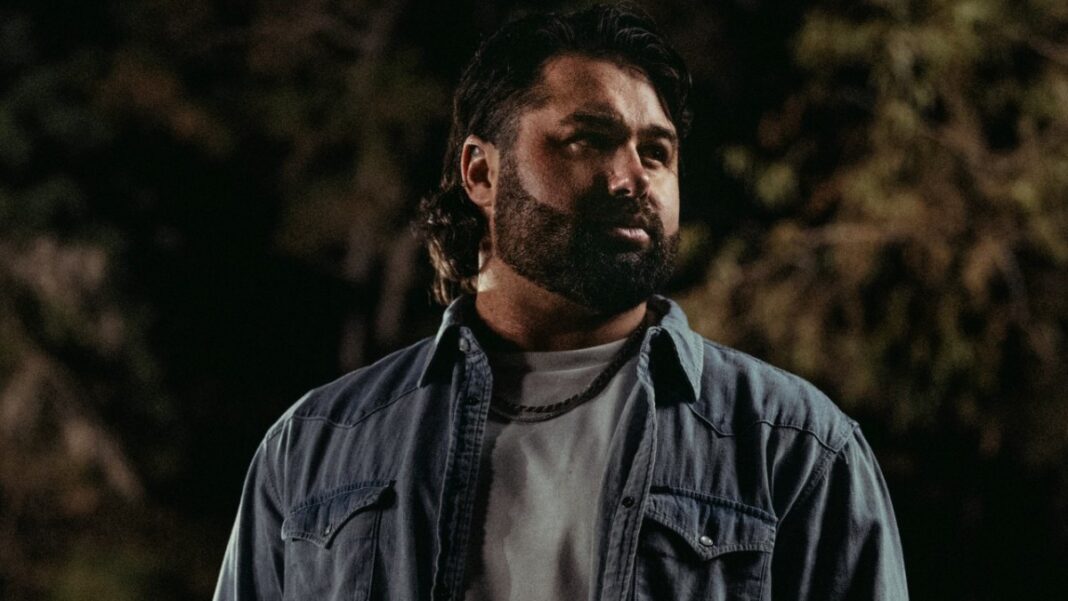

Koe Wetzel has spent the last decade building one of the most fiercely loyal fanbases in modern country and rock, doing it his own way from the bars and roadhouses of East Texas to sold-out arenas across the United States, Canada and Australia. Emerging from the Red Dirt and Texas music scene, the Pittsburg, Texas native forged a sound that blends country storytelling, Southern rock swagger and the grunge influences he grew up on. His breakthrough came through relentless touring and fan favourites such as ‘February 28, 2016' and ‘Drunk Driving,' before his career reached another level with the album ‘9 Lives' and its chart-topping hit ‘High Road,' which became one of country radio’s biggest songs of 2025. Along the way, Wetzel has earned a reputation as one of music’s most unpredictable and compelling live performers, taking his rough-edged honesty and anti-establishment attitude to ever larger audiences.
Now entering what may be the most reflective chapter of his career, Wetzel returns with his sixth studio album, ‘The Night Champion.' Described by the singer as a continuation of ‘9 Lives,' the record explores the aftermath of years spent living hard, chasing success and trying to make sense of both. The album finds him looking back on the chaos, excess and mistakes that shaped him while embracing the growth and clarity that have come with time. As explored in our review of the record, ‘The Night Champion' presents Wetzel as a comic-book antihero battling his own flaws and demons, pairing bruising Southern rock with some of the most self-aware songwriting of his career. Ahead of the album’s release, I sat down with Wetzel to discuss the meaning behind the title, the stories woven throughout the songs and how he has emerged from the “night side” of his life a champion.
First of all, how are you? It feels like a lot has changed since we last spoke. Congratulations on becoming a dad and getting engaged.
I’m doing good, man, really good. Life’s coming at me fast right now, but in the best way possible. There are so many cool things happening all at once, and I feel incredibly blessed to be in this position. Becoming a dad, getting engaged… those are huge life moments, and they’ve definitely shifted my perspective on everything. I appreciate you saying that, too, it means a lot.
You also look in great shape. Has becoming a father changed your lifestyle in terms of health and routine?
Yeah, absolutely. It’s crazy, honestly. If I could go back and show the version of me from ten years ago what my life looks like now, I probably wouldn’t believe it. But having my daughter really flipped a switch for me. It made me realise I needed to slow things down, get my head right and take better care of myself.
I’ve been hitting the gym, waking up early, being more disciplined with how I live day-to-day. And it’s not just physical, it’s mental too. I feel better across the board, and that’s carried into every part of my life. My relationships, my mindset, my music: everything benefits from that. It feels good to feel good, you know? And to be in this place right as ‘The Night Champion' is coming out… it’s a great feeling.
‘9 Lives' was a huge moment for you, with your first No.1 and a lot of mainstream attention. Did that success create pressure when making ‘The Night Champion,' or did it give you more freedom?
Honestly, it gave me more freedom than anything else. I never really looked at ‘9 Lives' as this massive, defining success. To me, it was just another chapter of my life that I documented through music. Of course, seeing how fans connected with it, especially with songs like ‘High Road,' that was incredible. But it was also new territory for me.
Working with Gabe Simon as a producer, stepping into a slightly different sonic space, all of that made the process feel fresh and a little surreal. And when ‘High Road' kept building over time, it wasn’t like we suddenly said, “Okay, now we need to top that.” That’s not how this record came together.
We actually just went in to write a few songs. There was no grand plan to make a full album at first. But those sessions kept growing, and before we knew it, we had ‘The Night Champion.' So there wasn’t really pressure: it was more about being present, taking it all in, and letting the music evolve naturally. And I think that’s why the record feels the way it does.
The title ‘The Night Champion' and the artwork give off this anti-hero, almost comic book vibe. What does that title mean to you?
For me, ‘The Night Champion' is really about survival, perspective and coming out the other side of a version of your life that could’ve gone a lot of different ways. When I look back over the last ten, fifteen years, especially my twenties, I was living pretty fast. There was a lot of chaos, a lot of late nights, a lot of decisions that, at the time, felt normal but looking back could’ve taken me down a very different road if things hadn’t worked out the way they did.
So the title is kind of me reflecting on that period and recognising that I made it through it. Not perfectly, not cleanly, but I’m still here, and I’m in a much clearer place mentally and physically than I’ve ever been before. I can actually look at my life, my relationships, and my music with a different perspective now, with a bit more clarity and honesty.
That’s where the idea of being a “night champion” comes from. It’s like I went through that darker, more reckless chapter, the “night,” and came out the other side still standing, still doing what I love, and in a better place than I was before. There’s a sense of pride in that, but also a sense of reflection. It’s not about glorifying those years, it’s about acknowledging them and understanding what they taught me.
At the same time, I think the title is open enough that people can take their own meaning from it. Everyone’s got their own version of that “night,” whatever they’ve gone through, whatever they’ve had to overcome, and if they can listen to the record and feel like they’ve come out the other side of something, then that’s what it’s all about.
‘Sinner' is a powerful opening track. Why did you choose it to start the album?
‘Sinner' actually came together in a really unexpected way. It wasn’t one of those songs where we sat down thinking, “This is going to be a big moment on the record” or anything like that. It started out as more of a warm-up in a writing session, something to get us going creatively that day. We wrote it pretty quickly, didn’t overthink it, and then kind of set it aside without giving it too much weight
A couple of months later, we came back to it, and Gabe pulled it up in the studio and played it through the speakers. As soon as it started, both of us had that moment of, “Hold on… this hits way harder than we remember.” There was an energy to it, a bite to it, that we hadn’t fully appreciated when we first wrote it. It felt raw and immediate, and it really captured a certain side of me that fans have connected with over the years.
That’s when it clicked that it should open the record. Because even though ‘The Night Champion' explores some new ground and leans into a more mellow, reflective sound in places, I didn’t want to throw listeners straight into that without any kind of bridge. ‘Sinner' kind of acts as that doorway: it gives people something familiar, that edge and attitude they expect from me, before the album starts to expand and shift sonically.
Lyrically, it also sets the tone in a really honest way. It’s about recognising your own flaws, knowing the patterns you fall into, and still struggling to break out of them. That’s a theme that runs throughout the whole record, that push and pull between knowing better and still making the same mistakes. So as an opener, it doesn’t just sound right, it feels right. It introduces the mindset behind the album before everything else unfolds.
You’ve worked again with writers like Amy Allen and Steph Jones, who also have strong pop backgrounds. (Sabrina Carpenter's ‘Espresso') What do they bring to your process?
Yeah, working with Amy and Steph again just felt like a no-brainer to me, honestly. I’d already built such a strong relationship with both of them on ‘9 Lives' and those sessions were some of the most natural and productive writing experiences I’ve ever had. So going into this record, there was never really a question of whether I wanted them involved, it was more like, “When can we get back in a room together?”
With Amy Allen, we’ve just developed this really easy, organic chemistry. She’s obviously an incredible songwriter, you look at the range of artists she’s worked with, from pop to everything else, and it speaks for itself, but beyond that, she’s someone I trust creatively. When we sit down to write, there’s no pressure, no overthinking. Ideas just come out, and we’re able to shape them into something that feels honest and true to who I am as an artist. Over time, she’s also become a really good friend, and I think that level of comfort shows up in the songs.
Steph Jones brings something equally important but in a slightly different way. She has this ability to take an idea and look at it from angles I might not naturally go to. Like, I might come into a session with a certain story or feeling I want to get across, and in my head there are a bunch of different ways I could say it, but Steph has this gift for finding those small details or turns of phrase that really elevate it. She helps piece things together in a way that feels fresh, but still completely authentic.
What I love about working with both of them is that they challenge me without ever taking away from what makes my music mine. They each bring their own perspective, their own influences, and their own instincts, and that pushes me to explore directions I probably wouldn’t go on my own. It keeps things from getting stale and opens up the songwriting in a way that’s really exciting.
At the end of the day, it’s also just fun. There’s a real sense of camaraderie when we’re in the room, it doesn’t feel forced or overly structured. It feels like we’ve known each other forever, and that kind of environment is where the best songs come from. So yeah, having them back on this record was huge for me, and I think they added a lot to what ‘The Night Champion' ended up becoming.
Who provides the female vocal on ‘When I’m Gone'?
That’s Maggie Antone. She’s incredible. I’ve been a fan of hers for a long time, and we’d talked about working together before, but nothing had quite clicked. With that song, I knew it needed a female vocal: something haunting and a little ominous to match the tone. I reached out to her, and she showed up within about half an hour and absolutely crushed it. Everyone in the room just looked at each other like, “Yeah, that’s it.” She brought exactly what the song needed.
Songs like ‘Hurts Like You' and ‘When I’m Gone' explore people staying in unhealthy relationships. Why are you drawn to those themes?
Yeah, that definitely comes from personal experience. I think I understand those kinds of relationships, or situations, better than I probably wish I did. It’s that feeling of being caught up in something you know isn’t good for you, whether it’s a person or just the dynamic itself, but you can’t seem to pull yourself away from it. You can see the damage it’s doing, you can recognise the patterns, but there’s still something about it that keeps pulling you back in.
With ‘Hurts Like You,' I’ve always thought of it almost like an addiction. It’s like a drug you know is bad for you, you know it’s going to mess you up in the end, but you’re so hooked on it, whether that’s the feeling, the chaos, or even just the familiarity of it, that you keep chasing it anyway. There’s a push and pull in that song between knowing better and still choosing to go back, and I think a lot of people can relate to that in one way or another.
‘When I’m Gone' comes from a slightly different angle, but it’s rooted in that same kind of emotional dependency. It’s about losing your sense of self when you’re not around someone: feeling like you’re not really whole without them. And that’s a dangerous place to be, because it puts so much of your identity and your stability in someone else’s hands. But at the same time, it’s real. People go through that all the time.
For me, writing about those kinds of situations just makes sense, because I’ve lived them. I’m not trying to write from some outside perspective or pretend I’ve got all the answers: I don’t. I’m just documenting what it feels like to be in those moments. And I know there are a lot of people out there dealing with the same things, whether it’s relationships, habits, or anything else they can’t quite let go of.
That’s really the whole reason I make the kind of music I make. If I can put those feelings into words in a way that makes someone else feel understood, or even just a little less alone in it, then that’s doing its job. And I think songs like those are important on the record because they show that side of things without trying to dress it up or offer some easy resolution, it’s just the truth of what it feels like to be stuck in something you can’t quite escape.
‘Circus' feels like a reflection on success and expectation. Would a younger version of you have written or recorded something like that?
‘Circus' is a really interesting one for me, because it’s actually the only song on the record that I didn’t write myself. My buddy Sam Harris from X Ambassadors sent it over, and I don’t even think it was necessarily with the intention of me cutting it for the album, I think he was just sharing it. But as soon as I heard it, something about it immediately clicked'
At the time, I was in a headspace where a lot of what the song talks about really resonated with me. On the surface, you could tie it to success, the idea of chasing something, working toward it for so long, and then finally getting there and realising it’s not exactly what you thought it was going to be. But I think it goes a lot deeper than that. It’s not just about music or career: it’s about life in general. We all have things we build up in our heads, things we think are going to fix everything or make us feel a certain way, and sometimes when we finally get them, there’s still something missing.
That’s what I connected to. It wasn’t so much about me looking at my career and saying, “This isn’t what I wanted,” because I try not to frame things that way. I’m grateful for everything that’s happened. But there are definitely moments where you step back and realise that the reality of something doesn’t always match the idea you had of it when you were chasing it. And I think that’s a really human experience.
When I heard ‘Circus,' it felt like it captured that feeling perfectly. It lined up with where I was at mentally, and it felt honest to include it on the record, even though I didn’t write it. Sam was cool enough to let me cut it, and I’m really glad he did, because it ended up being one of my favourite moments on the album.
And now that we’ve started rehearsing it for the Night Champion tour, it’s taken on a whole new life. It’s got this energy live that’s just huge: it’s a fun one to play, and I think fans are really going to connect with it once they hear it in that setting.
One of the songs that really stood out to me on the album is ‘The Man.' It feels like a real centrepiece: not just musically, but in terms of how it pulls together different sides of who you are as an artist. Do you see it as a kind of defining song for where you are right now in your career?
Yeah, man, from the second we started putting that one together, it just felt different in the best way. It was one of those songs where everything kind of clicked right out of the gate. I wrote it with Nick Carpenter and Steve Rush, and there was just an energy in the room that day, like we all knew we were onto something without having to say it out loud.
Nick’s such a unique artist, and I’d really been wanting to get in a room with him for a while. Pairing that with my history working with Steve, it just created this really natural dynamic where ideas were flowing and nobody was overthinking anything. We weren’t trying to chase a sound or force a moment: it just came together in a way that felt honest.
What I love about ‘The Man' is that it really does feel like a snapshot of everything I’ve done up to this point. If you took all my records, all the different sounds, all the different phases, all the stories, and tried to boil them down into one song, I think that would be it. It’s got a little bit of everything in there: the attitude, the rough edges, the storytelling, but also that self-awareness that’s come with getting older and going through everything I’ve gone through.
I’ve had people ask me, “If you had to show someone one song that represents your career, what would it be?” And honestly, I think this is the one. I know it might sound cliché to say that about a new song, especially when you’re talking about a new record, but I really believe it. It doesn’t feel like me trying to be anything: it just feels like me.
And I think that’s why it stands out to me. It’s not just a favourite because it sounds good or because it’s fun to play, it’s a favourite because it feels true. It feels like the most complete version of who I am as an artist right now, and that’s a really cool place to be.
With each record you release, your catalogue gets deeper and more varied, and now with ‘The Night Champion' adding another layer to that, I imagine putting together a live setlist becomes more and more of a challenge. At this stage in your career, how difficult is it to balance all of that and are you starting to find that you simply can’t fit everything in without leaving out songs that mean a lot to you or your fans?
It’s definitely becoming one of the tougher parts of what we do now, and it’s a good problem to have, but it’s still a challenge. Every time we put a new record out, you’re adding another group of songs that you’re excited about, that the fans are excited about, and suddenly you’re trying to fit all of that into a set that’s still only, what, 90 minutes to two hours most nights.
Back when I first started, whether it was in high school or those early years around 2011 and 2012, the goal was just to have enough original songs to fill a set. We were playing four-hour shows, mixing in covers, just trying to keep people engaged. I remember looking at setlists back then and thinking, “Man, I can’t wait until every song on here is one of mine.” That was the dream.
Now we’re at that point, we’ve got more than enough original material, and the problem is the exact opposite. There are songs we know fans expect to hear every night, songs that have become staples of the live show, and then there are deeper cuts that mean a lot to people too. On top of that, you’ve got a new record like ‘The Night Champion,' where you want to showcase that material and give it its moment.
So you end up making some really tough calls. There are songs you love playing that might have to sit out for a tour, and you know there are fans in the crowd who were hoping to hear them. That part never gets easy, because you want to give everybody everything: but realistically, there’s just not enough time.
We’ve actually been having those conversations a lot lately, especially while putting together the set for this tour. You’re constantly trying to find that balance between the songs people know and love, the ones that define the show, and the newer material that represents where you are right now. Honestly, as the catalogue keeps growing, I think the only real solution is that the shows just get longer! (laughing) You either rotate songs in and out more, or you start pushing those set times further and further. At this rate, we might end up back at those four-hour sets someday: just this time, it’ll be all our own songs. And like I said, that’s a really cool problem to have!
Is there one song you feel you can never drop from the setlist?
Yeah, there are definitely a couple of songs that fall into that category: the ones you just know you can’t leave out, no matter how much the set evolves. For a long time, that song was ‘February 28th, 2016.' It was kind of the cornerstone of our live show. We’d usually play it towards the end, and it had this moment where everybody in the crowd was locked in, it became part of the identity of what we did on stage.
But as I’ve gotten older and my life has changed, I’ve started to feel a little differently about it. I wrote that song when I was 22, coming off getting arrested, living a completely different lifestyle than I am now. It still means something, and it’s still fun to play, and I know the fans love it, but it doesn’t represent who I am today in the same way it used to. So we’ve slowly been stepping away from it being such a central part of the set.
At the same time, as you move away from one song, another one kind of steps into that role. With what ‘High Road' has done, that’s become one we absolutely can’t skip. It’s one of those songs where, if we didn’t play it, people would definitely notice, and probably let us know about it! (laughing) It’s become a staple in a different way, tied to a different phase of my career.
By the end of the album, there isn’t really a neat resolution or redemption arc. Was that intentional?
Yeah, that’s very intentional. I’ve never been interested in presenting myself as the hero or wrapping things up in a neat, happy ending. That’s just not real life, and it’s not how I’ve ever approached my music. This record feels more like closing a book than closing a chapter. It’s a reflection on everything, the last decade or more of my life, my career, my experiences. It’s raw, it’s honest, and it doesn’t try to sugarcoat anything.
I don’t want to give people a polished version of reality. I want them to get the truth: whatever that looks like.
Listening to ‘9 Lives' and ‘The Night Champion' back-to-back, there’s a real sense that they’re part of the same story, almost like two chapters of a larger narrative rather than completely separate records. Do you see these two albums as being intentionally connected in that way, almost like companion pieces, or is that something that only really became clear to you once ‘The Night Champion' was finished?
Yeah, I definitely see them as connected, and honestly, that became clearer and clearer the deeper we got into ‘The Night Champion.' By the time we finished the record, I was already telling people that it felt like a continuation of ‘9 Lives.' If that album had a sequel, this would be it.
I think the easiest way to describe it is that ‘9 Lives' is kind of laying out the problem: it’s the chaos, the survival, the mistakes, the second chances, all of that. It’s me living in those moments and documenting them as they’re happening. Then ‘The Night Champion' is more like stepping back and looking at everything with a different perspective. It’s not like I suddenly have all the answers, but there’s a level of reflection there that maybe wasn’t as present before. In a lot of ways, one feeds into the other. They’re two sides of the same story. One is the experience, and the other is the understanding that comes after it, or at least the attempt to understand it. And I think that’s why they sit so well together when you listen to them back-to-back.
What’s interesting for me is that I haven’t really done that before. With my past records, I’ve always tried to move forward and do something different each time: almost like each album was its own world. But with these two, there’s a real through-line. They feel connected emotionally, thematically, even sonically in some ways.
I’ve kind of described them as being like yin and yang, or like brothers. They belong together. And I think when I look back on them years from now, ten, fifteen years down the line, I’ll probably see them as a pair more than anything else I’ve done. That’s a really cool feeling, because it makes this period of my life feel more complete. It’s not just one snapshot: it’s a fuller picture of who I was, what I went through, and how I’ve come out the other side of it.
Be sure to check out Koe Wetzel's fabulous album ‘The Night Champion' out in all the usual places today. Our review of it is right here.

