


The most startling realisation when reading a text about three thousand years old is that the story is structured with cinematic textures and techniques. When I was a child, I loved Ray Harryhausen's incredible stop-frame animation that breathed new life into Ancient Greek mythology in classic films such as ‘Clash of the Titans' and ‘Jason and the Argonauts'. Now, Christopher Nolan is the latest Hollywood director to realise the epic scope of the Homeric tales and bring ‘The Odyssey' to the big screen.
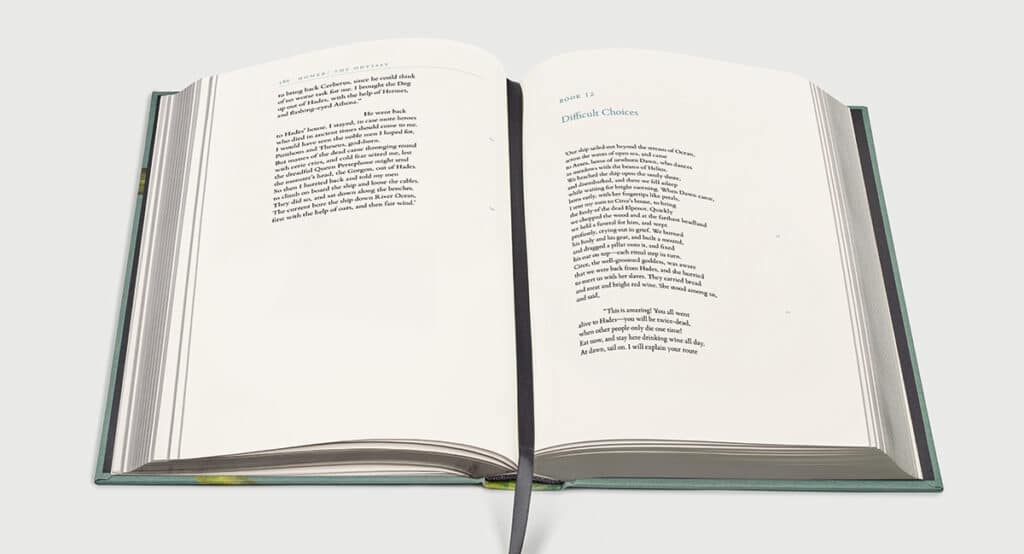
The events of ‘The Odyssey' follow on from ‘The Iliad‘. In many ways, ‘The Odyssey' is a more straightforward adventure, but the two stories form part of the same oral epic poetry tradition. Nobody really knows how long ago the tales originated. Yet this remarkable tale of Greek hero Odysseus's traumatic, decade-long return home following the events of the Trojan War grips the imagination to this day. ‘The Odyssey' is, quite simply, one of the greatest stories in human history, which is why it endures, inspires contemporary artists and thrills new generations. This superb new translation by Emily Wilson from the Ancient Greek retains its status as a poem, and uses a metre pleasing to Western ears so that it can easily be read aloud as it was originally enjoyed.
Our introduction to the hero is held back. First, we meet Odysseus's son, Telemachus, who had been but an infant when his father left for war. With the Palace on Odysseus' home island of Ithaca overtaken by a horde of boorish suitors, vying for the hand of his wife, Penelope, Telemachus holds out hope of a miraculous return for his father.
We meet Odysseus when he is held captive by the nymph Calypso, but he has been kept alive thanks to the intervention of Athena, the Olympian god who has taken him as a favourite. She arranges his release from Calypso's island after seven long years, but the sea god Poseidon sends a storm to shipwreck Odysseus and again delay his return home. The Phaeacians take pity on Odysseus, at first not recognising the great hero of the Trojan War (a theme that will recur throughout the poem). When his true identity is revealed, Odysseus opens up to his hosts over a lavish dinner and recounts the tragic tale of the last seven years of his life since leaving Troy. And what a tale we learn in backstory! It involves mythical creatures, meddling gods and outrageous misfortunes. This encompasses the island of the lotus-eaters, the man-eating cyclops known as Polyphemus, who falls for the deceit that Odysseus's real name is ‘Nobody', and the witch Circe who turns many of Odysseus surviving crew into pigs, before the wily Odysseus tricks her in turn.
Gradually, over the course of the twenty-four books comprising this epic tale, we learn why Odysseus ended up trapped on his own by Calypso, and what fate befell his crew. We understand more and more why, through his cunning and quick wit, he alone has survived, as the obstacles he has encountered on his adventures were too much for ordinary men. Finally, when he reaches his home land, we realise that he is hopelessly outnumbered by the suitors and his problems are far from over…
Emily Wilson's translation is every bit as brilliant as her work on the companion piece, ‘The Iliad'. Even when I studied the Homeric poems as a student, there were certain passages I would read over and over again, either for the excitement they evoke or the emotional impact. A favourite passage comes in Book 17 in which Odysseus is reunited with Argos, his faithful old hunting dog, who was but a puppy when his master left for war. Scarred and aged by fighting and misfortune, Odysseus is cursed to be unrecognised by all, even his closest family. Yet Argos knows his master has returned immediately, and almost gives away his old beggar disguise by wagging his frail old tail. This tender scene of the enduring, faithful love of a dog for his master invariably moves me to tears, and Wilson's translation ably captures the power of this moment, which could easily be lost among the higher-stakes sections. These few lines are electrifying on the page.
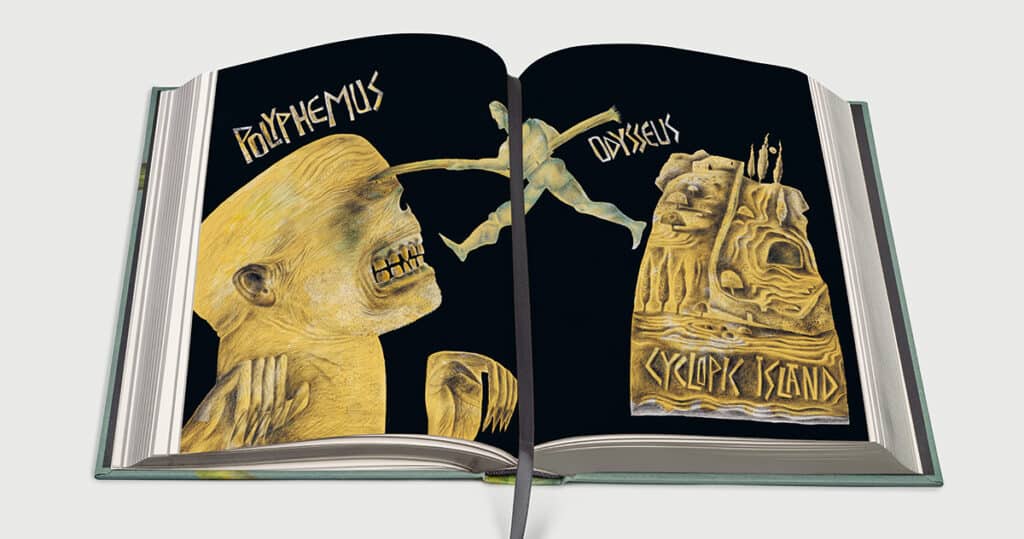
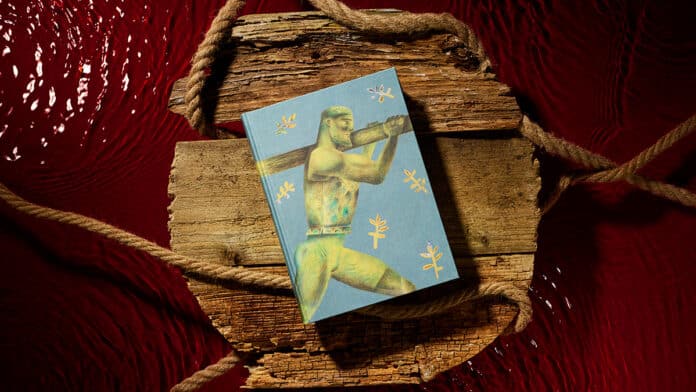
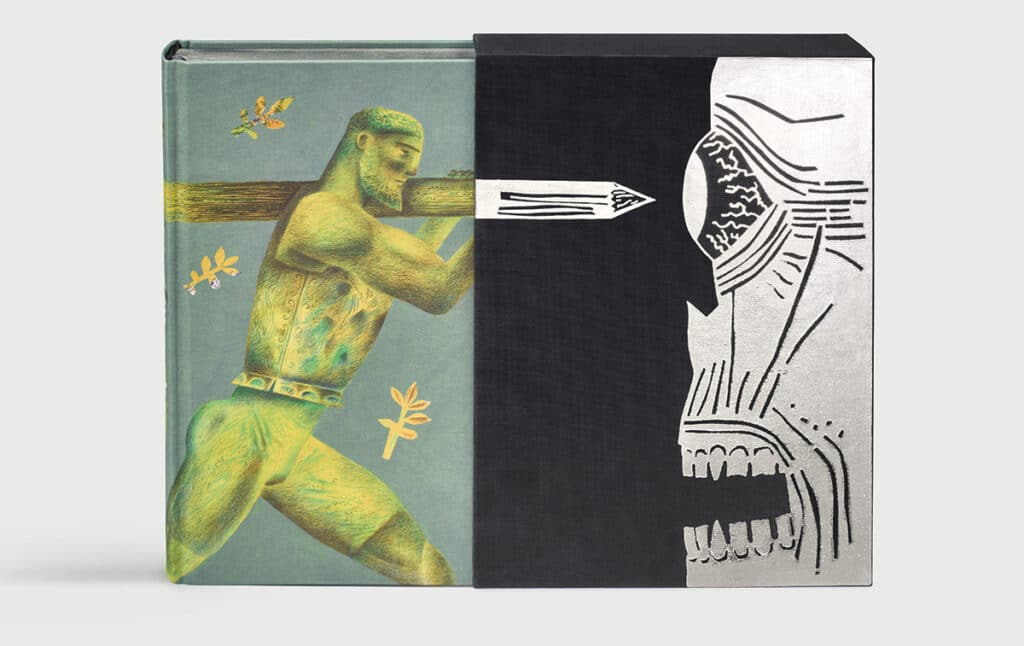
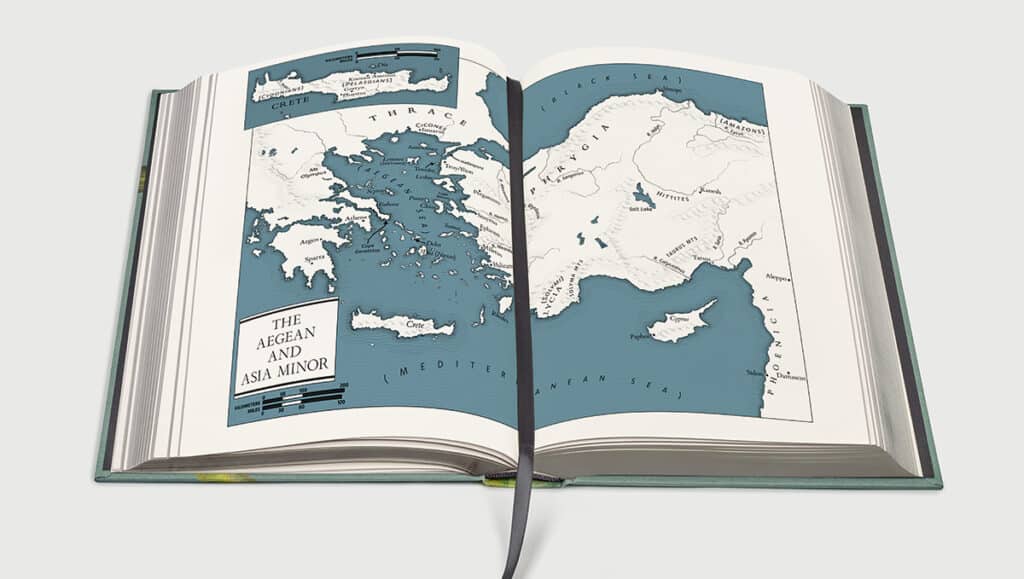
I strongly recommend The Folio Society's new edition of ‘The Odyssey' as the perfect companion volume to ‘The Iliad', which was release for the Spring Collection 2026. It benefits again from Emily Wilson's superb translation work, which retains the nature of the original text as accessible poetry that would be performed for groups of ordinary people. It is also produced to an excellent standard, with a cloth-bound hardcover and a black card case (depicting the attack on the Cyclops on one side and Odysseus' ship, both embossed in silver, on the other) as well as silver-gilded pages and maps showing the extent of ground covered by this tale. Clive Hicks-Jenkins's vivid illustrations similarly evoke the pictures on Ancient Greek pottery, picking out key moments from the text such as the triumph of Odysseus' Trojan Horse scheme, which tricked the Trojans into bringing Greek soldiers inside the walls of their city.
As this edition is a few hundred pages shorter than ‘The Iliad', it proved easier to read whatever the location, including turning a few pages at bedtime.
‘The Odyssey' stands the test of time as a thrilling, imaginative adventure and a breathtaking narrative. It is timely of The Folio Society to celebrate the Homeric poems and release them in quick succession. The translations by Emily Wilson are an excellent choice, both for academic appreciation of the beautiful text and for general readership. Accessible, authentic and beautifully-produced, this edition of ‘The Odyssey' is one for those who appreciate beautifully-crafted books and seek a definitive edition of a tale that will live for as long as there are people left to tell it.
Publisher: The Folio Society Publication date: 5th May 2026 Buy ‘The Odyssey'

