

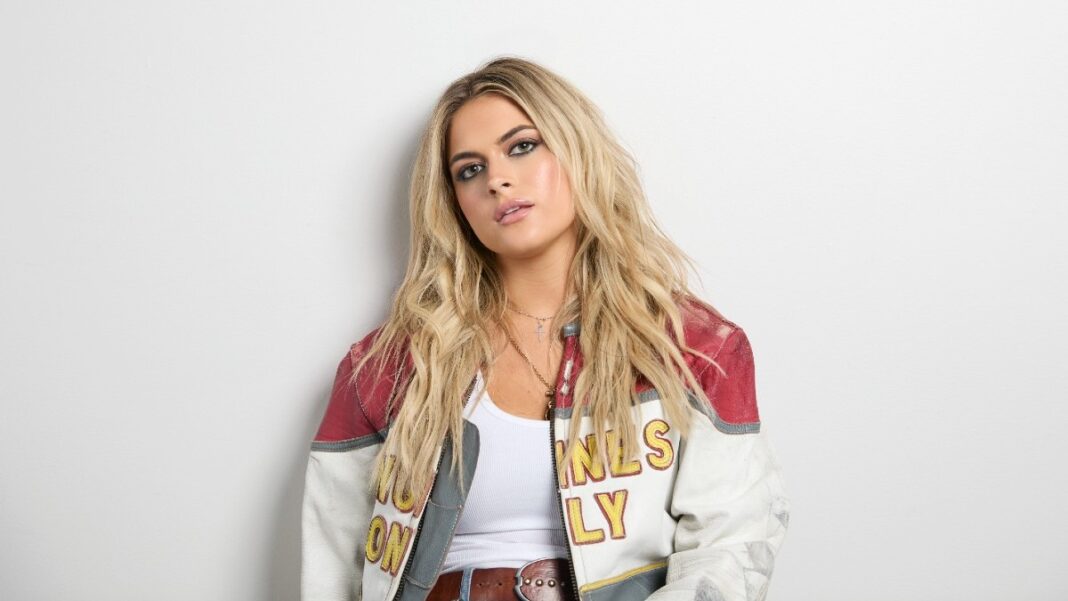

Over the past few years, Alana Springsteen has emerged as one of the most compelling young voices in modern country music, pairing diaristic songwriting with an emotional honesty that has resonated deeply with fans on both sides of the Atlantic. First breaking through with her ambitious three-part debut project ‘TWENTY SOMETHING,' which she co-wrote entirely herself while also contributing guitar, piano and production, Springsteen quickly established herself as more than just another Nashville newcomer. Praised by outlets including NPR Music and propelled by standout moments such as her acclaimed NPR Tiny Desk performance and her genre-blurring collaboration with Tiësto on the chart-topping ‘Hot Honey,' Springsteen has spent the last few years steadily evolving in public. Along the way she’s toured with Keith Urban, made a breakout appearance at Stagecoach Festival and built an especially passionate fanbase in the UK through repeated appearances at C2C: Country to Country and the Long Road festival.
Now entering what she describes as her most emotionally revealing chapter yet, Springsteen is preparing to unveil new album ‘i hope this helps,' a project shaped by growth, healing and self-discovery. Recent songs such as ‘note to self,' ‘love me anyway' and ‘black sheep' hint at a project that digs deeper than ever before into identity, confidence and learning how to move through life without seeking validation from others. In interviews earlier this year, Springsteen spoke candidly about the personal transformation she’s undergone over the past two years, describing herself as “healed, confident and empowered” after re-evaluating old behaviours and reconnecting with the young songwriter who first began writing songs alone on her bedroom floor. That emotional openness, combined with her ability to fuse country storytelling with modern pop instincts and cinematic production, has made anticipation for her sophomore album particularly intense. As she steps into this next era, Springsteen feels less like a rising artist and more like a fully formed creative voice coming into complete focus.
We caught up with her to talk all about the album. This is part two of an interview we did with Alana at C2C in London. If you want to read part 1 of the interview please click right here.
Let’s start with the new era and the new album. ‘note to self' is such a raw, vulnerable and deeply personal song, very different from something like ‘Hold My Beer.' Why did you choose that track to introduce this chapter of your career?
The past few years have honestly been the most transformative of my life so far. When I first started writing what I thought would come next after TWENTY SOMETHING, I went into it thinking, “This is my villain era. I’m going to write all the confident songs, the powerhouse girl anthems, let’s go.” (laughing) And I did lean into that for a little while.
But pretty quickly, I realised that this season of my life was asking something very different of me. I had this feeling in my gut that there was deeper work I needed to do. I could either keep writing those confident songs and kind of ignore that feeling, or I could be brave enough to follow it and see where it took me.
I hit a bit of a breaking point. My body felt like it was fighting me at every turn, relationships in my life were falling apart, and I just knew something deeper was going on that I hadn’t worked through yet. I couldn’t keep white-knuckling my way through life. I knew eventually I’d run out of energy.
A co-writer of mine actually introduced me to a therapist, and within the first couple of sessions I realised I needed to go all the way back to my inner child. I started uncovering these patterns and beliefs I’d picked up really early in life that were rooted in survival but just weren’t serving me anymore. I’ve always been a perfectionist, a people pleaser, someone who needed control. I struggled to be vulnerable and to connect with people. A lot of that comes from my childhood: my parents were really young when they had me, so I kind of became the caretaker. I was the kid trying to fix everything. If adults were arguing, I wanted to make it better; if my brothers were upset, I wanted to help. I absorbed a lot of emotion but didn’t have the tools to process it.
Going back to those moments and almost taking that younger version of myself by the hand and saying, “You’re safe with me now, you don’t have to carry this alone anymore,” was incredibly freeing. That release changed everything. So starting this era with ‘note to self' felt right, because it was the first real step. It was me going back to the beginning and setting the tone for everything that follows.
It sounds incredibly cathartic. Do you feel like healing is the central theme of the album as a whole?
Yeah, I think healing is definitely at the core of it. It’s been hard to distill the album down to one idea because it’s such a layered, nuanced record. I’m touching on a lot of different topics and experiences.
But if I had to sum it up, I’d say it’s a rejection of fear. It’s about choosing openness, curiosity, acceptance and hope instead. It’s about learning to sit with yourself, to understand yourself, and to move through life in a more honest way.
You mentioned therapy and processing emotions: music clearly played a huge role in that for you. What would you say to people who are going through something similar?
I feel incredibly grateful that I found music, because I didn’t grow up knowing how to process emotions. Nobody really teaches you how to do that. But for whatever reason, music became my outlet, it gave me a way to release all of that.
If I could offer any advice, it would be: create. Whatever that looks like for you. You don’t have to be a songwriter or an artist. It could be cooking, painting, building something: anything. I really believe that as humans, the way we metabolise our experiences is by turning them into something.
That process has been so healing for me. Being able to share my story and connect with other people through it has honestly saved my life.
Another song that stands out is ‘same god' which feels incredibly personal and complex. What inspired that one?
That song goes really deep for me. Faith has been a cornerstone of my life for as long as I can remember. Both of my grandfathers are pastors, and I grew up in a very traditional Southern Baptist environment. There was a lot of love in that, but also a lot of guilt and shame, which is just part of that culture.
My faith is still incredibly important to me, it’s what keeps me grounded, but as I got older, I started to realise that I’d inherited not just the faith, but also some of the fear and expectations that came with it. For a long time, I looked to other people to tell me if I was a good person, if I was a good Christian, if I was doing things “right.” I was almost performing for God, trying to be perfect, while hiding the parts of myself that felt messy or complicated.
As I’ve grown and lived more life, especially in this industry, it’s created tension with my family. They worry about me, and sometimes they don’t understand the path I’m on. But what I’ve come to realise is that at the end of the day, we’re all talking to the same God. That song is really about trust, trusting that the same God who gave me this dream is guiding me through it. And it’s also about empathy. It’s a call to try to understand each other instead of judging.
One of my favourite stories about that song is that my producer played it for a friend and her dad, who was this very stoic, straight-laced guy who never showed emotion. By the end of the song, they were both in tears, hugging each other, and they ended up having this deep conversation they’d never had before.
If this song can create more moments like that, more understanding, more empathy, then that’s everything I could hope for.
On the flip side, ‘black sheep' has this confident, almost ‘80s pop sheen to it. It even has a hint of Whitney Houston in there. How did that sound come together?
That’s such a cool comparison! (laughing) Whitney Houston was one of my favourite artists growing up, so that influence is definitely somewhere in me. What’s funny is that ‘black sheep' started as a really simple acoustic song, just me and a simple guitar, almost like a little folk tune. But when my co-producer sent it back, he’d transformed it into this driving, uptempo, confident track.
The second I heard it, I knew that was what it needed to be. The song is about embracing what makes you different, about owning who you are, and I wanted the production to reflect that energy.
I wanted people to feel free when they heard it, to want to dance, to drive with the windows down, to just let go. And I think the production really captures that spirit.
Another standout moment is ‘Vienna,' a Billy Joel cover that some people might not even find! Why include that and why that song?
First of all, I love that you found it: that makes me so happy! (laughing) I grew up in the era of listening to albums top to bottom, and I always loved that feeling when you’d get to the end and realise there was a hidden track. It felt like a reward for really listening, for caring about the full experience. So I wanted to bring that feeling into this record. And the hidden track, ‘Vienna' by Billy Joel, was incredibly meaningful to me over the past couple of years.
I’ve always loved that song, but it hit me differently during this season of my life. Lines like “You’re so ahead of yourself, you forget what you need” or “You can’t always see when you’re right,” they just landed in a completely new way.
Whenever I was struggling, I’d go sit at the piano and play it, and it would instantly make me feel better. So ending the album with that felt right. It’s a reminder that what we’re going through isn’t unique, it’s part of the human experience. People have been feeling this way forever.
Finally, having lived with this record and gone through everything it represents, how do you see it now that it's finally going to be released to everyone?
I’m so incredibly proud of this record, on a level that goes far beyond just the music itself. Of course, I’m proud of the songs and the way it sounds, but what it represents to me as a person is something much deeper. I know, without a doubt, that years from now I’ll look back on this album as a real turning point in my life, regardless of what it does commercially, or how it’s received, or any of the external things that we’re all conditioned to measure success by.
Because for me, this wasn’t just about making an album, it was about becoming someone new in the process of making it. Every single one of these songs required me to be more honest, more vulnerable, and more self-aware than I had ever been before. There were moments where writing these songs forced me to confront things I had avoided for years: patterns, fears, beliefs about myself that I didn’t even realise were shaping my life until I sat down and really faced them.
And I think that’s why this record feels so different to me. It’s not just a collection of songs, it’s a document of growth. It’s me learning how to sit with myself, how to understand myself, and how to show up in the world in a way that’s healthier, more open and more grounded. These songs genuinely changed me. They helped me process things I didn’t know how to process before, and in doing that, they gave me tools that I’ll carry with me for the rest of my life.
So when I say this album changed my life, I really mean that. It made me the human being I need to be to step into whatever comes next: not just in my career, but in my relationships, in my faith, in the way I move through the world. And I think that’s the most meaningful thing any body of work could ever do.
Alana Springsteen's new album ‘I Hope This Helps' is out Friday May 29th in all the usual places. You can buy signed vinyl right here.

