

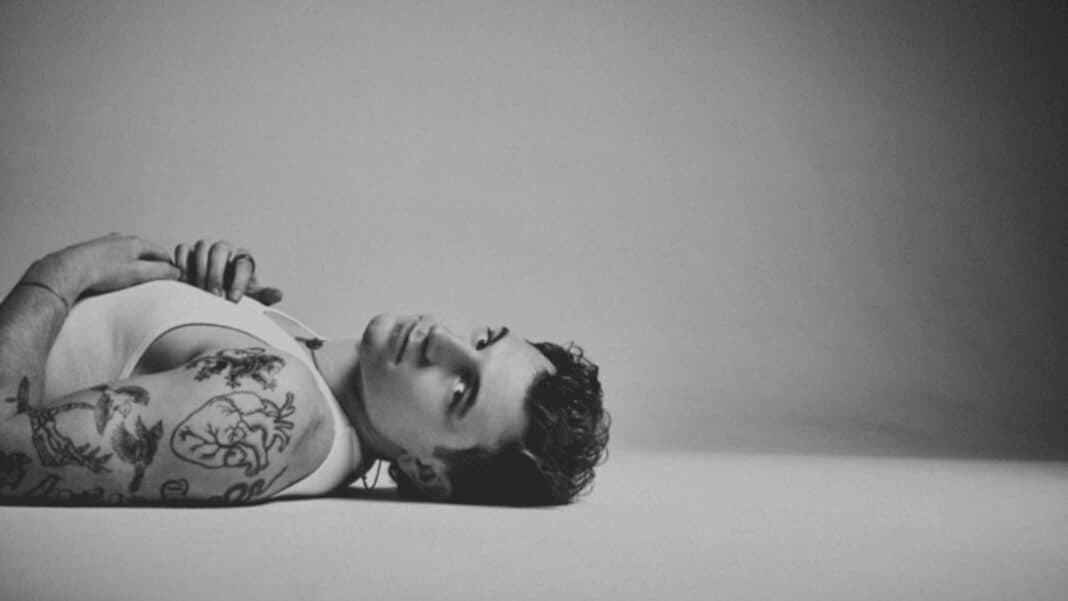

Emerging singer-songwriter Ian Harrison is quickly carving out a name as one of the most compelling new voices in the modern country-pop and Americana space, pairing introspective storytelling with a raw, relatable edge. At just 24, Harrison is already leaning into the emotional complexities of early adulthood, channelling themes of longing, uncertainty and self-reflection into his music with striking honesty. His new EP ‘Jealous,' out today (May 22), captures that in-between stage of life, where nothing quite feels settled and everything feels intensely personal, offering a collection of songs that explore rejection, faith, envy and the search for direction.
Alongside the new music, Harrison is also beginning to build a live following having recently toured the UK as support for Cooper Alan with stops including Birmingham, Bristol, Manchester and Glasgow. With ‘Jealous' out in the world and momentum building both on record and on stage, Ian Harrison is stepping into his breakthrough moment as an artist unafraid to sit with life’s messier emotions, turning them into something listeners can truly connect with. We caught up with him to talk all about the EP and much more.
First of all, thank you so much for taking the time to speak today. I have to say, I’m absolutely blown away by the ‘Jealous' EP, it’s a fantastic body of work. I also caught your set supporting Cooper Alan in Birmingham recently and really enjoyed it, so you’re very much on our radar over here now. How did those UK shows feel from your perspective?
Thank you so much, I really appreciate that. Those shows were honestly so much fun. That was actually the first proper tour I’ve ever been a part of, and on top of that, it was my first time ever coming over to the UK. So for me, it kind of felt like tour boot camp: just diving straight in and learning everything on the go. But I had such a blast with it. It was an incredible experience all round.
Being thrown into your first tour in a completely new country must have been a learning curve. What did you find the most challenging about that experience, and what did you enjoy the most once you settled into it?
I think the hardest part for me was just getting into the rhythm of it. It took me a couple of shows to really warm up and feel comfortable, which I think is pretty normal for anyone on tour. Once I got past that, though, everything started to click.
The best part by far was the crowds. When the audiences got into it, they really got into it, especially in the UK. They were singing along to every song they knew, and even when they didn’t know them, you could see them trying, which is such a cool feeling as a performer. That kind of energy just makes everything more fun, and it made those shows really special.
It certainly felt like you made an impression. There was a lot of buzz online and in fan communities after those shows. Do you feel like you built a real connection with UK audiences, and are you hoping to come back over during this ‘Jealous' cycle?
That’s amazing to hear, honestly, that’s exactly what we were hoping for when we came over. We wanted to connect with people and leave an impression, so hearing that people were talking about it means a lot. And yeah, I’d absolutely love to come back. Hopefully we can make that happen as part of this ‘Jealous' run.
Let’s go back a little bit, because your journey to this point is really interesting. You started out in Columbus, Ohio, before moving to Nashville after college, and you’ve spoken about working bartending jobs while trying to build your music career. Looking back on that period now, how tough was it, and what did it teach you about yourself?
It’s kind of crazy because it really doesn’t feel like it was that long ago, it honestly feels like yesterday. But during that time, I was basically just working to make enough money so that I could keep doing music whenever I had the chance.
It was definitely tough, there’s no way around that, but at the same time, I loved it. I loved it just as much as I love doing music now. I think the biggest difference is that now I’m able to put all of my time and energy into music, whereas back then it was something I had to fit around everything else.
Being able to do music full-time is such a huge deal for any artist, and I feel incredibly lucky to be in that position now. Not everyone gets to do that, so when you finally reach that point, it just feels amazing. It makes all those years of grinding worth it.
You mentioned that shift. So what did signing a record deal mean for you, both emotionally and practically? What does having a label behind you allow you to do now that you couldn’t before?
Signing the record deal was one of the most exciting moments ever. It really changes everything in terms of what you’re able to do. One of the biggest things is that it gives you the freedom to focus purely on creating: you can write songs every day, you can take time to develop your sound and you’re not constantly worrying about how you’re going to make ends meet.
It also gives you opportunities like coming over to the UK for a couple of weeks and going on tour, which just wouldn’t have been possible before. That kind of support is huge.
When I first moved to Nashville, we didn’t really know what was going to happen or where things would go, but Nashville has been really kind to us. It’s been very welcoming, and things have kind of grown from there in a way that we couldn’t have predicted.
You released ‘Ways to Get On Out' back in 2024, and now we have ‘Jealous.' Having gone back and listened to both, there’s a clear sense of evolution. How do you feel you’ve grown as a songwriter between those two projects?
I feel like there’s been a pretty big shift in direction between the two. After signing the label deal, I knew I didn’t want to stay in exactly the same place creatively. I also knew I was going to be writing a lot more songs, and hopefully becoming a better writer in the process.
It took a bit of time to figure out what that next step looked like. That’s why we released a few songs in between the two EPs, those were kind of like direction finders. We were experimenting, seeing what felt right, what was fun, what fit.
Then around October, I started to get a clearer idea of where I wanted to go. From there, we started properly planning the EP. I had some strong songs already, knew which writers I wanted to work with, and then it all started to come together from there.
That shift isn’t just musical, you can even see it visually. The ‘Ways to Get On Out' artwork has that laid-back, almost Morgan Wallen-style aesthetic, whereas ‘Jealous' feels much more polished and intentional, almost like a GQ magazine cover shoot! Does that reflect how you’ve matured as an artist?
Yeah, definitely. A lot of that just comes down to growing up. When I look back at the ‘Ways to Get On Out' cover, I see a kid. I was 21 when we took that photo. Now I’m 24, and it feels like a completely different era of my life.
I think I’ve changed just as much visually as I have musically. It’s all part of figuring out who you are and how you want to present yourself. But at the same time, at the core of it, I’m still that same guy who walks on stage with a guitar and writes songs, that part hasn’t changed at all.
Your sound pulls from pop, folk, country and rock: if someone asked you to sum up Ian Harrison in one sentence, how would you describe it? Or do genres not really matter anymore?
Honestly, I usually just describe myself as a singer-songwriter first and foremost, because that’s really at the core of everything I do. If someone wants me to get a bit more specific, I’ll say it sits somewhere in that space between pop, folk and alternative, with some country influence in there as well, but I try not to box it in too tightly.
I think genres are becoming less and less important now anyway, especially with how people discover music. Listeners don’t really care about categories in the same way anymore, they just connect with songs. For me, it’s more about how it feels than what label you put on it. As I’ve been finding my direction more clearly, I’ve realised I don’t need to define it too rigidly. The music will kind of speak for itself over time, and people will take from it what they want. I’d rather focus on writing honest songs and building a sound that feels true to me than trying to fit into a specific lane.
It feels like Nashville has opened up to that kind of genre-blending more recently. Who do you think helped pave the way for artists like you to exist in that space?
I think the biggest shift came with the whole Zach Bryan wave. When he broke through, it introduced this Americana-leaning version of country that wasn’t right down the middle, and that opened the door for a lot of artists to exist in that in-between space.
Since then, it’s just grown more and more. You’ve got artists like Cameron Whitcomb and Jack Wharf Band who are adjacent to country but not strictly traditional. That whole movement really helped expand what the genre could be.
And personally, who are the artists you find yourself drawn to the most?
Yeah, I mean obviously I’ve got a lot of respect for Zach Bryan and what he’s done, he’s an incredible artist and you can’t really ignore the impact he’s had, but if I’m being honest, there are probably other artists I naturally gravitate towards a bit more in my day-to-day listening.
I listen to a pretty wide mix of stuff, but I definitely lean into that more folk, alternative and rootsy space. I love artists like Chris Stapleton: his voice, his songwriting, everything about what he does just feels so authentic. Then on the folk side, bands like The Lumineers and Mumford & Sons have been huge for me, especially in terms of how they build songs and create emotion with fairly simple arrangements. Their newer stuff as well has been really inspiring.
I also listen to artists who sit a little bit outside of country altogether. There’s a guy called Matt Mason who does more pop-leaning alternative indie music, and I think he’s incredible, his songwriting and production really stand out to me. And then even within that same kind of emerging scene, artists like Cameron Whitcomb and others who blur the lines between genres are really exciting to watch.
So yeah, I’d say my taste is pretty varied, but it all kind of comes back to the same thing, I’m drawn to artists who feel real, who write honestly, and who aren’t afraid to exist a little bit outside of a defined genre. That’s the kind of music that inspires me the most and definitely feeds into what I’m trying to do myself.
Let’s talk about ‘Jealous' itself. Did you find a core group of writers you really trusted when putting this project together?
I think finding the right people to write with was a huge part of making ‘Jealous' what it is. There were a handful of writers that I already had a history with, people I’d been in rooms with before where we’d come out with songs that felt really honest and really “me.” So going into this project, I knew I wanted to lean on those relationships and build around that trust.
One of the biggest for me was Nolan Sipe. He co-wrote ‘Jealous' with me, as well as ‘Not Yours,' and he’s someone where every time we sit down together, I feel really confident that we’re going to get something that connects. There’s just a natural chemistry there, we don’t have to overthink it too much, and that makes such a difference when you’re trying to write something meaningful.
Beyond that, it was about building a small circle of collaborators who understood where I was at in life and what I was trying to say with this EP. I didn’t want to be jumping into rooms with loads of different people just for the sake of it, I wanted consistency, people who could help shape the sound and direction in a way that felt cohesive. And I think that’s why the project holds together so well in the end, because there’s that shared understanding across the songs.
So yeah, it wasn’t necessarily about having a huge list of writers: it was about having the right ones. The people I trusted, the people who could challenge me a bit, and the people who could help bring out ideas that I maybe wouldn’t have got to on my own. That’s what really made the difference on ‘Jealous.'
Which song on the EP took the longest to figure out, either lyrically or sonically?
I’d say ‘Games' was definitely the one that took the longest to really come together, and it had a pretty unusual journey compared to the rest of the songs on the EP.
When we first wrote it, I honestly didn’t even know if it was going to be my song. I was in the room with another artist (Carson Wallace) and writer, and going into it I kind of assumed we were writing for him. We’d worked together before, so it just felt like that was the natural direction it would go in. Even as we were writing it, I wasn’t necessarily thinking, “This is going on my project.” It just felt like one of those songs where you’re following the idea and seeing where it lands.
Then when it came time to record a demo, there was this last-minute switch where they asked me to put the vocal down instead. So I did, and we sat with it for a while after that. Even then, I still wasn’t completely sure what I wanted to do with it. It kind of lived in that in-between space for a bit where I liked it, but I didn’t know if it fully fit what I was building.
It wasn’t until we were getting closer to releasing more music that I went back to it and really listened again. At that point I was like, “Wait, there’s something here, we should finish this properly and put it out.” So we went back in, tightened everything up and committed to it.
What’s funny is that it ended up being one of the songs that connected the quickest once it was out. It kind of took on a life of its own almost immediately, which is always a reminder that you never really know which songs are going to hit. Sometimes the ones you’re unsure about for the longest end up being the ones people respond to the most.
What made “Jealous” the title track—the song that defines the whole project?
Yeah, I think “Jealous” just felt like the most honest reflection of where I’m at in my life right now, and that’s really why it became the title track. Being 24 and living in Nashville, it’s a really strange, in-between stage of life. You’re looking around and seeing people you grew up with or people in your circle going in completely different directions, some are settling down, getting married, having kids, building that kind of life, and others are still chasing something, still trying to figure it all out. And you kind of find yourself caught in the middle of that, questioning where you fit and whether you’re on the right path.
That feeling can bring out a lot of emotions, and one of those is jealousy, but not necessarily in a negative or bitter way. It’s more like this quiet, internal comparison. You can be really happy for someone, but at the same time wonder why your life looks so different, or why you don’t feel as certain about things as they seem to. I think that’s something a lot of people in their twenties go through, even if they don’t always say it out loud.
When we wrote ‘Jealous,' it just captured that feeling perfectly for me. It felt very real, very current, and very personal, not just to me, but to a lot of people around me as well. And because of that, it ended up becoming more than just another song on the project. It felt like a timestamp of this moment in my life, like a snapshot of that uncertainty and that growth.
So when it came to naming the EP, it just made sense. ‘Jealous' kind of holds the whole thing together thematically: it represents that push and pull, that tension between where you are and where you think you’re supposed to be. It felt like the most honest way to define this chapter.
There’s a real sense of contrast across the EP: both musically and thematically. Was that duality intentional?
For me, life, especially in your early to mid-twenties, just exists in that constant push and pull. You can feel two completely opposite things at the same time and both be true. You can be out on the road chasing something exciting, living that kind of free, unpredictable lifestyle, and at the same time be craving stability, connection, or something more grounded. You can be in love with what you’re doing but still feel unsure, or confident one day and completely lost the next.
I think that’s what ended up shaping the EP both sonically and lyrically. There are songs that feel really stripped back and intimate, and then others that open up into something much bigger and more expansive. And thematically, it’s the same thing: you’ve got that contrast between wanting something real and lasting, while also being pulled toward a different kind of life that maybe doesn’t allow for that in the same way.
What’s interesting is that it wasn’t something we set out to do from the beginning. It kind of revealed itself as I started going through all the songs and choosing what felt right for the project. When we laid them out together, it just became really clear that there was this thread running through everything, that tension between two sides of the same coin.
And I think the biggest realisation for me was that you don’t have to choose one or the other. You’re allowed to live in both spaces at once. You’re allowed to be figuring things out while also chasing something bigger, to feel grounded and lost at the same time. That’s what makes it honest. And I think that’s why the EP connects the way it does, because it reflects that reality rather than trying to tie everything up neatly.
Finally, I have to ask about “Feeling Nothing,” which closes the EP. I think it might be my favourite song on the EP. Why was that the right song to end this chapter?
‘Feeling Nothing' was a really interesting one, because it actually came together quite late in the process and ended up becoming the final piece of the puzzle for the EP. It was written with Johnny Simpson and his wife Andrea, and at the time we didn’t necessarily go into it thinking, “This is going to be the closing track.” It was just another honest writing session, trying to capture a feeling that I think a lot of people experience but don’t always talk about, that kind of emotional numbness where you’re not necessarily heartbroken in a loud, dramatic way, but you’re also not fully present or connected either.
When we finished it, we sat with the song for a while. It wasn’t an immediate, obvious choice for the project, and for a minute it wasn’t even guaranteed to make the EP. But the more I listened to it, the more it stuck with me. It had this quiet weight to it, it wasn’t trying too hard, it wasn’t over-explaining anything, but it still said a lot.
As we got closer to finalising the tracklist, it started to feel like the perfect way to close things out. A lot of the other songs on the EP deal with big emotions: confusion, longing, jealousy, love and ‘Feeling Nothing' kind of sits in the aftermath of all of that. It’s almost like the calm after the storm, but not in a peaceful way, more in a reflective, slightly unresolved way.
And I think that’s why it works so well as the closer. It gives you a sense of who I am and where I’m at without spelling everything out. It leaves a bit of space for interpretation, which I really like. It felt like the most honest way to end this chapter: just letting the listener sit with that feeling rather than trying to wrap everything up neatly.
Well, congratulations on the EP, it’s a brilliant release, and I’m sure this won’t be the last time we speak. Hopefully we’ll see you back in the UK very soon.
Thank you so much, I really appreciate it, and yeah, I’d absolutely love to come back.
Check out our review of ‘Jealous' right here.

