



‘Silent Planet – Elegy of a Dying World‘ may not be due to arrive on PC and consoles until 2027, but there's already plenty of buzz building around the game.
Developed by Vertex Zero and published by Red Dunes Games, the gothic sci-fi adventure is the first release from Canadian ensemble Vertex Zero, a small independent studio co-founded by James Alex Santoro and Virginie Cabana.
As the game's development continues, we spoke to James Alex Santoro, Co-Founder and Creative Director at Vertex Zero, to discuss the inspiration for ‘Silent Planet', discuss the approach to bringing the game to life, and to find out how feedback from the Tokyo Game Show has helped shape the game.
Where has the team/designer of the game drawn their/his inspiration from for the game? Of course, ‘Castlevania Symphony of the Night' must figure high in your estimations – so what is your goal to create a genre leader?
While ‘Silent Planet' pays visual homage to ‘Castlevania: Symphony of the Night' through detailed pixel art and a gothic atmosphere, our gameplay and narrative are shaped by a much broader range of sci-fi and horror influences.
On the literary side, we draw from Isaac Asimov for ethical questions around technology, Arthur C. Clarke for the awe and terror of the unknowable cosmos, and Colin Wilson for existential and occult philosophy.
Cinematically, we channel the eerie isolation of ‘Planet of the Vampires', the claustrophobic survival horror of ‘Alien', and the melancholic elegance of ‘Vampire Hunter D: Bloodlust'.
From games, ‘Super Metroid' shaped our sense of solitary exploration, ‘Demon's Crest' influenced our brooding gothic tone, and ‘Galerians' inspired elements of psychomancy and psychological tension.
Our goal isn’t to chase genre leadership or replicate an existing formula. Instead, we aim to craft a gothic sci-fi Metroidvania where cosmic insignificance meets personal resolve; a world where survival is the only certainty, and beauty exists alongside decay.
How did you first approach creating the game particularly in terms of storyboarding, designing action scenes, and shaping the overall structure? What were some of the earliest ideas you sketched out on paper or implemented in code?
Additionally, ‘Castlevania' was successful because it blended several compelling elements: freedom to explore, numerous secrets to uncover, light role-playing mechanics, and strong action gameplay without becoming overly complex. Would you agree with that assessment? What are your lists of must have in your game?
The first spark for ‘Silent Planet' came over a decade ago, but it remained dormant until we began building the universe for a smaller project called ‘Into the Heart of Darkness'. That is when the foundations of the ‘Starseer Chronicles' truly took shape.
From the beginning, our guiding principle has been simple: gameplay must serve the narrative, and the narrative must justify the gameplay. Nothing exists in isolation.
Two of the earliest mechanics we prototyped were Apranik’s psychomancy and psychokinesis. Psychomancy focuses on combat, allowing her to destabilize and manipulate enemies through mental force.
Psychokinesis, on the other hand, is used to sense the world around her, uncover hidden elements, and learn more about the environment and its history. Inspired partly by ‘Galerians', these abilities were not added as gimmicks. They emerged naturally from her fragmented psyche and the world’s themes of perception, memory, and internal struggle.
We also designed our three-layer exploration system early in development. Each area is structured as stacked layers that are navigated horizontally, creating depth and interconnectivity without overwhelming the player. This allows for complex world design while preserving clarity and pacing.
We absolutely agree that what made ‘Castlevania: Symphony of the Night' resonate was its balance: freedom to explore, meaningful secrets, light RPG elements, and responsive action without unnecessary complexity.
Our must-haves stem directly from our tone and world:
- Exploration that feels lonely and deliberate
- Combat that is weighty and precise
- Abilities that are narratively justified
- Environmental storytelling instead of exposition
- Progression that expands mastery rather than grind
We are not building a checklist of mechanics. We are building a cohesive world where every system reinforces the experience.
In terms of backdrops, graphics and story – how time and labour intensive is this in the creation process?
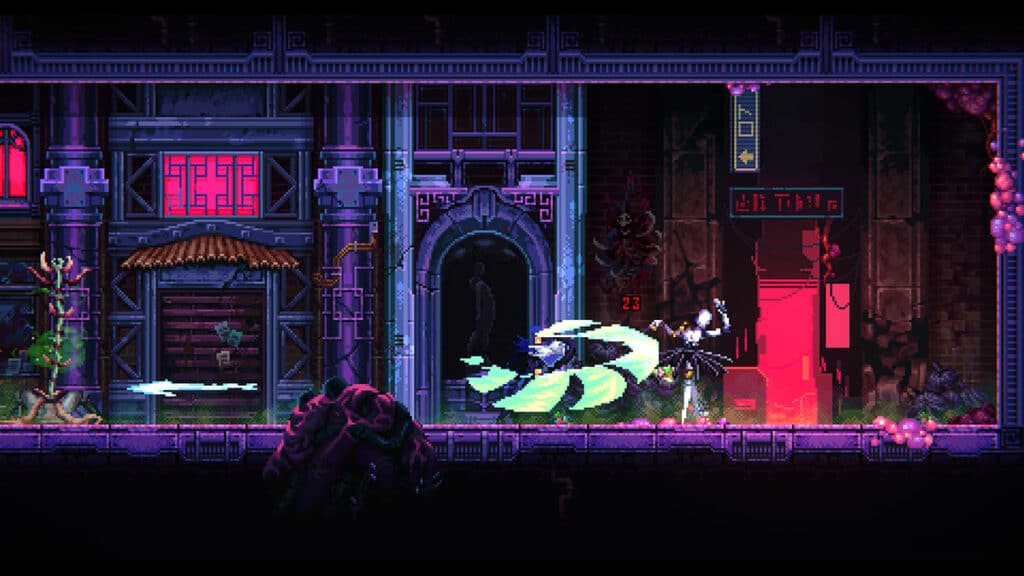
It is extremely time and labour intensive, especially for a small team like ours. Every backdrop, animation, and environmental detail is crafted by hand, often going through multiple iterations before it meets our standard.
We are fortunate to have artists on the team who previously worked on titles such as ‘Blasphemous', ‘Being and Becoming', and ‘Turbo Kid'. That experience brings a deep understanding of pixel art, atmosphere, and visual storytelling, which directly informs the tone of ‘Silent Planet'.
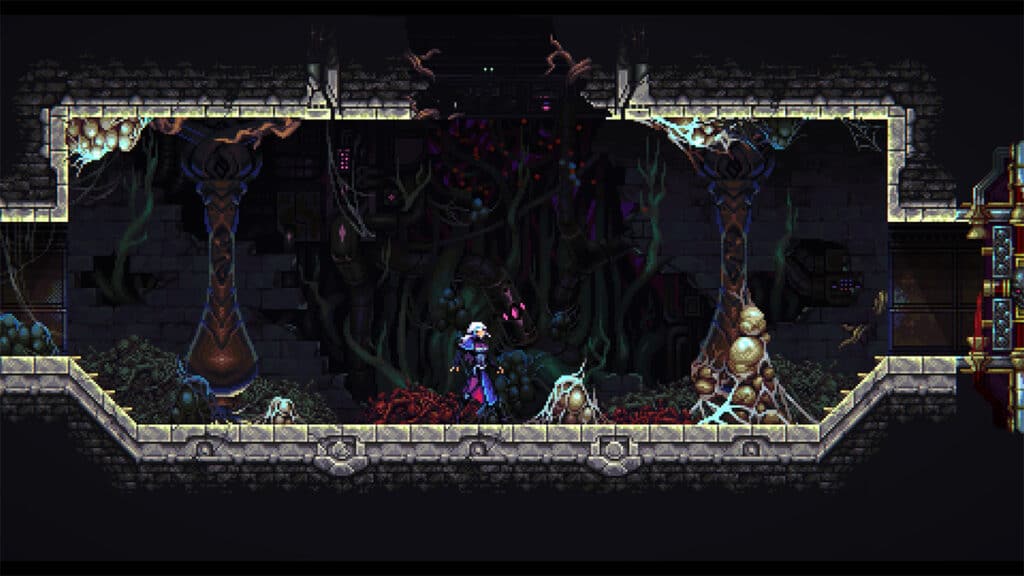
Our world depends on contrast. Beauty and decay must coexist in every frame. Achieving that balance requires careful pixel work, lighting refinement, and environmental storytelling that supports the narrative without overwhelming the player.
We do not treat environments as static backdrops. Each space reflects the emotional and thematic state of the world, requiring close collaboration between art, design, and writing at every stage.
It is demanding work, but that level of craftsmanship is what allows the world to feel oppressive, melancholic, and alive.
Can you give our readers a little insight into the story and cast (especially the main character) and objectives?
Apranik was born on the planet Thurayya, in the grand capital city of Suhayla. She comes from one of the most prestigious noble families, devoted to justice, discipline, and honor. Yet beneath that legacy, she carries a quiet and persistent melancholy shaped by fragmented memories and profound personal loss.
As her homeworld slowly dies, she embarks on a desperate mission to retrieve the Angel’s Egg, an ancient artifact created by the long-vanished Primeval Ones and believed to hold the source of life itself.
Her search leads her to Thulcandra, a dying planet in a decaying solar system. Deep beneath its surface lies an abandoned megacomplex where grotesque techno-organic horrors and buried cosmic truths await.
The cast she encounters is small and enigmatic. These are not traditional companions, but solitary remnants shaped by aeons of tragedy. Each carries fragments of forgotten history, and each reflects a different response to a universe that offers no meaning.
At its core, ‘Silent Planet' is not only about saving a world. It is about confronting insignificance, memory, and the cost of survival in a universe that does not care.
Combat is, of course, a primary goal to get right. So, what has been the hardest aspect of ensuring the level is just right, and is there a nice progression line to the action?
The hardest aspect has been achieving a combat feel that is both weighty and responsive, especially within tight, claustrophobic spaces. Every strike must land with impact, but controls must remain precise and fair. We have spent a great deal of time iterating on timing windows, enemy behavior, and spatial awareness to ensure encounters reward skill and positioning rather than button-mashing.
Balance is crucial. Early in the game, Apranik relies primarily on melee combat with limited psychomancy. As players progress, they unlock expanded abilities such as charged attacks, ranged techniques, and synergies that connect directly to the lore. These additions do not simply increase damage output; they change how encounters are approached.
Enemy design evolves alongside the player’s toolkit. Foes become more aggressive, more tactical, and more layered, but the player grows in mastery rather than power inflation. The goal is to create a progression curve that feels earned, satisfying, and deliberate, without becoming bloated or grind-focused.
Can you explain the term cosmic horror and how do you combine that within an RPG platform game so there is an equal balance?
Cosmic horror is the dread of confronting a universe that is indifferent to our existence, a reality where meaning is not given but must be sought. It is the unease of facing truths beyond human comprehension and the sense of smallness in the face of forces that cannot be controlled.
In ‘Silent Planet', we integrate this through both world and mechanics. The environment itself becomes a character, cold, silent, and unyielding. Players encounter ruins, derelict machinery, and horrors that do not respond to heroism or morality. Only observation, careful planning, and adaptation allow survival.
Abilities such as psychokinesis allow Apranik to probe these mysteries, revealing hidden truths or manipulating the environment, while psychomancy empowers her in combat. This duality ensures that cosmic dread and player agency coexist. The universe is indifferent, but survival is still possible through skill, exploration, and insight.
By making the world’s indifference tangible and linking powers to both combat and discovery, we balance existential unease with the quiet satisfaction of mastery and discovery.
Being a 2D platform scrolling game, how does that limit you and have you tricks and treats within the game? Are you pleased with the action and the way the game flows?
We do not view 2D platforming as a limitation. It is a deliberate choice that allows us to deliver the world as we envision it: intimate, claustrophobic, and full of tension.
The format does restrict full 3D freedom, but we have designed creative solutions to add depth. Our three-layer system (which we mentioned in a previous question) is similar to layered corridors, creating interconnectivity and maze-like exploration while remaining fully 2D.
We are very pleased with how the action and flow feel. Movement is weighty but responsive. Combat has a satisfying rhythm in tight spaces. Exploration builds momentum through purposeful backtracking, and mid-game fast travel helps maintain pace without diminishing the sense of discovery.
This approach allows players to feel both grounded in the world and continuously engaged in meaningful exploration and combat.
Feedback from Tokyo Game Show and recent fests/events have been fantastic? With nearly a year to go before all platform releases, how far is the game in development and have you been given any valuable feedback from gamers that you may implement?
Feedback from Tokyo Game Show 2025 and other recent showcases has been extremely positive. Players consistently praise the atmosphere, the hand-crafted pixel art, the weighty combat, and the unique blend of cosmic horror and sci-fi. It confirmed that we are hitting the tone and vision we set out to achieve.
The game is progressing well, with core systems, levels, and combat largely in place. We are now focusing on refinement, polishing visuals, fine-tuning gameplay, and expanding environmental storytelling.
We always listen to our community. Once the demo is released, we plan to incorporate feedback that aligns with our vision, ensuring the game is both engaging and true to its themes.
Sum up the experience in one sentence
Developing ‘Silent Planet' has been a deeply rewarding journey, transforming a decade-old idea into a hand-crafted, small-team passion project that we hope will resonate with players and leave a lasting impression.
‘Silent Planet – Elegy of a Dying World' is coming to PC and consoles in 2027. Keep up-to-date on the game's release at https://vertexzerostudio.com/ and on YouTube at https://www.youtube.com/@VertexZeroOfficial.

