

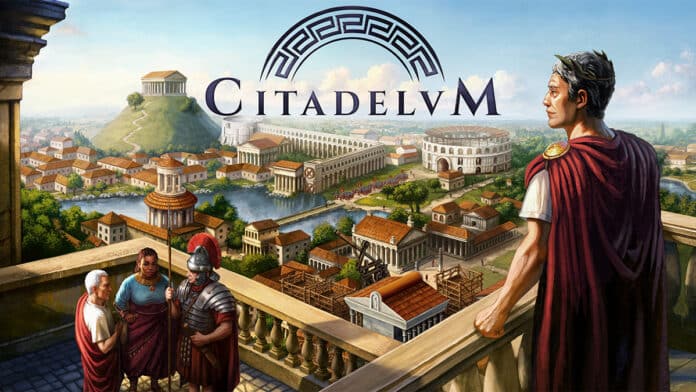

Set in the tumultuous late Roman Republic around 40 BC, ‘Citadelum' first places you in the sandals of Gaius Octavius as he embarks on his journey from ambitious heir to the first emperor of the Roman Empire. Following the assassination of Julius Caesar, players will expand Rome's influence outwards and into the riches of Egypt, establishing settlements, commanding militias, and navigating conquests during one of history's most transformative and intriguing periods. From there, the campaign takes you on other quests rooted in the history of the time, from the Gallic Wars in Geneva in 58 BC to the conquests of the Romans in Britannia around 79 AD.
Building an Empire
‘Citadelum' delivers a solid city-builder experience, sitting comfortably within the genre's tried and tested framework. The campaign guides you through gentle introductory missions before ramping up complexity as you embark on increasingly difficult quests across the continent. As you play through, you'll encounter historically grounded scenarios spanning centuries of Roman history, where you will adapt your strategy to diverse biomes from the deserts of Egypt to the tundra of Britannia, with beautiful coastal and Mediterranean settings at its heart.
The city management mechanics revolve around a two-tier class system that mirrors Ancient Rome's social structure. Plebeians form your working class, requiring necessities like housing, water, and food. Patricians, meanwhile, demand luxury goods, entertainment, and culinary variety whilst generating the tax revenue that will fuel your expansion. This straightforward model provides a gentle learning curve without overwhelming complexity.
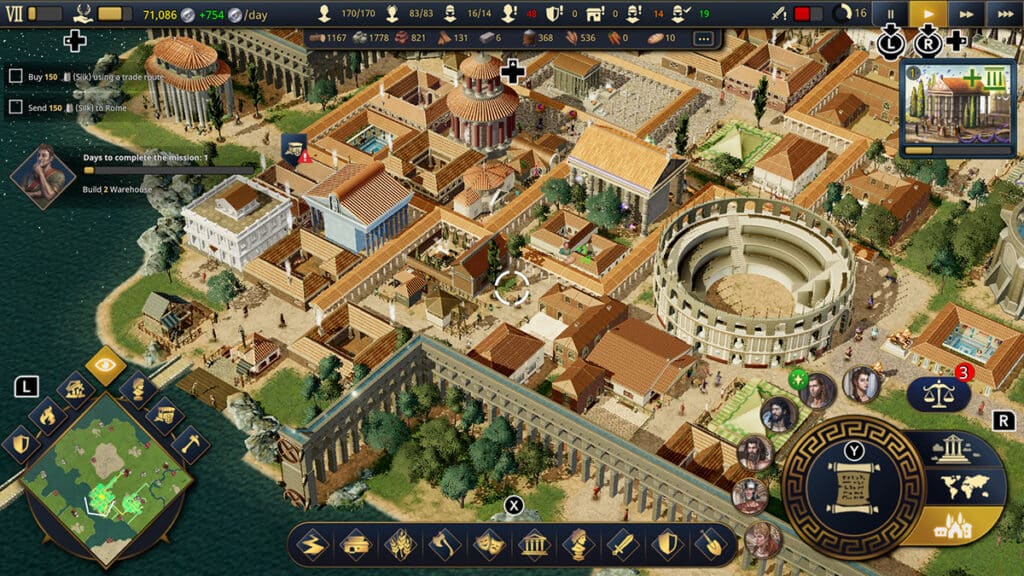
Building your settlements feels genuinely enjoyable. I particularly enjoyed the stunning graphics, like watching the water sparkle as it flows through your city aqueducts or zooming in to observe your upgraded housing bustling with daily life. The gameplay loop is smooth and forgiving, especially compared to more punishing city-builders like Timberborn that include highly detrimental weather events and resource crises. There is very little micro-management required, making this an accessible entry point for casual players that still brings depth through prestige levels that unlock increasingly sophisticated buildings and production chains.
As your cities grow from humble villages subsisting solely on wheat, to thriving metropolises producing weapons, wine, olive oil, and cheese, you'll organise theatrical performances and festivals to honour the gods. The progression feels satisfying, particularly as the historical context grounds the game in reality, fostering a sense of familiarity and excitement for those with an interest in the region's history.
A Historical Journey
The campaign's quest-driven structure was, to me, ‘Citadelum's strongest asset. The historical scope provides genuine weight to each settlement and conquest. I found myself realising that many of the settlements I was establishing are still around today, which brought me a genuine thrill.
The narrative blends historical events with mythological elements, creating a storyline that feels rooted in real places and times, with, of course, the bonus of Roman gods that many of us know and love.
Experiencing pivotal moments like the Roman invasion of Sicily adds depth that goes beyond a simple city-builder game. For history enthusiasts or those fascinated by the Roman Empire, there is considerable appeal in diving into this game.
Divine Intervention: Spectacle Without Substance
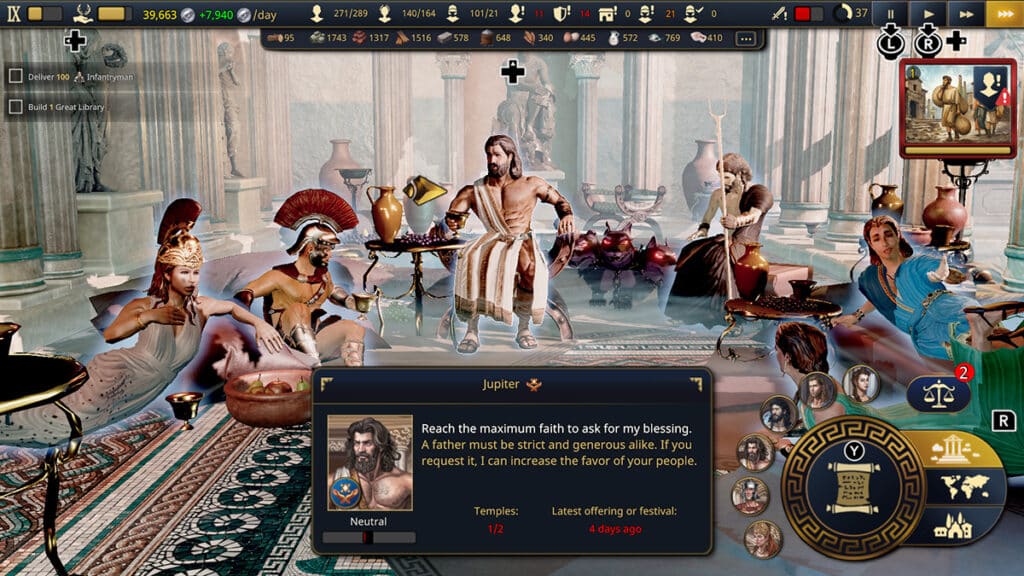
‘Citadelum's interactions with Roman deities felt shallow, though it was still a nice touch. As you gain or lose the favour of the gods by building temples or passing on relics, they will descend, quite literally, into your city, jumping down to provide blessings or cause chaos and destruction. This mechanic evoked a pleasant nostalgia for me, harking back to classics like Age of Mythology, where seeing Osiris smashing and zapping lightning through settlements gave me a genuine thrill.
However, the mechanics feel underdeveloped given the emphasis placed on them in the game's marketing, which promises that you will “earn the favour of the gods, or challenge them if you dare,” setting expectations for meaningful divine intervention. In practice, such interventions amounted to occasional destruction, resource bonuses, or military support that rarely felt impactful on gameplay. On many occasions, I completed missions without ever constructing a temple, suggesting that these important mechanics are not woven deeply enough into the experience.
Across many games we've seen the gods characterised in various ways, recently in the highly anticipated Hades II. In the Hades franchise, the gods feel truly unique with strong characterisations through use of colour, costume, voice actors, and witty dialogue. This aspect was lacking in ‘Citadelum'. The spectacle is there, but the substance falls short of what could have been the game's distinguishing feature.
A City-Builder for the Ages?
As someone who has spent countless hours in city-builder and simulation games like ‘Manor Lords', the ‘Civilization' series, ‘Cities Skylines', ‘Timberborn', and ‘Frostpunk', I recognise when a genre is treading familiar ground. ‘Citadelum's mechanics, while pleasing, are not original. The resource management systems and city-building loops are well-worn territory that has been reskinned across the genre.
Drawing a quote from the game itself, Roman philosopher Marcus Tullius Cicero famously said, “The greater the difficulty, the more the glory in surmounting it.”
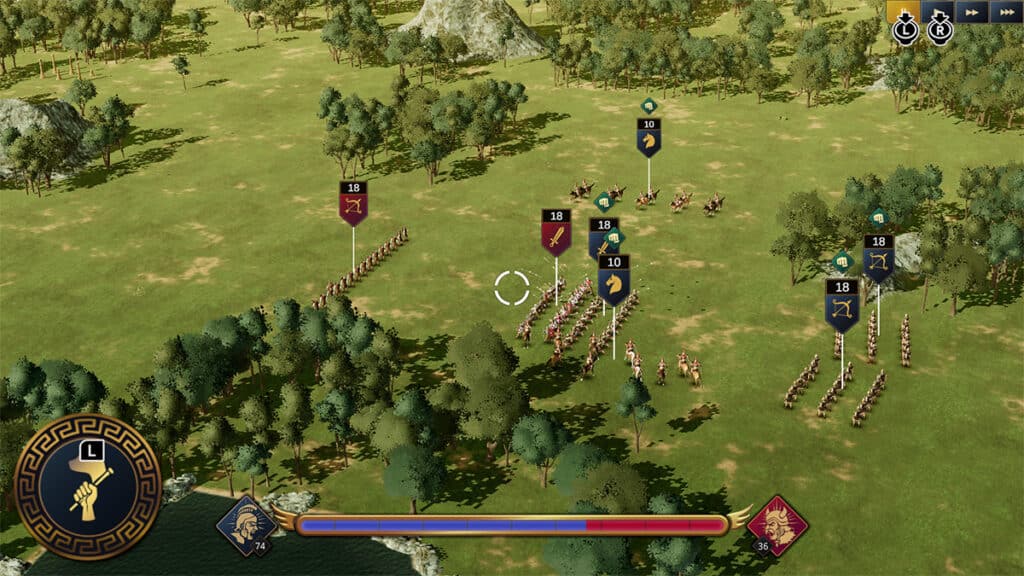
Unfortunately, ‘Citadelum' doesn't achieve that glory. I clearly have no objections to developers using this established framework, as I've stacked countless hours into over ten of these games myself. However, within this framework, I expect each game to carve out its own unique experience. ‘Citadelum' delivers this through its expansive historical campaign, but the shallow god mechanics and relatively simple resource management system undermine the experience at times. After a few missions, the pattern becomes predictable: build your city, climb through prestige levels, achieve the resource or military demands of the quest, in some instances achieve the favour of the gods, and repeat.
This approach does limit replayability, but I thoroughly enjoyed my first playthrough of the campaign.
The Switch 2 Adaptation
As an avid PC gamer, I had some doubts about playing a city-builder on console. The Switch 2 controls did surprise me. Once I got the hang of them, I felt less limited than I imagined I would be without my trusty mouse, scroll wheel, and keyboard. As this is on the more casual side of city-builders, it feels like a great fit for Switch 2 and a nice adaptation onto the new console.
Final Verdict
‘Citadelum' is an engaging city-builder. I would recommend it to newcomers in the genre and history enthusiasts looking for an interactive glimpse into Ancient Rome. Forgiving mechanics, attractive visuals, and the ambitious historical campaign create an enjoyable experience.
For veterans of the genre seeking innovation and complexity, this might not hit the spot. For me, ‘Citadelum' doesn't entirely offer that “something extra” needed to stand out. From my experience playing other city-builders where I find myself stuck in my chair as things like research trees, incremental objectives, and complex supply chains have me fully immersed in the game, this one doesn't quite reach those heights.
If you're drawn to Roman history or want a relaxed city-building experience, ‘Citadelum' delivers a pleasant journey and is a great addition to your Switch 2 game library.
Will ‘Citadelum' become my ‘Roman Empire’ – that thing I can't stop thinking about? Probably not.
Developer: Abylight Barcelona Publisher: Abylight Studios Genre: City-builder Platform Reviewed: Nintendo Switch 2 – also available on PC and Steam Deck Release date: 22nd January 2026

