


Benjamin Disraeli is remembered as a politician. The father of modern Conservatism held the office of Prime Minister over two terms between 1868 and 1880. Yet, before reaching the top of the his profession and governing the country, he was a successful novelist. What is interesting about ‘Sybil, Or the Two Nations' (published in 1845) is that it sets out much of his political philosophy. This BBC Radio dramatisation was released in 1983, the same year that returned Margaret Thatcher to power when she won the second of three General Elections. She could be considered as influential as Disraeli in the history of the political party. The 1980s, much as a century earlier, were a time of economic reform. widening wealth division and industrial tensions.
Political discussion runs throughout ‘Sybil, Or the Two Nations'. You have to be interested in political history to immerse yourself in this dramatisation. But if you enjoy the subject matter, there's a lot to take from this excellent recording.
‘Sybil, Or the Two Nations' explores the immense social and economic divide between the rich and poor in early Victorian England. The “two nations” that the author believed had grown apart: the wealthy and the working classes. The story follows Charles Egremont, an aristocratic young Tory MP disillusioned with his class, who becomes increasingly aware of the suffering endured by industrial workers. His growing political awakening coincides with his romantic interest in Sybil Gerard, the idealistic and devout daughter of a working-class radical involved in Chartist politics, which calls for universal male suffrage.
Before Charles Dickens, let alone George Orwell, popularised social commentary, ‘Sybil' changes settings from country estates of the landed gentry to manufacturing towns, mines and overcrowded slums, to accentuate the differences. The listener is presented with scenes of grinding poverty, exploitation and social unrest. The character of Sybil is intended as a bridge between the two nations of rich and poor – the One Nation Conservatism and the need for government to protect the vulnerable that later formed the political philosophy underpinning Disraeli's time in office.
This adaptation is faithful to the book and allows listeners to make up their own minds about the themes. Certainly, the author's point of view comes across strongly as Egremont's worldview changes, coming to be persuaded by Sybil as he sees more of the country outside his own privileged aristocratic class. The Chartist movement is dealt with sympathetically, with indifference among the aristocracy for the plight of the poor the focus of the drama's condemnation.
This BBC Radio 4 dramatisation stars Sorcha Cusack as Sybil and Richard Derrington as Egremont. It is narrated by RSC legend Richard Pasco, who provides a voiceover as Disraeli, or the ‘author'. It is directed by Vanessa Whitburn, who went on to become a stalwart of BBC Radio dramatisations. Coming during a politically eventful year, this dramatisation helped to reintroduce Disraeli's long-forgotten novels into the public consciousness.
Whitburn's direction makes ‘Sybil' accessible, though there are still some lengthy political speeches that would seem more appropriate for the floor of the House of Commons than for characters in a radio play. Soundscapes and ambiance help to provide a sense of realism that lifts the sometimes verbose dialogue. The performances help to keep listeners attentive. Sorcha Cusack provides a warm clarity to Sybil, blending moral conviction with emotional intelligence. Derrington captures Egremont’s journey from sheltered aristocrat to socially awakened reformer with subtle, gradual shifts in vocal confidence. Alan Dobie provides the Chartist leader Walter Gerard with integrity. A great, but often underused actor, Dobie's credits include playing Bolkonsky in the BBC's 1970s production of ‘War and Peace', which helped to launch Anthony Hopkins on the path to stardom. Richard Pasco's narration provides the whole production with gravitas.
‘Sybil, Or the Two Nations' is a serious and intellectual play, running to almost five and a half hours in duration. If you've read the book or have an interest in the life and career of Benjamin Disraeli, or even just the Chartist movement and the reforms of the Nineteenth Century, then you'll find this production enjoyable and a useful exploration of political themes. Casual listeners may find it a little too heavy and verbose. Ultimately, it is superbly performed by top stage and radio actors, and the source material is from one of the most significant political figures of the last two centuries. Those factors alone ensure the continued relevance and appeal of ‘Sybil Or the Two Nations'.
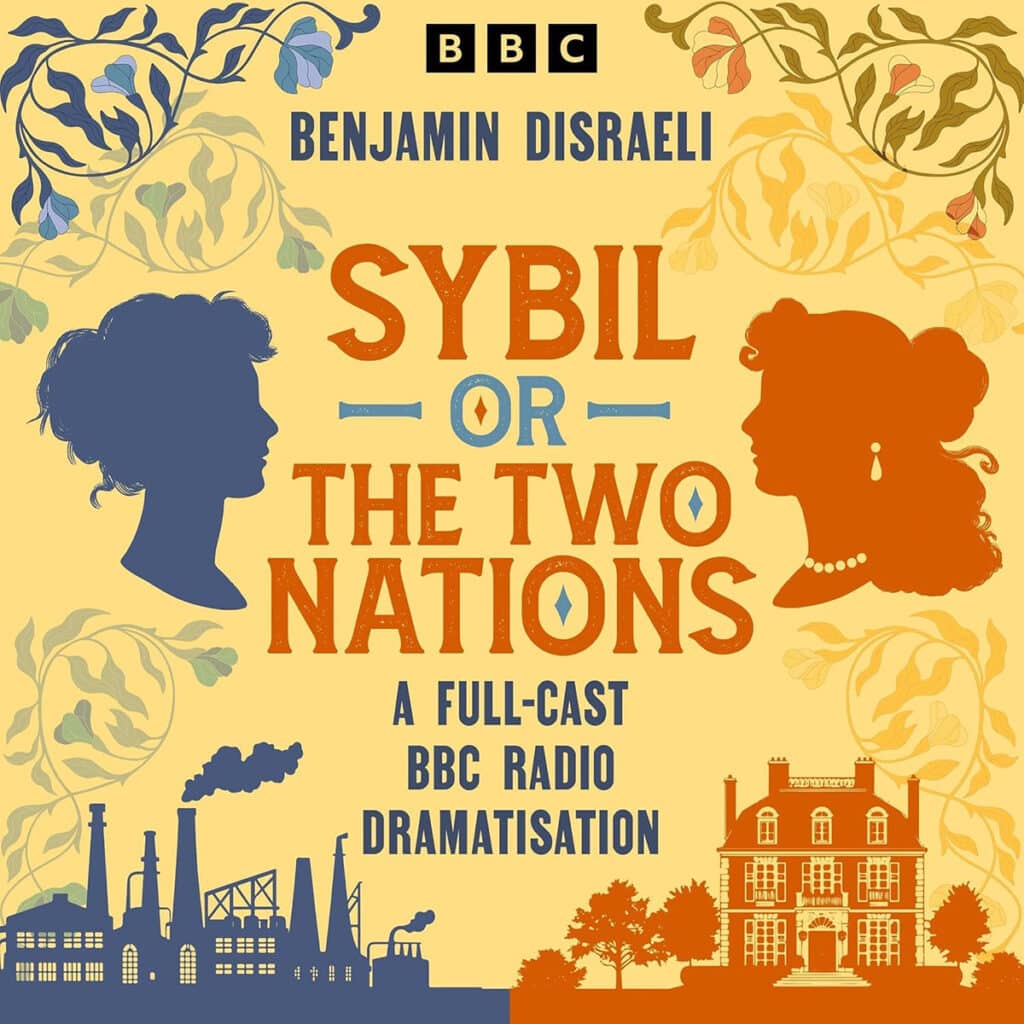
Cast: Sorcha Cusack, Richard Derrington, Alan Dobie, Terry Molloy, Richard Pasco Director: Vanessa Whitburn Publisher: Penguin Random House UK audio Publication date: 11 December 2025 Buy ‘Sybil, Or the Two Nations'
This article contains an affiliate link. Purchases through this link may result in us earning a commission.

