



‘Pornocracy' is an exposé of something that is everywhere, affecting every one of us, and yet its very existence is shrouded in silence. If pornography is mentioned at all, it's usually in the form of a punchline or a conversation stopper. In ‘Pornocracy', Jo Bartosch and Robert Jessel drag the subject kicking and screaming into the spotlight, forcing the reader to look at the inherently disgusting issue in depth.
Critics will say it's a biased book, since both authors are strongly opposed to pornography and go to lengths to expose its damaging effects, whether that's on pornography consumers, their spouses and families, or society more generally. Certainly, ‘Pornocracy' is a polemic. But I don't mean that in a pejorative sense. Polemics are often thrilling to read whether you agree or disagree with the author. Think, for example, of Christopher Hitchens on religion.
Like Hitchens, Jo Bartosch is a journalist and skilled essayist. Her many articles for numerous publications placed her on my radar as a thoughtful writer whose work I rate and enjoy. At book length, her skill at rhetoric and persuasion remains on full display. You get the feeling, reading ‘Pornocracy', that it's a book she's wanted to produce for some time. The passion with which it is written helps the reader to digest what is frequently profoundly disturbing subject matter. This is not dry academic language, but concise journalistic rhetoric. Bartosch's skill at making you care about a subject is what makes ‘Pornocracy' a compelling and gripping if not always pleasurable read. I often found myself compelled to read on, barely able to believe the sordid details on the page. I should not overlook Robert Jessel's co-authorship, though his name may be less familiar to most readers, certainly to me. A line in his closing remarks struck me for its powerful framing: “When and how did we lose the idea that it's shameful to turn humans into objects, to watch them copulate and to see them abused?” Desensitisation to the very concept of porn can make it shocking to even see it for what it is. This book forces you to do precisely that.
Undoubtedly, ‘Pornocracy' is meticulously and thoroughly researched as the copious notes and references attest. Anybody wishing to find a comprehensive account of the dangers and corrosive effects of pornography will find everything they need in this single and easily-digestible volume. The arguments are set out and evidenced with a forensic level of skill and attention to detail. The book will also be useful to anyone with an open mind on the subject. Perhaps you currently lean on the libertarian side of the argument and think, “Isn't it down to freedom of choice, and what harm can looking do really? Isn't it prudish to raise objections? Isn't it empowering for the women who make money from taking their clothes off, and surely nobody's forcing them? It's nobody else's business, let men have a bit of pleasure, as long as it's behind closed doors.” If this sounds like you, but you're willing to hear the contrary point of view, be prepared to have your worldview shattered. The authors dismantle every one of those familiar objections with devastating clarity.
‘Pornocracy' takes you through the full story of porn usage. It details the rewiring of neural pathways in the brain that heighten sensitivity to porn while dulling real-world sexual responses, and all the problems with intimacy that brings to real relationships. Usage can lead to addiction, where the consumers become enslaved to their drug, their whole lives revolving around getting their next fix. More disturbingly, ‘Pornocracy' documents how frequent porn usage leads to users seeking out more and more extreme forms of pornography, often drawn into taboo areas such as sexual violence, incest and child abuse. Sometimes, pornography can drive men to commit the real thing. The authors expose the multi-billion dollar pornography industry, and the algorithms on websites to tempt consumers to keep browsing. One stark finding from the social research is how men who started watching porn during their marriage doubled the chance of divorce, when pornography had played almost no role in marriages failing in the 1990s or earlier.
The authors trace the rise of the ready availability of pornography on mobile devices as a generational shift, as the consequences of porn in the digital age become increasingly obvious. No longer confined to seedy video stores, technology has taken away the shame of accessing pornography. Finally, they sound a warning for the future as AI enables sexual fantasies to be catered for in increasingly immersive and unhealthy ways at the press of a button. What will this mean for teenagers of today, awake to their sexuality and desires? Although answers can only be guessed at, in raising the early warning siren, the authors invite vigilance.
A central theme of the book is on how pornography fuels sexual violence, and how this is enabled by an inherent cultural belief that men have a right to sex, and women should provide it. Issues of misogyny and the objectification of women come across strongly in the pages, including in the often tragically short and addiction-heavy lives of women who enter the adult entertainment industry. There is racism too, with black women in pornographic videos often debased and degraded even more. The authors point to obvious examples when male misogyny and porn usage ought to have been picked up as a red flag, but such matters are currently normalised. They reference police officer Wayne Couzens, who went on to rape and murder Sarah Everard, a young woman he had kidnapped. Whether rape pornography creates rapists or rapists gravitate towards it may be difficult to prove either way, but the authors are persuasive in pointing to how pornography can directly worsen behaviour and attitudes towards women and children, the common subjects of pornographic materials.
Any controversy that attaches itself to this book will inevitably be on account of touching on one of the most incendiary topics of modern debate – transgenderism – even though this takes up less than a tenth of the word count. It is, if anything, just another example among a litany of extreme porn-fuelled male behaviour. The lesson of the book, should this become lost in any arguments about whether or not it has caused offence, is, “To reduce the death grip of pornography on our culture and society, we have to convince men that porn hurts them.”
There are limits to the book's scope. It retains a laser focus on heterosexual use of pornography, most especially how it is used by its main demographic – men. It leaves the homosexual use of pornography for other writers to document, though this is a rich area for study. So too is gay misogyny, which helps to explain the seemingly counterintuitive embrace of gender identity ideology. Perhaps unpacking all of that would require a book-length sequel.
In the final assessment, ‘Pornocracy' is a brilliantly-argued work full of journalistic style and persuasion. Some facts will haunt you – the massive prevalence of child sexual abuse material on tube sites for one. A note of optimism may be that people are starting to wake up, even if it took the hubris of celebrities demanding men's rights to access women's spaces and the accompanying cancel culture for non-conformers for many of us to sit up and take notice of journalists like Jo Bartosch. She has proven her wits to be sharp and her judgment sound on issues she has taken a stand on. There's no reason to believe her critical faculties are any less attuned when it comes to pornography. ‘Pornocracy' is essential if often disturbing reading. This subject will only become more pressing as technology finds more effective ways to hook men on porn, so Bartosch and Jessel must be commended for opening this can of worms. We ignore their warning at our peril.
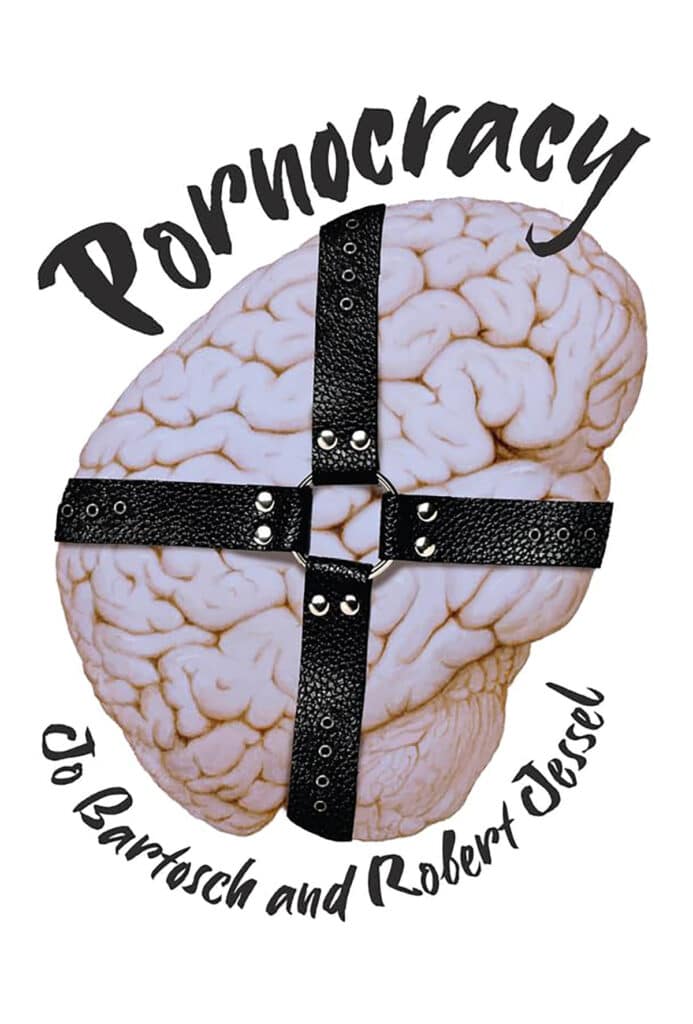
Publisher: Polity Publication date: 31st October 2025 Buy ‘Pornocracy'
This article contains an affiliate link. Purchases through this link may result in us earning a commission.

