


If you're interested in Graham Greene's life and career and want a quick introduction to how he worked and what made him tick, I strongly recommend ‘Graham Greene at 80' which is the final instalment of this impressive set of radio dramas based on his works. In ‘Graham Greene: The BBC Radio Drama Collection – The Later Years', you'll find audio adaptations of many of his most famous books and plays, and a few lesser-known works too.
Catholicism and espionage connect almost all of these works. Greene may present his stories in different ways, but when you listen to his works back-to-back you realise how those two central themes run through almost all of his works. The 1984 celebration of his 80th birthday teases out much of this, though Greene is an instinctively private man and a cautious interviewee, as Nigel Lewis discovers. There are more insightful contributions from his brother Hugh, biographer Norman Sherry, and readings by Ian Holm (‘Alien', ‘The Lord of the Rings'). Greene is described as “religious and restless”, a man driven to visit dangerous places because to know something intensely, you have to visit and see for yourself.
Over thirty years after his death, the works of Graham Greene retain their place in the British psyche, and some of these radio adaptations were made within the last decade. The collection opens with a 2000 dramatisation of ‘The End of the Affair', Greene's 1951 novel. It stars National Theatre favourite Alex Jennings as Bendrix and Emma Fielding as Sarah, and is directed by Sally Avens (who is also behind ‘A Burnt Out Case'). As the celebration of Greene's 80th birthday points out, the 1950s was a transformative decade for him, when he wrote less about religion and more about politics. Perhaps he got it all out of his system with ‘The End of the Affair', which is an intriguing story with a clever twist. Bendrix and Sarah embark on an affair in wartime Britain, but Bendrix hires a private investigator when he suspects Sarah may be cheating on him too. However, Sarah may have her own reasons for clandestine meetings that have nothing to do with affairs of the heart. The two lead actors are superb, and the story unfolds faithfully. Jennings' portrayal of Bendrix is oddly close to Ralph Fiennes's, who played the character in a 1998 film adaptation. My criticism, which I also found when reading the novel two years ago, is that none of the characters are likeable. But if you struggle with faith, especially if you have a difficult relationship with Catholicism, you'll likely find the story relatable and engrossing. By the end of the story, Greene has examined the themes so thoroughly and cleverly that ‘The End of the Affair' is one of his most memorable tales.
Next up is ‘The Potting Shed', which dips into the archives. Dame Sybil Thorndike lends her considerable talents to this spooky and unsettling tale from 1967, based on a lesser-known Greene stage play. It stars John Justin in the lead as John, a middle-aged man trying to unravel the Callifer family's dark secrets. What really happened to John in the potting shed one terrifying night when he was a child? This 1973 play features a peculiar performance by Henry Stamper as one of the many troubled priests you'll find in these hours of Greene's imaginative storytelling.
‘Our Man in Havana' sees a vacuum-cleaner salesman turn spy in Communist Cuba. The 1983 adaptation stars Jack Watling in the lead role, and he brings plenty of innocent passion to the part, completely believable as an ordinary man in over his head. This is hardly James Bond stuff, but more the English way of muddling through. Popular Czech actor George Pravda also features, alongside Hubert Rees and Peter Tuddenham. The Latin music and good use of sound effects give the play a sense of authenticity, and it sounds like a more modern production than it really is.
There are a few adaptations by Nick Warburton. ‘A Burnt Out Case' has another hero who has lost his faith and travels out of his comfort zone to find meaning. Querry (Ben Miles) is a celebrated architect of churches, at least before his journey into the unknown. The relatively modern production is also directed by Sally Avens and was broadcast in 2017. The next instalment is ‘The Comedians', a 1994 adaptation dramatised by Rene Basilico and this time set in Haiti. (The documentary delves into Greene's love of exploring dangerous and distant places, with a self-destructive drive present in some of his heroes.) This one, at eight episodes, feels over-long and drawn out, but a central performance by the dependable Michael Kitchen (‘Foyle's War') is enough to recommend it.
Greene nominated ‘The Honorary Consul' as his best work, justifying it through the changes that multiple characters undergo during the course of the story. This 2020 adaptation, proving that Greene remains relevant into the current decade, is another by Nick Warburton. He gives it an enjoyable documentary style that lends it authenticity. This time set in Argentina, the complex thriller is another featuring a troubled priest. Geoffrey Streatfield plays the lead role of Dr Eduardo Plarr. At only two episodes running to under two hours, it is a tight story that does not outstay its welcome.
The short, snappy ‘Yes and No' is an amusing fifteen-minute interlude about an actor preparing for a part. The director (Clive Francis) asks the performer (that man Alex Jennings again) a series of questions, to which he only answers in one word – yes or no. ‘Monsignor Quixote', a pastiche of Cervantes' classic novel, also provides listeners with a bit of light relief and is set in post-Civil War Spain. It is ably brought to life thanks to a charming performance by the late, great Bernard Cribbins, who takes listeners on a range of amusing adventures. Based on one of Greene's last novels, published in 1982, it also features Philip Jackson. In keeping with Greene's oeuvre, you'll find priests in distress, monks chanting, bells ringing and various other Catholic sounds and smells, but the humour is a welcome relief from much of the weightier dramas contained on this release. We can hope that Greene had found some peace of mind by the final decade of his life.
Overall, although the quality of the individual adaptations varies, most are pretty solid and faithful to Greene's original vision. If you love the works of Graham Greene, or if you find him hit and miss, dry or compelling, but somehow always interesting (my experience of reading half a dozen of his novels), then this broad range of his works will point you in the right direction of the ones you want to delve into next. Running to over sixteen hours in duration, ‘Graham Greene: The BBC Radio Drama Collection – The Later Years' is great value for money and is a fine celebration of one of the most important English authors of the second half of the Twentieth Century. Greene's stories are brought to life by some of the greatest British actors, and the final documentary giving voice to the writer is truly the icing on the cake.
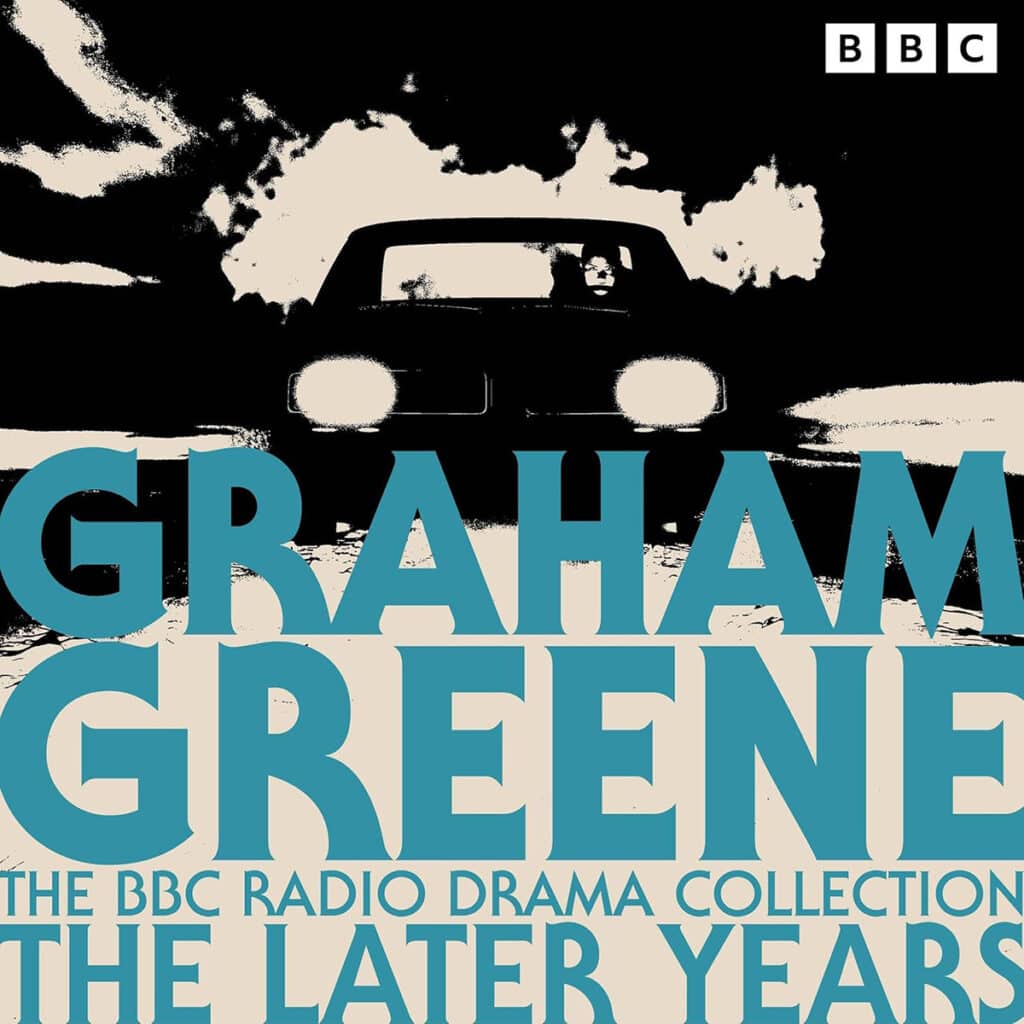
Publisher: Penguin Random House UK audio Publication date: 3rd July 2025 Buy ‘Graham Greene: The BBC Radio Drama Collection – The Later Years'
This article contains an affiliate link. Purchases through this link may result in us earning a commission.

