


Simon Squibb has enjoyed a remarkable and inspiring life so far. Starting his first business when he was a homeless 15-year-old, Squibb went on to launch marketing agency Fluid, which he sold to PwC for an incredible sum of money. Deciding to retire early, Squibb soon found himself bored and returned to his passion of helping other people. Through his company HelpBnk, Squibb is on a mission to help 10 million people kickstart their businesses and he’s amassed a huge social media following in the process.
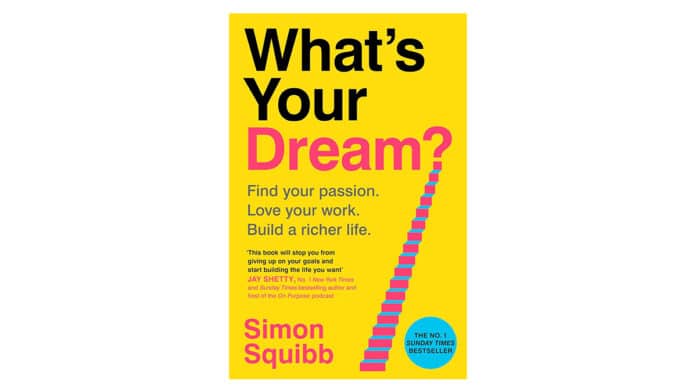
For anyone looking to turn their passion into a career, Squibb’s recently-released book “What’s Your Dream?” is a perfect read. The book contains both stories from Squibb’s career and plenty of advice to help you, the reader, finally step out of your dull 9-to-5 job and pursue your dream. For the uninitiated, Squibb built a huge following by filming encounters with strangers on the street, who he asked “what’s your dream?”. This seemingly simple question flummoxed plenty of people, and Squibb started to see patterns in the way that people react when they’ve faced with a possibility they never thought could be theirs.
Split into three sections, “What’s Your Dream?” holds the readers hand throughout, gently explaining why having a dream is important and helping you to verbalise, or write down, your own dream. Squibb’s advice flies in the face of much of what we’re told growing up, such as concentrating your efforts on climbing the corporate ladder and putting all of your money into buying a house. For Squibb, chasing that conventional life path leads only to restrictions, dissuading people from following their dream and instead choosing to let it die while they slave away for someone else.
Throughout the book’s first two sections, Squibb shares plenty of stories from his life, including successes and failures. He paints a realistic picture and doesn’t make the reader feel like following your dream is a simple thing to do. Squibb explains that it comes with an element of risk but often with risk, you have the opportunity to land a huge pay-off and infinitely improve your circumstances and life. He does acknowledge that taking risks isn’t for everyone, but he encourages you to think long and hard about what you could be doing with your life, rather than what you think you should be doing.
The book’s third section is perhaps the most useful. The chances are that if you’ve picked up this book, you’re already considering a career change, or at the very least open to seeing what’s out there. By the time you get to section 3, you’ll have your dream realised (at least partially), and Squibb switches focus to making your dream happen. He doesn’t sugarcoat the journey that you’ll go through, explaining the difficult times and the hardships that come with it, but his ethos that a little pain results in more freedom is hard to resist.
“What’s Your Dream?” will appeal to anyone who has an entrepreneurial spirit or is tired of their current work/life set-up and balance. Squibb’s practical advice is invaluable, and given his vast experience you know that you’re in capable hands. On a handful of occasions, Squibb may underestimate that even a low spend to start a business isn’t within everyone’s reach, but he offers plenty of pathways and suggestions as to how you can get started. For me, I found this book hugely inspiring and it’s reframed the way I think about my professional career. That surely is all that Squibb hopes for from anyone that reads “What’s Your Dream?”
Publisher: Century Release date: 16th January 2025 Buy “What’s Your Dream?” now
This article contains an affiliate link. Purchases through this link may result in us earning a commission.

