

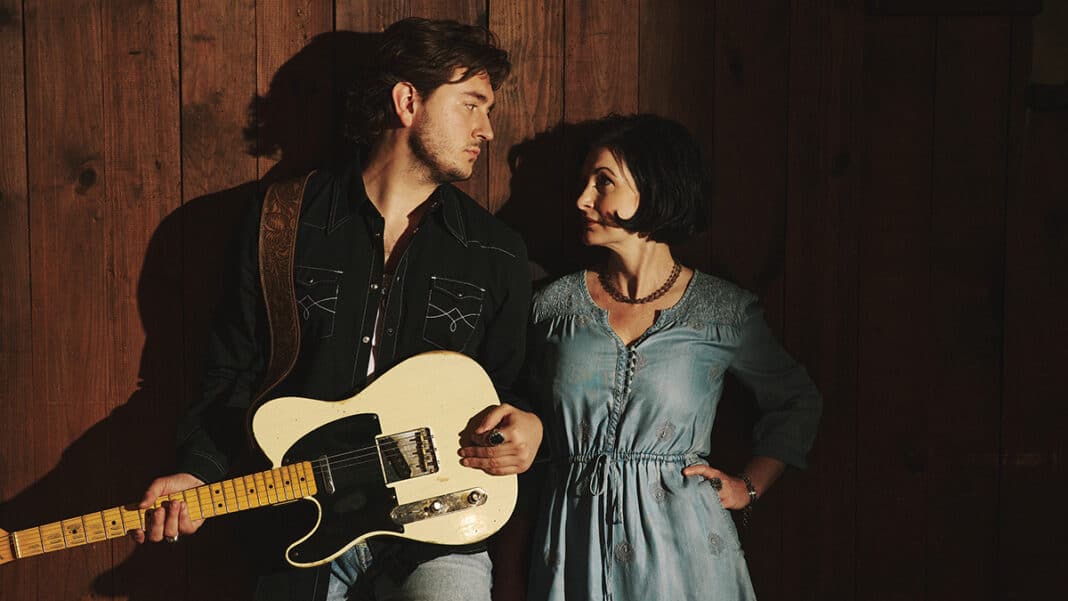

Americana duo A Tale of Two – award-winning vocalist Stephanie Adlington and guitar virtuoso Aaron Lessard – might be a new name for you but once you hear their debut album ‘Renegade' you'll be adding them straight to your playlist.
The duo has been crafting their music for a few years and their debut album finally arrives on Friday (4th October). ‘Renegade' is an 8-song collection produced by Jon Estes, and it serves as a great introduction for a duo that is very much on the rise.
I caught up with Stephanie and Aaron to talk about ‘Renegade', discuss the challenges of being independent and find out their thoughts on the changing music industry…
To our readers A Tale of Two might be a fairly new name to them so let's start by finding out how the band came together…
Stephanie: I'm a graduate of the Royal Academy of Music, so I got all of my training in your lovely country and I love it wonderfully. I came back to America and moved to Nashville. I've been singing and teaching over here ever since. When Aaron moved to town, I was in need of a guitarist, and we got together and started working together, and then eventually started writing together. People liked the blend of our voices together, which basically came off of a one-off gig. We went to Memphis, I had a friend at South Main Sounds, and he said, ‘why don't you all come and play what you're working on?' and everyone loved our voices together so we thought, ‘well, maybe that's what we've been missing from our solo careers? Maybe we need to add it together?' That's how we started off, really,
Aaron: Even from a logistic sense in terms of independent touring now, it's become really hard to tour with a band if you come from more of that world. What we really like about doing this project as a duo is we're able to create, especially with more of our live content on YouTube, a lot of full sound with just two people. That's something we're very adamant about. We've enjoyed touring, just the two of us. It's been nice. There's no band drama (laughs). There's no massive Sprinter van where it always breaks down away to the show (laughs).
Stephanie: Just our Subaru Outback traveling the country.
Aaron: That's right, very practical.
Stephanie: We've gotten to go to a lot of places, a lot of different states, met a lot of different people, and had some wonderful experiences along the way. When you're touring, it's so busy because you're just trying to get to location and location, but we really do try to stop along the way and see some sights and eat some really good food, and try to be local and see what the what the culture is about.
(both laugh)
Aaron: … and blow all of our money on food!
Stephanie: Yeah, we are foodies so that's a big part of it.
I've watched a lot of the the live videos on YouTube to get a sense of what you're like live, and I really do understand what you were saying about how you create a full sound with just the two of you. That's hard to do. You can't just pair two people and it be magical, but it seems to be magical with you two. The album, ‘Renegade', shows just how well you work together and that relationship really shines through. What was it like putting this album together?
Stephanie: It's been a lot (laughs).
Aaron: Our first record was a six-track EP that we started recording right in the middle of Covid.
Stephanie: We actually had our recording sessions set for April of 2020, and, of course, late March of 2020 the world shut down. That was the beginning of (us saying), ‘Oh, okay. Well, what do we do now?' (laughs)
Aaron: That project was definitely a good and difficult introduction to the world of releasing your own music, independently on a professional level. When we revisited and wanted to make a full LP, we went for eight songs because in the world of digital singles and Spotify it's tough to put out a 20-song record and have people listen to all those tracks. We wanted to rethink some strategy. We worked with a new producer on the record, Jon Estes, who does a lot of Americana here in Nashville. I believe he has a Grammy as well, he's excellent. He played bass, pedal, steel banjo, mandolin, organ, wurlitzer and percussion on the record. It's ridiculous.
Stephanie: He has this amazing studio where he just has all these instruments and he's like, ‘hey, let's try this' It's like a big toy box. (He tried) all these different sounds to see what works and I'm just sitting back in awe. It was a really wonderful creative environment. We took two years to record the songs, instead of having the whole Nashville process of going in for one day and recording six songs. I didn't want to do that again. I really wanted to take the time. I wanted to go in, I wanted to be as creative as we could and think the process through and not feel rushed and not feel stressed. I think that definitely helped bring a lot more dynamic and a lot more creativeness to the the album. If you listen to the early EP, which was the first and it's fine, but I do hope that we've grown into the second one because we did take that time, and we did play the process out, instead of trying to rush through it to get it done.
Aaron: By taking more time, the body of work and the songwriting evolves too. It really changed from a lot of the first record. The beginning of the LP is more prohibition stories and some folklore, and then we really started to evolve into more personal writing that we use some references of where we grew up, some more personal stories and some opinions on music and the industry itself, and some other things that we wanted to write about from a more vulnerable standpoint, and evolve the narrative of the duo a little bit more too. It was cool to see that transition actually occur in the middle of the process of making the record. This record only had maybe five people in total involved. It was John, the two of us, two percussionists, Jamie Dick and Ross McReynolds, and then Billy Contreras on fiddle, who's a legend in Nashville. He tours with Ricky Skaggs and all these other people, and he's just a God among men. That was awesome. I love his fiddle work on the record.
Stephanie: And Liz…
Aaron: That's right. Liz Estes, Jon's wife, also played the fiddle part on the title track, ‘Renegade'.
I took my first trip to Nashville in the summer and you can see the two sides of the business there. You have Music Row that's churning out the hits and then you have artists, such as yourselves, that are taking the time to craft music and tell stories…
Aaron: It's really changed too. Years ago, you legally and technically were not even supposed to have a home studio where you were operating your business as a producer. You had to have an actual space that was considered a business lot. When that law was reversed over Covid, I really think that even further amplified the divide between the old Nashville machine, which is changing. You walk down Music Row, it's not Music Row anymore. It's changed quite significantly. A lot of established old studios are being torn down and a lot more records are now being made in home studios because it's a more practical, affordable option for people. Obviously, people are not buying as much physical media as they once did, so really your only revenue source is for live touring and merch. I think people are going more the independent route because with the labels, you are relying upon them for larger exposure, we've heard enough horror stories with people and their relationship with certain others. That's obviously a case-by-case situation but the grass isn't always greener on the other side.
The record industry model has changed so much with so many artists now onlybeing offered deals single by single, with no guarantee of an EP or album. What do you feel are the advantages of being independent?
Aaron: Oh, wow, there's a lot. I would say having having full creative and full control over your branding, how you want to appear on social media, the type of content you want to put out, having the freedom of how you want to market yourself… all of that is important. We both (work) in education on the side as well so it's difficult for us as independent artists because we aren't getting some large check in advance from a label or a publishing company. We're still working. We gig locally in town, and we tour and we teach. We're doing all these things at the same time. I was up till 2:30am making video content for an upcoming show in October. A negative is that you have to do a lot more of the labour but the pro is that you know you're doing it, at least in your mind, correctly and to the best of your ability.
We've been very careful about the people we've wanted to have work around us. We finally just got a booking agent, Terry Stewart, who's fantastic, after four years of doing this independently. I was booking all of our own shows. We have two great publicists and a radio promoter here in town, but we've been very selective about who we want to work with We have a good relationship with those people, where we're in constant communication. When you're in a more label structure, you just have less control over those decisions. I knew an artist who were trying to promote themselves on social media and they had to wait for approval from the label for every single post they would make, and it would take up to two weeks. They had done five or six albums with a major label, and they finally said, ‘enough is enough. We're just going to go independent'. They just wanted more say, to do immediate things. There's a lot of red tape you have to go through when you're in that old model. They have a lot of influence over your career and they can shelve your music and not expose it. They have a lot of control. That being said, they can also get you on New Music Friday on Spotify and all these other things. It's just the choice you want to take and we're fortunate to be in the Americana scene, which does champion more independent artists. It's more grassroots, and the opportunity to tour is there with a lot of attentive crowds and listening rooms, versus being in the pop world or rock world, where you have this bar space with an open floor, and you have to bring hundreds of people out with this crazy campaigning. It's changed a lot, but we're really happy to be in the position that we're in right now.
You're free to put out music whenever you want too, within the constraints of your budget. There's such an expectation for new music all the time now. What's that pressure like for you?
Aaron: We've been very patient, which is good and bad I think, in the sense that we try not to cater to any pressure of forcing any music to be out. I think we did that a little bit on our first EP, because we didn't have anything before and you have to have music to tour. You have to support the record and make fans. We were in a position with the first album where we were like, ‘we've got to get this done. We've got to get off the ground and get through this early stage', which I think is by far the hardest for any artist. It's like running your own business. The first few years, you don't make money and it's hard. You're trying to get your name out, and then from there it grows slowly. I think a lot of artists don't think of themselves as running a small business, but I think they're very comparable.
Most importantly for people, I think you need to just be confident in the music that you have to put out. You have to feel really good about it. You don't want to wait three years to put out a record. I have noticed this trend in the business where records are taking longer to come out, and I do think, unfortunately, it's a result of the budget that artists have. If you want to properly put out a record that's over 12 tracks and you want to promote it like a label with multiple publicists in different countries, radio promotion and significant social media advertising and streaming advertising, you're talking $40,000 to $50,000 probably at a minimum. The percent of independent artists who can pull that off is extraordinarily low. That's why crowdfunding for them is so critical. We've been lucky to benefit from that a little bit on this record. It's just challenging, and I think that is the reason why records are taking longer to come out. There is this pressure for people to put music out. Singles have become more of a thing where people are just releasing one song at a time. It's hard though, from a business perspective, to do that, because to promote it through like publicists, a lot of publicists won't take on just singles when releasing music. You have to make that decision in the space you're in – ‘do I have enough of a fan base that can support this single? Or do I wait and put out a full project and try to maximize my reach?'
Stephanie: I think more than anything, I'm really into quality over quantity. Whatever we do put out, I feel is hopefully going to outlive us. I want to be proud of the work. 100 years from now, when I'm gone, if it's still seeing the light of day, I would hope that we put out something that was good and that we felt good about, instead of just trying to put something out, just to have it. That might not be the the most lucrative thing to do, but I feel like it's important.
Aaron: I think your question is really great, because there is such a pressure now in all forms of media, because we live in this meme culture and this culture of instant now, now, now. What used to be 15 minutes of fame, is now 15 seconds of fame. There is this pressure to consistently deliver content endlessly to people so you're feeding this short-term attention span. I think we're fortunate to be in a genre and in a space where there is more breathing room, where we can be more creative and be more conscious of the quality of the music. At least to the best of our ability and trying to grow things in a more grassroots manner, which just feels very counterculture to all of society, which I kind of like.
Stephanie: I have to admit, he's far more of the tech world than I am. I'm a dinosaur. I just got Spotify, and the only reason I got it was because they offered me three months free (laughs).
Aaron: I promise you will not see us doing any synchronised TikTok dancing (laughs)
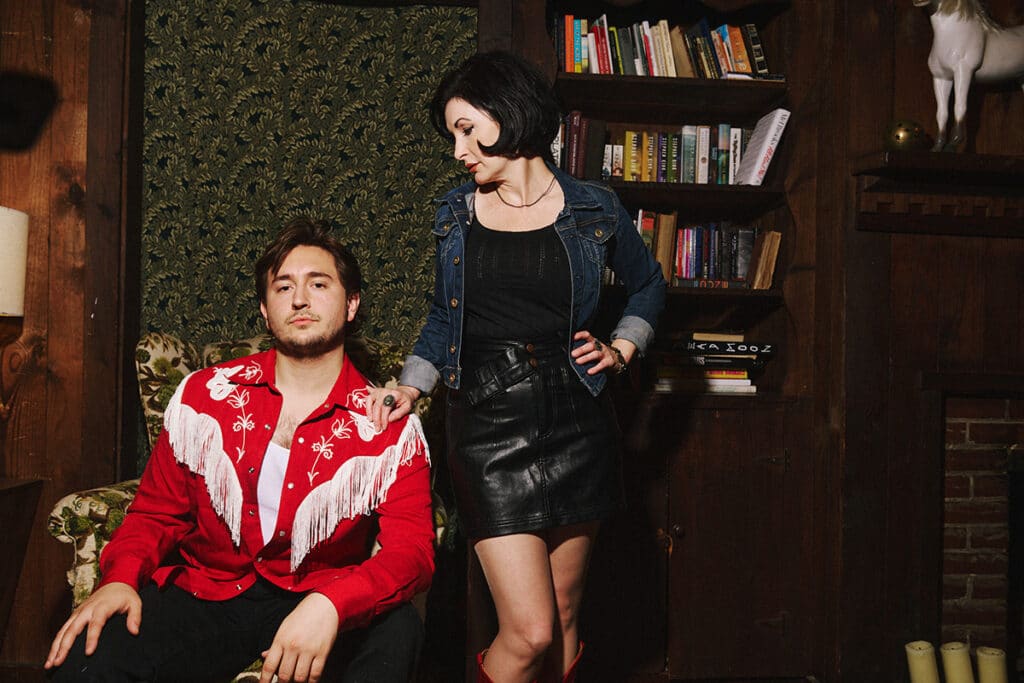
You say that now…
(both laugh)
Stephanie: I try but I feel like everything is so fast. If you get caught up in that, it's like a horse on a carriage that you're just trying to control, and you never will. I just try to stay in my bubble and try to think things through and what interests me, and what ideas are coming and can they be formulated. That takes a long time. Luckily (Aaron) is on the other side of it, pushing a little bit more. I think I'm more of we'll just sit back and wait (type). That's the ying and the yang. We are very much that!
That's why it works. I'm an old-school music fan. I like my physical products and I don't like what streaming has done to the music industry. I worry that in the future we're going to have a generation of music that's just lost because if people aren't buying music, and streaming services could so easily disappear, how is all the music being put out now going to survive?
Aaron: 100%. Funny enough cassettes are making a comeback in Nashville. There's a lot of new artists putting out cassettes, which is just really cool. I agree with you. I think there definitely is a push for physical media once again. I think you're absolutely right, Spotify might not be around forever. We don't know and then you own no music. Even as a consumer, you might be able to go to another streaming service but who knows what the future of streaming services is?
Stephanie: I'm very excited to say we are putting ‘Renegade' out on vinyl. It's our first vinyl. This is my book case behind me and I have probably about 800 pieces of vinyl beside me. I'm a big vinyl collector, and to actually have our own vinyl is going to be very exciting.
When might we be able to see you performing in the UK?
Aaron: We're working on that.
Stephanie: I'd be there in a second, if I could. Living in your country for five years was one of the best experiences of my entire life. I love the UK. I have so many wonderful friends that I keep in touch with more than really my own family. (laughs)
Aaron: We are working with an agent now who handles both US and UK bookings so we're building out a whole ‘Renegade' tour for 2025 which is part of the reason why we wanted to get the record out this year. It's been done since April, and we were making a decision a little while ago whether or not we wanted to put the record out early next year or in the fall. When we found out we were playing AmericanaFest here in the US, we decided we wanted to release it in conjunction with that. We plan to be (in the UK), we just don't have specific dates yet. We have some venues in mind that a lot of our friends play in like The Green Note in Camden. Hopefully we'll be there. I'm sporting my Camden Watch Company watch from the folks at Camden Watch Company. They're awesome and they're so sweet. They even contributed to our Kickstarter, which was amazing, because we met them for maybe like 45 minutes. We will definitely be making it happen. We were planning an Ireland tour two years ago that unfortunately got canceled, so hopefully we'll be doing a whole UK and Ireland run next year. We will make it happen.
Which song on ‘Renegade' is the most special to you and why?
Stephanie: ‘Once Opon a Summer's Day ‘was written about me growing up. I'm from a very small town in West Virginia called Grafton. It's one of those where we didn't get an interstate. When passenger trains disappeared, we didn't get an interstate so my little hometown that has all this amazing history connected to it was one of those forgotten little towns. There were so many wonderful things about growing up (there). I just sat down one day and started making a list, and wanted to include as much in there as I could. It was hard to write because you start thinking about things, and you get very sentimental so I'd put it aside and bring it back and then put it aside.That was probably the hardest song but I'm so excited that I did it. We got to go back this summer, back to West Virginia and perform it for some of the people that those moments were about. I had friends coming up to me like, ‘the Prince reference that was…? and I'm like, ‘Yes, that was you'. It was really cool that they had the same memories that I did. That song, to me, is always going to be very, very sentimental.
Aaron: That was really a cool song to do, because we had seven tracks done for the record and we really wanted to have eight to make it feel a little more complete. We sat on that for a few months, and it was getting a little stressful, because we were getting to the point where if we had waited any longer to cut the song in the studio, we were going to probably push off the release till next year.
The way we write, I wish we were these writers that had 60 songs in the vault ready to go, we're very in the moment, spontaneous writers. We typically write when there's a little more pressure in regards to time, and it just seems to work out that way. I really enjoyed doing ‘1934' on the record about Bonnie and Clyde. That was an older song that we had. I just love the way the arrangement came out and Billy Contreras fiddle playing on it, and it's just such high energy, cinematic type of song. It just has all these hills and valleys and quiet moments and just massive things. It's makes me feel like I'm at the symphony. I really enjoyed cutting that track and ‘Renegade' as well. I always love a good excuse to play some slide guitar (laughs). Anytime I can do a guitar solo, I'm happy.
Stephanie: He's a total rock background. I was complete classical background. So again the yin and the yang coming together and trying to find a common ground, which we have.
A Tale of Two will release debut album ‘Renegade' on Friday 4th October 2024.

